
What does it mean to live inside a story so completely that reality starts to look like the fiction?
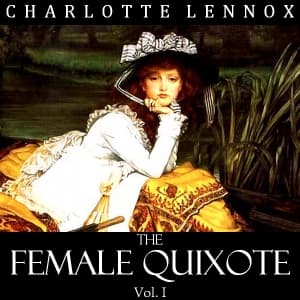
I picked up Female Quixote Vol. 1 on a Thursday afternoon when I was supposed to be finishing a logo project. Instead I ended up cross-legged on my studio floor with Frida asleep on my sketchbook, completely absorbed in Arabella — this 18th-century girl who read too many French romances and decided, with complete sincerity, that every man who glanced at her was a devoted slave prepared to die for her honor. She's not delusional in the sad way. She's delusional in the way that makes you think: okay but what if she's actually onto something?
Charlotte Lennox wrote this in 1752 and it reads like she was personally tired of something. Tired of the genre, tired of the expectations, tired of watching women perform the exact role that romance novels had scripted for them. Arabella isn't mocked cruelly — she's observed with this sharp, almost affectionate precision. When she interprets a gardener's casual stare as a declaration of undying passion and then orders him banished from the estate, I laughed out loud. Genuinely. Diego looked up from the windowsill like I'd lost it. But two seconds later I felt something catch in my chest because — she believes it. She fully, completely believes she deserves that level of devotion. And there's something almost heartbreaking about a woman who has absorbed every story that told her she was the center of the universe, and then actually acts like it.
Abuela would have had OPINIONS about Arabella. Probably starting with "mija, that girl needs a reality check" and ending with "but also she has standards, I respect it."
The Book Itself: Hilarious, Repetitive, Worth It
The satire is genuinely sharp in a way I didn't expect from 18th-century comedy. Lennox has this trick where she lets Arabella deliver these long, elaborate speeches about Romance protocol — citing fictional heroines like legal precedents — and the people around her just... don't know what to do. Her cousin Lucy trying to understand why she can't just say a man is handsome without it constituting a formal declaration of love. The men in her life cycling through confusion, indulgence, and occasional exasperation. It's funny because it's specific. Arabella doesn't just believe in romance — she has a whole system, with rules and hierarchies and correct procedures for being adored.
That said: yes, it gets repetitive. The joke is essentially the same joke, reset and rerun with new characters. By the fourth time someone misreads a completely mundane interaction through Arabella's Romance lens, you feel the formula. This is Vol. 1 of 2, which means it's also a setup book — you're not getting full resolution here, you're getting Arabella fully established in her worldview, ready to collide with more of actual life in Vol. 2.
The Narration: A Patchwork Quilt (Some Squares Are Gorgeous)
Okay. This is a LibriVox volunteer production, and I say that with genuine respect for the effort and genuine honesty about what that means for your ears.
The quality varies — not slightly, but noticeably. Some narrators have this warm, measured delivery that actually suits the novel's dry wit perfectly. One reader in particular handles Arabella's speeches with just the right amount of earnest gravity, which is exactly what the comedy needs — you have to play it straight for the absurdity to land. But then a chapter later, a different volunteer rushes through dialogue like they're reading a grocery list against a timer, and the momentum just... collapses. A couple of sections I had to replay because the pacing made it genuinely hard to follow who was speaking.
I listen at 1.0x always. Always. And even at 1.0x, some of these readers felt like they were already at 1.5x in their heads. For a novel that lives in its language — the elaborate, formal, satirical language of 18th-century prose — that's a real problem. The comedy requires timing. When the timing is off, the joke doesn't land, it just sits there.
This is not the version I'd hand to someone new to Lennox. But if you're already a classic lit person comfortable with LibriVox's nature, there's enough good here to get through it.
Who This Is For (And Who Should Probably Wait)
If you love 18th-century lit, if Don Quixote is already in your rotation, if you find the idea of a woman weaponizing romantic convention against itself genuinely funny — this is your book. I had a similar moment of gleeful recognition reading Hot Ticket — different century, same electric feeling of a woman who knows exactly what game is being played and decides to play it harder than anyone expected. The story absolutely earns your time.
But if consistent, professional narration is non-negotiable for you (and I get it, I really do), wait for a polished single-narrator version before committing 7 hours. The book deserves better audio than it sometimes gets here.
The verdict in my heart: I'm glad I listened. I'm mildly frustrated about how I listened.
Arabella is one of the funniest, most quietly devastating characters I've met in a while. A girl who built her entire self out of stories, who moves through the world expecting it to perform the plot she was handed. I felt that in my bones a little. Didn't we all, at some point, read something and think — yes, this is how it's supposed to go?
The book gets 3.5 stars. The narration gets a generous 2.5 for effort and occasional genuine loveliness. Find Arabella. Maybe find her somewhere with better audio.