
I was prepping my weekly meal prep - dal, rice, the works my mother would approve of - when I started this audiobook. Eight hours later, I have Thoughts. Capital T.
Here's the thing about Dave Asprey: the man is a fascinating case study in confidence. Whether that confidence is warranted is... well, that's where it gets psychologically interesting.
The Biohacker's Ego Problem
Asprey narrating his own book creates this peculiar dynamic. On one hand, you get authenticity - he genuinely believes everything he's saying, and that conviction comes through. On the other hand, you're essentially listening to an eight-hour TED talk from someone who really, really wants you to know how smart he is.
The protagonist exhibits classic guru psychology: personal transformation story, proprietary methods, and an almost messianic certainty that he's cracked the code the rest of us are too conventional to see. My therapist would have thoughts about this character. Specifically about how the narrative positions him as simultaneously the expert AND the rebel, the scientist AND the maverick. It's a compelling identity construction, I'll give him that.
When Science Meets Salesmanship
The research actually shows that intermittent fasting has legitimate benefits. Asprey knows this literature, and he presents it competently. But here's where I found myself asking: why does this book need to be eight hours long?
Because roughly a third of it feels like an extended advertisement for Bulletproof products. The coffee. The supplements. The entire ecosystem he's built. I kept waiting for him to pivot back to actionable information, and sometimes he did. Sometimes he just... kept talking about his personal journey with a reverence that borders on the uncomfortable.
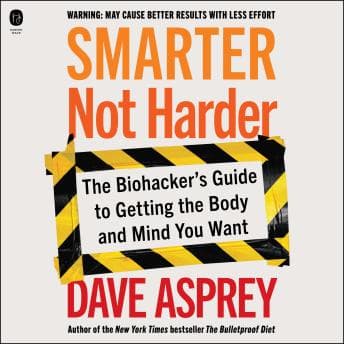
Psychologically, this doesn't track as pure education. It tracks as brand-building wrapped in science-adjacent language. The "What IF" framing in the book's premise? Classic persuasion technique - gets you nodding along before you've actually evaluated the claims.
What Actually Works Here
I'm not dismissing everything. The sections on how fasting affects women differently than men - genuinely useful. The discussion of personalized approaches based on genetics and individual biology - this is where Asprey's biohacking philosophy actually serves readers rather than his bottom line.
And look, he's not wrong that our relationship with food is psychologically complicated. The emotional components of eating, the way we use food for comfort and control and identity - he touches on this, though not with the depth I'd want. Science the Mind actually goes deeper on these psychological patterns, though it lacks Asprey's practical application. (Occupational hazard: I want everyone to go deeper on the psychology.)
The practical toolkit sections, when he finally gets to them, are solid. Skip a meal, here's how to manage the hunger. Workout timing, sleep optimization, the metabolic tricks. This is the book that should have been - maybe four hours of concentrated, useful information.
Asprey Behind the Mic
Asprey's voice is... fine. Competent. He sounds like a guy who's given a lot of podcasts, which he has. There's an evenness to his delivery that works for the instructional content but makes the personal anecdotes feel a bit rehearsed. No distinct vocal personality, just steady information delivery.
I'll be honest - I sped this up to 1.25x by hour three. The pacing drags in places where he's elaborating on concepts he's already explained. If you're listening while doing something else (cooking, jogging, whatever), you might lose the thread during the denser science sections. This one wants your attention.
Who's This Actually For?
If you're already in the Bulletproof ecosystem and want more Dave Asprey content, you'll probably enjoy this. If you're new to fasting and want a comprehensive (if lengthy) introduction from someone with strong opinions, it'll work. But if you want just the fasting information without the personal mythology and product placement? You might be frustrated. Skip this one if you have low tolerance for self-promotion dressed as science.
I kept thinking about how my research methods professor used to say "kill your darlings" - Asprey could have killed about half his darlings and had a much tighter book.
My Clinical Impression
This is a fascinating case study in how wellness culture packages expertise. Asprey clearly knows things. He's also clearly selling things. The book never quite resolves that tension, and your enjoyment will depend largely on how much you trust the messenger.
For me, standing in my kitchen with perfectly timed biryani and a head full of intermittent fasting protocols, I'm left with mixed feelings. Useful information exists here. So does a lot of padding. The human mind has patterns, and Asprey's pattern is unmistakable: believe in me, buy my products, and maybe you'll become the high-performing human you were meant to be.
Maybe. Or maybe just eat less sometimes and see how it goes.