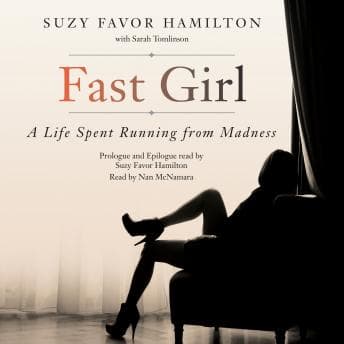

I get mildly annoyed when a memoir promises honesty and then spends six hours doing PR cleanup. Fast Girl does not do that. It walks straight into the ugliest parts: the 2000 Sydney Olympic mile, the medication-fueled escalation, the Vegas escort identity "Kelly," and the suicidal crash after her double life blew up. No spin. Just damage reports.
Bottom Line: Worth your commute. This is basically An Unquiet Mind but for elite athletics, public shame, and the weird way a culture that worships performance can miss a person actively coming apart. The closest audiobook experience I've had to it recently was actually You're Not Listening, which does something similar for interpersonal dynamics — putting a name to something you've experienced but never quite had the language for.
I listened to this partly on a long weekend run along the Embarcadero and partly during one of those 2 a.m. can't-sleep nights after work lit my nervous system on fire. Weirdly, both contexts fit. The running sections have that familiar competitive tunnel vision. The mental health sections do not let you zone out.
What hit me first was how clearly the book connects Suzy Favor Hamilton's identity as a runner to the later collapse. Not in a tidy "sports broke her" way. More like: if your whole life is built around overriding your body, suppressing fear, and converting pain into results, what happens when your brain starts feeding you bad data? The Sydney mile becomes a key scene because it isn't framed as just a race result. It feels like a crack in the operating system. You can hear the obsession with control, the shame, the need to perform — all of it stacking long before the public scandal.
And then the book gets even harder. The sections on being misdiagnosed, put on medication that worsened the mania, and sliding into hypersexual behavior are deeply uncomfortable in the useful way. Not sensationalized. Not coy either. She doesn't ask you to approve of what happened when she became "Kelly" in Las Vegas. She asks you to understand how untreated bipolar disorder can hijack a life that, from the outside, looked absurdly polished. That's a much more interesting and much riskier book than a redemption memoir with all the rough edges sanded off.
Where this memoir actually earns your attention
The strongest thing here is specificity. The public version of Suzy was the wholesome Olympic runner and sportswear spokesperson. The private reality included grief, shame about her athletic career, ambivalence around motherhood, strain in her marriage, and this terrifying inability to trust her own mind. Those details matter because they stop the memoir from collapsing into a single-axis scandal story.
Also, if you've ever been frustrated by books that flatten mental illness into inspiration-content, this one mostly avoids that trap. It doesn't present treatment as a magical patch release. Proper diagnosis, therapy, and support help — especially her husband's support — but the book keeps the messiness intact. I appreciated that. Recovery here sounds like ongoing systems maintenance, not a cinematic reboot.
The pacing can wobble, though. You can feel where some listeners bounced off, especially if they need a memoir to move like a thriller. The middle stretches occasionally linger in self-examination without adding much new signal. I didn't mind it too much because the emotional stakes are high, but yes, this could've been tighter by maybe an hour. I finished it in basically two focused listening blocks, and I definitely wouldn't recommend it as pure background audio while triaging Slack.
Nan McNamara wisely does not overclock the emotion
Nan McNamara is really good here. And good in the exact way this book needs. She sounds close enough to Suzy Favor Hamilton's natural voice that the performance has credibility, but she doesn't push every confession into melodrama. That's a harder balancing act than it sounds.
The best moments are the restrained ones. In the sections describing manic episodes, McNamara keeps the tone grounded instead of going full "listen to this breakdown" theater kid mode. That matters, because the text is already intense. During the aftermath of the exposure of her escort life — especially once the suicidal period enters the story — the steadiness of the narration makes it land harder. You're not being manipulated by the audio. You're just stuck there with her.
Suzy Favor Hamilton also appears as a narrator, and that helps the authenticity rather than disrupting it. The production is clean and straightforward — no music, no weird effects, no publisher trying to gamify trauma. Just the story. Which was the right call.
I'd still go 1.25x, maybe 1.3x if you're an aggressive speed-listener like me. At 1.5x, some of the emotional processing gets flattened, and this is not a book you want to optimize into oblivion.
Who Should Listen (And Who Should Skip)
Perfect for: focused train rides, long solo runs, quiet housework where you can actually pay attention. Maybe therapy-adjacent reading if memoir helps you think.
Skip if: you want bedtime audio, casual background listening, or any moment where you need your brain left alone. Also skip if your tolerance for narrators confessing ugly behavior is basically zero. A lot of the pushback on this book seems to come from listeners who couldn't get past judging her. Fair enough. If you need your memoir subject to be easy to root for at all times, this won't work for you.
But if you're interested in the mechanics of mental illness — how mania can masquerade as confidence, ambition, sexuality, even freedom — this audiobook has real value. The ROI here is not "life hacks." It's clarity. About bipolar disorder, about shame, about how public success can hide catastrophic failure conditions.
My only real reservation is that the book occasionally circles points you've already absorbed, and that can make the pacing feel uneven. Still, the candor is rare enough that I was willing to give it slack.
So. Not a fun listen. Not an easy one either. But a useful, bracing, very human one. The kind of memoir that trusts you to sit with contradictions instead of resolving them into a motivational poster. I respect that a lot.
If your audiobook diet is usually sci-fi and business books (hi, same), this is a sharp left turn. Worth taking.