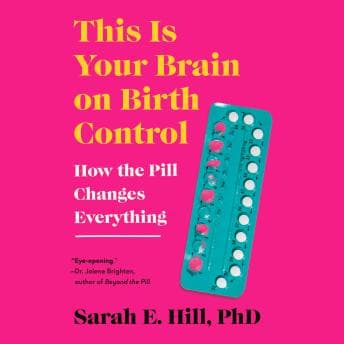

How much do you actually know about the medication you take every single day?
I was chopping onions for a biryani I'd been procrastinating on all week when this question hit me like a pan to the face. Sarah Hill, an evolutionary psychologist with serious research credentials, had just explained how the synthetic hormones in birth control pills don't just prevent pregnancy—they fundamentally alter the stress response system, attraction patterns, and emotional processing. And I stood there in my kitchen thinking: I took the pill for eight years. Eight years. And nobody told me any of this.
The Research Actually Shows Something Uncomfortable
Hill's central thesis is both simple and paradigm-shifting: sex hormones affect billions of cells throughout your body, including massive portions of your brain. The pill replaces your natural hormone fluctuations with synthetic versions that your brain reads differently. This isn't speculation—she cites study after study showing measurable changes in cortisol response, mate preference, and even the size of certain brain regions in women on hormonal contraception versus those who aren't.
What makes this compelling is that Hill isn't anti-pill. She's explicitly pro-choice about contraception. But she's also pro-information, and her frustration with the medical establishment's "here's your prescription, good luck" approach is palpable. Women on the pill have a blunted cortisol spike during stress—which sounds great until you realize cortisol helps consolidate memories and regulate mood. It's a trade-off nobody explained to us.
The chapter on mate selection particularly fascinated me. Women's attraction patterns shift across their menstrual cycle—drawn to more masculine features during ovulation, preferring nurturing traits during other phases. The pill eliminates this fluctuation. Hill presents research suggesting some women who chose partners while on the pill experienced decreased attraction after going off it. Is this definitive? No. Is it worth knowing before you make major life decisions? Absolutely.
Nan McNamara Makes Endocrinology Feel Like Coffee With a Brilliant Friend
McNamara's narration hits exactly the right register for this material—enthusiastic enough to keep you engaged through the denser research sections, but not so perky that it feels like a wellness podcast. She handles Hill's accessible writing style well, making complex endocrinology feel like something you'd discuss over coffee rather than suffer through in a textbook.
The audiobook includes a PDF of figures, which I appreciated—some of the hormone pathway explanations benefit from visual aids. I did find myself rewinding occasionally during the more technical sections, but that's the material, not the performance.
What This Book Doesn't Do (And Why That Matters)
Hill is careful to present this as "here's what the research shows" rather than "throw away your pills immediately." She acknowledges the revolutionary benefits of hormonal contraception—the economic and social gains for women are real and significant. Her argument isn't that the pill is bad. It's that the pill is powerful, and powerful things deserve informed consent.
Psychologically, this tracks. The protagonist of this story—which is really every woman who's ever taken hormonal birth control—exhibits classic patterns of being given incomplete information by authority figures and then blamed for any resulting problems. My therapist would have thoughts about the medical establishment treating women's bodies as simple machines rather than complex systems.
The trauma of being systematically under-informed by institutions you trusted is something Oprah and Dr. Perry unpack with real precision in What Happened To You?—and reading Hill alongside it gave me a whole new framework for understanding why so many women feel genuinely betrayed when they finally encounter this research.The book does lean heavily on evolutionary psychology frameworks, which—look, I have colleagues who would fight me on this—can sometimes oversimplify human behavior. Hill's interpretations are reasonable, but she's working within a particular theoretical lens. If you're skeptical of evo-psych explanations, some sections might frustrate you.
Who This Is For (And Who Should Skip)
Essential listening for anyone currently on hormonal birth control, considering it, or coming off it. Also valuable for partners, healthcare providers, and honestly anyone who wants to understand how profoundly hormones shape cognition and behavior. (My research on narrative psychology suddenly has a whole new dimension to consider.)
Skip if you want a simple answer. Hill doesn't tell you what to do—she tells you what to consider. If you're looking for "pill good" or "pill bad," you'll be frustrated. This is a book for people who can hold complexity.
The Prescription I Wish I'd Had Years Ago
I finished this audiobook genuinely angry—not at Hill, but at the decades of medical paternalism that kept this information siloed in academic journals while millions of women made major decisions about their bodies and relationships without it. We deserve better. Hill's book is a step toward that better.
At nearly nine hours, it's a commitment. But it's the kind of commitment that changes how you think about your own brain. And that's worth the time.