
This book wrecked me in the school pickup line and I'm still not over it.
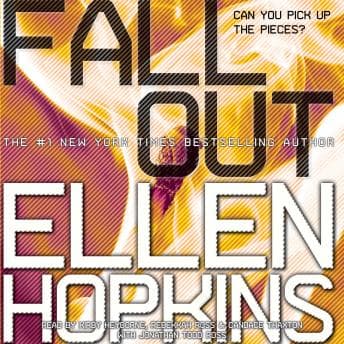
I knew going in that Ellen Hopkins doesn't pull punches. I'd listened to the first two books in this trilogy during Sophie's newborn days—those endless 3 AM feeds when I needed something to keep my brain from melting. But *Fallout* hit different. Maybe because my kids are older now. Maybe because watching three teenagers navigate the wreckage their mother left behind feels uncomfortably close to every parenting fear I've ever had.
Hopkins has this gift for making you feel implicated in her characters' pain—I had the same unsettling reaction to Impulse, where I finished it feeling like I needed to call my kids' school counselor just to check in.Three Kids, Three Narrators, One Devastating Legacy
The four-narrator setup here is smart. Hunter, Autumn, and Summer each get their own voice actor, and you need that separation because these kids have never met. They share DNA and trauma, but nothing else. Jonathan Todd Ross brings this barely-contained rage to Hunter that made me grip my steering wheel during drop-off. Kirby Heyborne handles the male perspective with this wounded quality that never tips into self-pity. And Rebekkah Ross captures Summer's desperate need for love in a way that physically hurt to listen to.
The verse format—which sounds gimmicky until you actually hear it—works beautifully in audio. Hopkins writes these concrete poems where the shape of the words on the page matters, and somehow the narrators translate that visual rhythm into something you can feel. Pauses land where they should. Emphasis falls on the right syllables. At nine hours, it's long enough to feel substantial but short enough that I actually finished it in a week. (High praise from someone whose Audible library is 40% abandoned books.)
The Stuff That's Hard to Hear
Look, I need to be real with you: this book has content. Abuse. Addiction. Sexual assault. Language that made me grateful my seven-year-old was wearing headphones watching Bluey in the backseat. If you're looking for a cozy escape, this ain't it.
But here's what Hopkins does that I appreciate—she doesn't exploit the trauma. These kids aren't defined by what happened to them. Hunter's struggling with his girlfriend and his job and his anger, and yes, that anger comes from somewhere dark, but he's also just a nineteen-year-old trying to figure out life. Autumn's alcoholic grandfather and crumbling family situation feels painfully real without feeling like poverty tourism. Summer's foster care journey broke my heart, but it also showed her resilience.
The news article interludes—read by Candace Thaxton—provide these jarring reality checks. You're deep in one kid's perspective, feeling their pain, and then suddenly you're hearing a clinical news report about "the Kristina Snow case" and you remember that this family's tragedy became public entertainment. It's uncomfortable in the best way.
What Survived 47 Pauses
Here's my test for any audiobook: can I pause it when Sophie wakes up screaming, deal with a diaper situation, referee a fight between Emma and Lucas about whose turn it is on the iPad, and come back without being completely lost?
*Fallout* passes. Barely. The three-perspective structure actually helps because each section is clearly delineated. When I'd come back from toddler chaos, I could usually remember "okay, I'm with Autumn now, she's the one living with her aunt." The verse format means natural stopping points every few minutes.
What doesn't survive interruption as well: the emotional momentum. There's a scene toward the end—I won't spoil it, but it involves Hunter finally confronting some hard truths—that I had to pause three times for kid stuff. By the time I got back to it, I'd lost some of the building tension. Not Hopkins' fault. Not the narrators' fault. Just the reality of listening to heavy material in two-minute increments.
Who Needs This (And Who Should Run)
Your book club will love this if your book club likes to ugly-cry together. Seriously, this is discussion-group gold—so much to unpack about generational trauma, addiction, the foster care system, what we owe our parents versus what we owe ourselves. Perfect for parents who want to understand what their teenagers might be reading, fans of Hopkins' other work, or anyone who thinks verse novels are pretentious until they actually try one.
Skip it if you need happy endings (this one is hopeful but earned, not wrapped in a bow), you're triggered by addiction or abuse content, or you're looking for something light. Also maybe skip if you're going through your own family stuff right now—this might hit too close.
On the lighter end of the emotional spectrum, Such a Fun Age scratched a similar itch for me when I needed something character-driven but didn't have another brutal week left in me.Sitting in the Garage, Engine Off
I finished the last hour parked in my garage, tears streaming down my face, knowing I should go inside because dinner wasn't going to make itself. But I couldn't stop. These three kids, finding each other, finding themselves, choosing to break the cycle—it got me.
Not groundbreaking in the sense that Hopkins has been doing this for years. But sometimes you don't need groundbreaking. Sometimes you need a story that reminds you why you're trying so hard to get it right with your own kids. Why the endless snacks and the referee-ing and the 47 pauses matter.
Made me cry at school pickup. Worth it though.