
This book is a psychological operation. And I mean that as a compliment.
I finished it at 0300, sitting in my truck outside a client's facility after a late-night security assessment. Ranger was snoring in the back seat. The parking lot was empty, the kind of industrial quiet that amplifies every thought. Perfect conditions for a book that crawls inside your head and sets up camp.
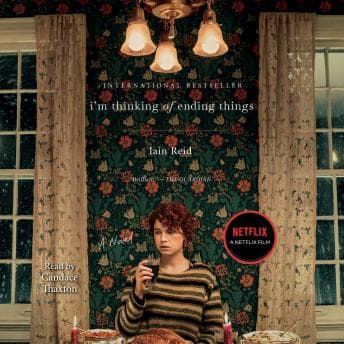
Iain Reid's debut is barely over five hours, but it packs more psychological punch than thrillers twice its length. The premise is deceptively simple: a young woman is driving with her boyfriend Jake to meet his parents at their remote farmhouse. She's thinking of ending things—the relationship, that is. Or is she?
The Slow Burn That Actually Burns
Let me cut to the chase: this isn't a thriller in the traditional sense. No gunfights, no car chases, no ticking clock on a bomb. The tension here is entirely internal, built through repetition, strange details that don't quite add up, and a narrator whose reliability you start questioning about an hour in. Reid layers unease the way a good interrogator builds pressure—so gradually you don't realize how uncomfortable you are until you're already there.
The farmhouse scenes with Jake's parents are genuinely unsettling. Something's off about every interaction, but you can't put your finger on what. I've been in situations where my gut screamed "wrong" before my brain caught up. This book captures that feeling perfectly.
Now, the ending. Some listeners hated it. Called it confusing, unfulfilling after all that buildup. I get it—if you're expecting a neat resolution with all the pieces clicking into place, you'll be frustrated. But here's the thing: the ending isn't meant to satisfy. It's meant to disturb. And it does. I sat in that dark parking lot for a good ten minutes afterward, just processing. That's not nothing.
Thaxton's Voice: A Strategic Choice
Candace Thaxton's narration is interesting. Her voice has this chirpy quality that initially seems wrong for the material—too bright, too normal. I almost switched to something else in the first twenty minutes. But stick with it. That ordinariness becomes part of the horror. She sounds like someone you'd meet at a coffee shop, someone completely unremarkable. And as the story gets stranger, that normalcy starts feeling deeply wrong.
The narration is essentially stream-of-consciousness from the female protagonist's perspective, so there's not much character differentiation to evaluate. Thaxton handles the introspective passages well, keeping you engaged during moments that could easily drag. She adds an atmospheric quality that—according to listeners who've seen the Netflix adaptation—actually outperforms the film in terms of pure creepiness.
Who Should Listen (And Who Should Bail)
If you need action to stay engaged, skip this. If you get impatient with slow pacing and internal monologue, skip this. If you need every plot thread tied up neatly, definitely skip this.
But if you appreciate psychological horror that works on you like water eroding stone—slowly, persistently, inevitably—this is worth your time. It requires focus. Don't try to listen while doing anything else. This isn't background material. It's the kind of book that demands you meet it on its terms.
I've read comparisons to Lionel Shriver and Michel Faber, and I see it. White Oleander works the same way—that slow accumulation of dread that stays with you long after the last page. There's that same sense of creeping unease, that same willingness to make the reader work for understanding. Reid clearly did his homework on how to construct dread.
Mission Debrief
At five hours, it's a minimal investment for maximum psychological impact. The pacing is deliberate—some would say slow—but it serves the story's purpose. Thaxton's narration grows on you, transforming from a potential weakness into an unexpected strength.
This isn't a book you'll enjoy in the traditional sense. You'll feel unsettled, confused, maybe even a little disturbed. But you'll also be thinking about it days later, which is more than most thrillers can claim.
Ranger slept through the whole thing. Lucky dog. Some of us have to carry these stories around in our heads.