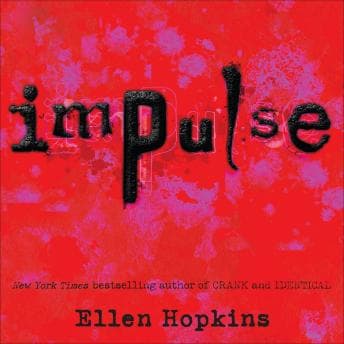

I wasn't on the Caltrain when I listened to this. Couldn't be.
It was 11 PM on a Tuesday, Kevin already asleep, and I was sitting in the dark kitchen with my headphones on because some books demand that kind of attention. Impulse is one of them. This isn't a commute book. This is a sit-down-and-focus book, and I say that as someone who's debugged memory leaks while half-listening to epic fantasy.
Three Voices, Three Threads, Zero Filler
Ellen Hopkins writes in free verse, which I'll admit made me skeptical going in. Poetry in audiobook form? Sounds like a recipe for pretentious disaster. But here's the thing—it works. The format means every line hits deliberately. No padding. No filler chapters that could've been blog posts. Just raw, stripped-down emotion delivered in bursts.
The three-narrator setup is basically load balancing for your emotions. Belle Sauvage uses a similar technique with its dual narrators, though there the emotional weight gets distributed across a completely different kind of coming-of-age story. Jeremy Guskin takes Connor—the rich kid whose parents see him as a portfolio asset rather than a son. Laura Flanagan voices Vanessa, who cuts herself and cycles through manic episodes. Steve Coombs handles Tony, who killed his mother's boyfriend after years of abuse and is now wrestling with his sexuality in a system that has no idea what to do with him.
Each narrator owns their character completely. Guskin's Connor sounds exactly like the kind of guy who's been taught to perform perfection—there's this brittleness underneath the polished exterior that cracked me open. Flanagan's Vanessa shifts between manic energy and depressive flatness in a way that felt uncomfortably accurate. And Coombs brings this guarded vulnerability to Tony that made me want to reach through my headphones and tell him he's going to be okay.
The Psychiatric Hospital as Debug Environment
Okay, weird metaphor, but hear me out. These three kids are in Aspen Springs, a psychiatric facility, essentially trying to trace back through their own code to find where things went catastrophically wrong. The hospital setting forces them into proximity, and their stories start threading together—group therapy sessions, stolen moments, the weird intimacy of being broken in the same place at the same time.
Hopkins doesn't romanticize any of it. The suicide attempts aren't dramatic plot devices. The self-harm isn't aestheticized. It's ugly and scary and presented with the kind of honesty that made me pause the audiobook more than once just to breathe. The timing of the narration—the pauses, the way the readers let certain lines hang—amplifies everything. There's this visceral quality to the performance that feels less like acting and more like testimony.
Listen If / Skip If
Let me be direct: this audiobook has content warnings for a reason. Abuse, violence, sexual content, discussions of suicide and self-harm. If any of those are triggers for you, skip this one. Full stop.
But if you work with teens, have teens, were a teen who struggled (hi, yes, that was me), or just want to understand what it feels like inside the minds of kids who've been pushed to breaking point—this is essential listening. It's the kind of book I wish had existed when I was fifteen and didn't have words for what I was feeling.
Also surprisingly good for anyone in tech who's ever wondered why we're so bad at building mental health support systems. Think Like a Freak actually touches on this kind of systems thinking from a completely different angle—it's about retraining how you approach problems, which feels relevant when you're looking at broken institutional design. Hopkins captures the gaps—the way institutions fail these kids even while trying to help them. Made me think about all the ways we design systems that work on paper but break in production when humans are involved.
Not a Background Listen
At 6 hours 50 minutes, this is technically commute-length. But I'm not recommending it for the train. You need to be present for this one. The free verse format means your attention can't drift—miss a line and you've missed a beat. Plus, honestly? You might cry. I did. On the kitchen floor at midnight like a reasonable adult.
The production is clean—no music, no sound effects, just the three voices rotating through their stories. That simplicity serves the material. Anything more would feel manipulative.
Worth the Processing Power
Is this audiobook "worth" your time? Weird question for a book about kids trying to survive their own minds. But yes. The narration elevates already powerful material into something that burrows under your skin and stays there. I finished it three days ago and I'm still thinking about Tony's voice when he talks about what happened to him.
This is basically The Breakfast Club but for the psych ward generation, and somehow more honest than anything I read as a teen about mental health. The three narrators don't just read the book—they inhabit these kids so completely that by the end, you forget you're listening to actors at all.









