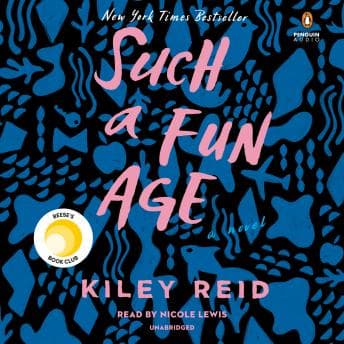

Look, I started this one during a particularly chaotic school drop-off line and finished it three days later hiding in my car. That's high praise from me. Ten hours of audiobook time is basically a week of my life, and I didn't want to pause once. Well, I had to pause approximately 847 times because toddlers, but I never wanted to.
The Grocery Store Scene That Hooked Me
The book opens with Emira, a young Black babysitter, getting accused of kidnapping the white toddler she's watching. In a grocery store. At night. And someone films it. I was white-knuckling my steering wheel during this scene, and I wasn't even driving yet. Kiley Reid doesn't ease you into the discomfort—she drops you right into it. And honestly? That's exactly how these moments happen in real life. No warning, no buildup, just suddenly you're in the middle of something awful.
What got me was how the book doesn't make it simple. Emira is understandably furious. Her employer Alix is horrified and wants to fix everything. But the way Alix wants to fix it—that's where it gets complicated. Because sometimes the desire to help is really about making yourself feel better. (Don't we all know someone like that? I might be someone like that sometimes. Ugh.)
Nicole Lewis Absolutely Nails It
Okay, so here's the thing about this audiobook: Nicole Lewis is doing something really impressive with her voice work. She's got distinct voices for every character, but it's not just accents or pitch changes—it's the energy behind each person. Emira sounds genuinely 25 and aimless in that specific way where you're old enough to know you should have a plan but young enough to not have one. Alix sounds like every wellness influencer who's ever made you feel inadequate about your morning routine.
The code-switching is chef's kiss. Lewis moves between Emira's conversations with her friends versus her employer so naturally that you feel the shift in how Emira presents herself. That's not easy to pull off. I've listened to audiobooks where the narrator is technically good but you never forget you're listening to one person doing voices. Here, I forgot. I was just... in it.
Small caveat: she pronounces "Alix" in a way that some people find annoying. I didn't notice until I read other reviews, but now I can't unhear it. Sorry in advance.
Why This Hit Different for Me
I used to work in corporate. I've been the only one in meetings. I've had well-meaning colleagues try to "connect" with me in ways that made everything worse. So watching Alix try so desperately hard to be the good white employer—inviting Emira to stay for dinner, asking about her love life, wanting to be friends—made me deeply uncomfortable. Not because Reid is heavy-handed about it. The opposite, actually. She's so subtle that you find yourself understanding Alix even while you're cringing at her.
And Emira isn't a saint either. She's broke, she's directionless, she's sometimes petty. She's a real person, not a teaching moment. I appreciated that so much. Too many books about race make the Black characters into lessons for white readers. This one just... lets everyone be messy. That messiness is something I appreciated in Lost World too, though in a completely different context.
The twist—because there is one—I didn't see coming. I won't spoil it, but it connects Alix and Emira in a way that reframes everything. I actually gasped. In the Target parking lot. A mom walking by gave me a look.
The Slow Parts (Being Honest)
The middle drags a tiny bit. There's a lot of Alix's backstory about her high school days and her career and her marriage, and while it all pays off later, I did zone out during a few of those sections. (To be fair, Sophie was screaming about a goldfish cracker, so maybe that was the problem.) But the last third? I could not stop. I stayed in the garage an extra twenty minutes and my husband came out to check if I was okay.
The ending isn't neat. Some people hate that. I actually loved it because—and this is going to sound weird—it felt earned. Life doesn't wrap up with everyone learning their lesson and becoming better people. Sometimes people just... keep being themselves. That's frustrating and also true.
Who Should Listen (And Who Should Skip)
If you want something that'll make you think without feeling like homework, this is it. Perfect for book club if you want actual discussion instead of everyone just saying "I liked it." Great for commutes because it's easy to follow even with interruptions. The pacing is conversational enough that you won't get lost if you have to pause mid-scene.
Skip if you want a feel-good ending or if you're not in the headspace for stories about race and privilege. This one sits with you. I'm still thinking about it a week later, which is saying something considering I can barely remember what I had for breakfast.
Nicole Lewis won an Earphones Award for this narration, and yeah, she earned it. The book is smart and uncomfortable and funny in unexpected places. Exactly what I needed during car-time therapy sessions.