
I was reorganizing the horror section at the library—yes, at 8 PM, because someone has to alphabetize the Stephen King overflow—when I realized I'd been standing motionless for twenty minutes. Shirley Jackson's The Haunting of Hill House was in my hand, but I wasn't seeing it. I was on a storm-battered island off the coast of Scotland, watching a German spy and a lonely woman circle each other like wolves.
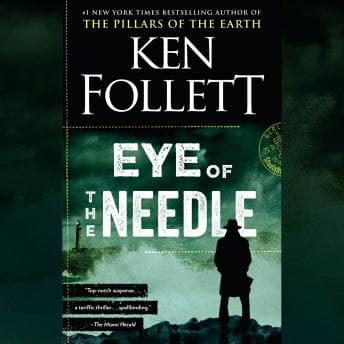
Ken Follett's Eye of the Needle had me. Completely.
The Monster Wears a Human Face
Here's what Follett understands that so many thriller writers don't: the scariest villains are the ones you almost root for. Henry Faber—code name "Die Nadel," the Needle—is a killer. Cold, efficient, leaving bodies like breadcrumbs across wartime Britain. But Samuel West doesn't play him as a monster. He plays him as a man. Cultured. Intelligent. Lonely in a way that feels almost... relatable?
That's the horror of it. West's German aristocrat isn't a cartoon Nazi. He's someone you could have a conversation with at a dinner party. Someone who reads poetry. Someone who, when he meets Lucy on that isolated island, seems genuinely capable of connection. And then you remember what he's done. What he'll do.
My podcast listeners know I'm obsessed with the banality of evil as a horror concept. This book gets it. This narrator commits to it.
Lucy Deserved Better (And That's The Point)
The woman at the center of this story is trapped long before Faber arrives. Married to a bitter, wheelchair-bound husband. Isolated on an island with a small child. Starving for human touch, human warmth, human anything. When the handsome stranger washes ashore, of course she's drawn to him.
West voices Lucy with this quiet desperation that made me genuinely uncomfortable—in the best way. The romantic scenes (and yes, there are romantic scenes, more than the film adaptation included) aren't gratuitous. They're tragic. You're watching a woman fall for someone who might destroy everything she loves, and you understand why.
I listened to those island chapters during a late shift at the library, alone in the stacks after closing. Mistake? Probably. The storm outside the windows wasn't helping. But horror—and make no mistake, this is horror wearing a spy thriller's clothes—demands that kind of immersion.
Samuel West Understands the Assignment
Let me be clear: this is a clinic in single-narrator performance. West doesn't do "voices" in the cartoonish sense. He does people. His British RP provides the baseline, but the subtle shifts—Faber's clipped precision versus Lucy's husband's bitter edge versus the various military men hunting the Needle—create distinct humans without ever feeling like a one-man radio play.
The pacing is deliberate. Some listeners recommend 1.25x speed, and I get it—Follett builds slowly, methodically, the way a real manhunt would unfold. But I'd argue against rushing. The tension lives in that slowness. The dread accumulates.
By the final scenes—and I won't spoil them, but tears were involved, which is not something I admit lightly—West has you so invested that the resolution feels earned. The epilogue hit me harder than any jump scare.
Who Should Brave the Storm
This is for you if: you want a thriller that respects your intelligence, if you appreciate slow-burn dread over cheap thrills, if you've ever wondered what it would feel like to realize the person you love is a monster. Skip it if: you need constant action, if WWII settings bore you, or if you're looking for something light. This isn't light. There's violence. There's sexual content. There's moral complexity that doesn't resolve neatly.
The Edgar Award it won in 1979? Deserved. This is the book that made Ken Follett, and listening to it now, you understand why.
Shirley Would Approve
I don't say this often about spy thrillers, but: this understands that horror isn't about gore—it's about dread. Last Trial operates on similar principles—the real terror comes from watching someone methodical at work. The monster here isn't supernatural. He's human. He's charming. He's holding a knife.
Samuel West's performance transforms what could have been a competent historical thriller into something that lingers. I finished it three days ago. I'm still thinking about Lucy on that island, making her impossible choice.
My cat Shirley was unimpressed when I finally turned off the audiobook at 2 AM. I was not. I was deeply, uncomfortably impressed.
Finally, a thriller that respects the genre.