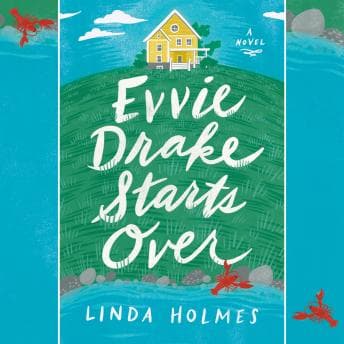

Is it weird that I find a book about a dead husband relaxing?
Look, I work trauma. I see the worst days of people's lives five nights a week. Usually, when I leave the hospital at 07:00, I need something loud to drown out the beeping monitors in my head. But sometimes? Sometimes I just need humans acting like humans.
I picked this up thinking it was a standard rom-com. You know the type—boy meets girl, miscommunication, grand gesture, the end. (And honestly, I usually eat those up). But Evvie Drake Starts Over isn't that. It's messier.
And messy feels way more real to me.
When Grief Doesn't Follow the Textbook
Here's the thing about grief—we expect tears, black veils, the whole Victorian mourning vibe. But in the ER, I see the other side. The shock. The numbness. The relief? Yeah, that too.
Evvie isn't just grieving; she's guilty because she was packing her bags to leave her husband right before he died. That hit me. The complexity of mourning someone you were falling out of love with (or who was emotionally controlling you—let's call a spade a spade) is something we don't talk about enough.
Linda Holmes writes dialogue that sounds like actual people talking, not characters reading a script. There's this moment where Evvie and Dean are just eating sandwiches and talking about nothing, and I found myself nodding at the dashboard. It's that comfortable silence you only get with people who get it.
The Voice in My Passenger Seat
Can we talk about Julia Whelan for a second?
If she narrated a manual on how to clean a catheter, I'd probably listen to it. She brought that same grounded quality to Educated, where the emotional weight could've crushed a lesser narrator. She has this way of doing male voices—Dean, the baseball player with the "yips"—that doesn't sound like a cartoon. It's grounded.
Dean has the "yips"—he physically can't throw the ball anymore because his brain is short-circuiting. As a nurse, seeing the physical manifestation of psychological stress? Spot on. We see it all the time. Stress isn't just in your head; it locks up your muscles. Whelan captures that frustration perfectly. You can hear the tension in Dean's jaw through her voice.
She nails the banter, too. It's fast, dry, and actually funny. I caught myself laughing out loud on the I-10, which is dangerous because people drive like maniacs in Phoenix.
The Driveway Sit
Okay, so the romance. It's a slow burn. Like, really slow.
If you're looking for fireworks in chapter three, this isn't it. But for me? It worked. It felt like two adults figuring out their baggage before trying to merge their lives. (Which, let's be real, is how it should be. Don't get me started on the patients I see who moved in together after two weeks.)
There were moments where the plot felt a little thin—mostly just daily life stuff—but I didn't mind. I sat in my driveway for ten minutes this morning just to finish a chapter before going inside to tackle the breakfast rush. My husband Carlos knocked on the window to ask if I was okay. I told him I was just listening to baseball talk.
He didn't buy it.
Who's This For?
Listen if you want romance that doesn't rush, characters working through real emotional baggage, and dialogue sharp enough to keep you awake after a twelve-hour shift. Skip if you need constant plot momentum or want your love stories wrapped up by the halfway mark.
Clocking Out
It's warm, it's smart, and it treats trauma with the respect it deserves without being depressing. Perfect for the drive home when you've seen too much reality and just want a little bit of hope.