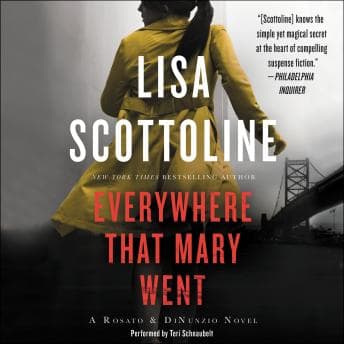

Lisa Scottoline's debut novel is not horror. Let me get that out of the way. But as someone who has spent a decade dissecting what makes dread work — the mechanics of it, the slow tightening in your chest — I picked this up because a stalker thriller should understand dread. The premise is there: Mary DiNunzio, overworked Philadelphia lawyer, starts getting phone calls timed perfectly to her arrivals and departures. Someone is watching. Someone is following. That's a setup that, in the right hands, should make your skin crawl.
And honestly? The book half-delivers on that promise. The other half is… complicated.
The Dread That Almost Was
I was shelving returns at the library on a Saturday afternoon — one of those gray Oregon days where the fluorescent lights hum just a little too loud — and I had this playing through my earbuds. The early chapters do something smart: they let Mary's paranoia build incrementally. The phone rings at the office. Then at home. Then the pattern becomes undeniable. Scottoline, to her credit, understands that the scariest part of being stalked isn't the confrontation — it's the not-knowing. The looking over your shoulder. The second-guessing whether you're imagining things. Before the Storm does something similar with that slow erosion of certainty — and it never loses the thread the way this one does.
But then the book keeps pulling you out of that tension to deal with law firm politics, partnership drama, and romantic subplots that feel imported from a different novel entirely. Mary's trying to win a big antitrust case while also grieving her dead husband while also flirting with two different men while ALSO being stalked. It's a lot of plates spinning, and the stalker thread — the one I showed up for — sometimes gets buried under legal procedure and office dynamics.
Scottoline's legal knowledge is clearly deep, and Mary as a character has a sharp, self-deprecating Italian-American voice that feels lived-in. Her relationship with her parents, her Catholic guilt, her working-class roots clashing with the polished world of big law — that stuff rings true. But I kept wanting the book to lean harder into the fear. When it finally does in the last act, it moves fast and hits hard. The problem is it takes a while to get there.
Teri Schnaubelt and the Anger Problem
Okay, here's where I have to be honest, because the narrator makes or breaks a thriller in audio form. And Teri Schnaubelt's performance is… a choice.
She does suspense well. In the moments where Mary is alone, hearing footsteps behind her, sensing someone in the shadows — Schnaubelt commits. There's genuine tension in her delivery during those scenes. I'll give her that.
But there's this persistent edge of anger in her read that colors everything. Mary thinking about her dead husband? Angry. Mary joking with her best friend? Still angry. Mary eating dinner with her parents? Somehow also angry. It flattens the emotional range of the character into one register, and after a few hours it starts to grate. Mary DiNunzio is supposed to be funny, anxious, grieving, stubborn, scared — she contains multitudes. But in this performance, she mostly just sounds pissed off.
The narrator commits in the suspense scenes. That's rare. But commitment to one emotional note across nine hours isn't range — it's a limitation. And it makes the quieter, warmer moments feel off. Mary's banter with her law school friend Judy Carrier should crackle with warmth and humor; instead it comes across like two people having a tense disagreement.
I bumped the speed to 1.25x around hour three, which actually helped — it moved through the flatter stretches faster and gave the pacing a slight urgency that the default speed was missing.
Who Gets Followed Home With This One
If you're a legal thriller fan who wants a competent, quick-read mystery with a strong female lead and a Philly setting that feels authentic, this will work for you. Scottoline clearly knows her courtrooms and her Italian-American family dynamics. If you're coming to this for the stalker element expecting something like You or Ruth Ware-level psychological claustrophobia, you'll be waiting a while for the payoff.
And if narrator tone matters to you — and if you're listening to audiobooks, it should — know that Schnaubelt's performance is polarizing. I didn't hate it, but I noticed it constantly, and in audio that's almost worse. You want to disappear into the story, not keep thinking about why everyone sounds like they're about to throw a stapler.
Shelving This One Under 'Decent, Not Essential'
This is a solid debut. Not great, not bad. Scottoline would go on to write much stronger entries in this series — and knowing this is book one, I can feel her finding her voice, testing what works. The bones are good. The stalker payoff in the final stretch genuinely had me looking up from my cart of returns and checking the empty aisles of the library. But nine hours is a lot of investment for a last-act reward, especially when the narrator is fighting against the material's emotional variety.
Shirley (my cat) was unimpressed. For once, I kind of agreed with her.