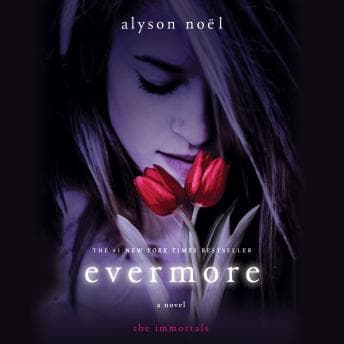

"I'm not psychic, I'm just cursed."
That line hit around hour two, and I actually paused my thesis procrastination to appreciate it. Look, I picked up Evermore because my D&D group's been running a campaign with a psychic NPC, and I wanted inspiration for how to roleplay someone who hears everyone's thoughts involuntarily. What I got was... well, it's complicated.
When Your Magic System Is Actually Trauma Response
Here's what Noël does that I genuinely respect: Ever's abilities aren't cool. They're overwhelming, isolating, and she drowns them out with hoodies and iPods cranked to max volume. That's not the typical "chosen one discovers awesome powers" arc. That's a kid who survived a car crash that killed her entire family and now can't touch anyone without experiencing their whole life story. The progression isn't satisfying in the Sanderson sense—there's no hard magic rules or clever limitations—but the emotional logic tracks. She's not learning to be a superhero. She's learning to be a person again.
Damen Auguste, the mysterious love interest, is exactly what you'd expect from 2009 YA paranormal romance. Gorgeous. Wealthy. European-adjacent. Shows up with tulips that shouldn't exist. Can silence the noise in Ever's head just by existing near her. If you've read Twilight (and let's be honest, we all have), you know this dance. But the audiobook adds something the page can't: Katie Schorr's raspy voice selling Ever's internal chaos.
Katie Schorr: Youthful Energy, Limited Range
Schorr has this naturally young, slightly rough voice that works perfectly for Ever's narration. When Ever's spiraling about whether Damen is dangerous or just mysterious, Schorr nails the breathless teenage uncertainty. The emotional beats land—I'll admit I felt genuine tension during the accident flashbacks.
But here's where my D&D brain got frustrated: character differentiation is basically nonexistent. Ever's best friend Haven sounds like Ever. Damen sounds like Ever but slower. The mean girl sounds like Ever but snippier. In a tabletop game, if your DM used the same voice for every NPC, you'd lose track of who's talking within five minutes. Same problem here. I had to rewind a few times during group conversations because I genuinely couldn't tell who was speaking.
Schorr doesn't drop her pitch for male characters or add any distinctive vocal texture for the supporting cast. It's not bad narration—it's just flat where it should be dimensional. She was apparently pretty new to audiobook work when this was recorded, and it shows. The spirit is there. The technique isn't quite.
The Immortal Question: Is This Actually Fantasy?
Okay, thesis-avoidance tangent: I've been thinking about how we categorize paranormal romance versus urban fantasy. Evermore sits in this weird middle space. There's definitely supernatural elements—auras, immortality, psychic powers—but the world-building is pretty thin. Tower Lord goes the opposite direction with its fantasy elements, building out every political and magical detail. We don't get detailed explanations of how any of it works. We get vibes. We get mystery. We get Ever falling helplessly in love while trying to figure out what Damen actually is.
If you're here for Sanderson-level world-building, this isn't for you (but you're wrong about needing that in every book). If you do want that detailed magic system satisfaction, Theft of Swords delivers exactly that kind of fantasy construction. Evermore is mood over mechanics. It's about the feeling of being sixteen and broken and meeting someone who makes the world quiet for the first time since your family died. That's the magic system, really—not the psychic powers, but the desperate hope that connection is still possible after loss.
Eight Hours of Teen Angst: Worth Your Time?
I listened to this across three late-night coding sessions when I should've been working on my procedural generation algorithm. (Sorry, Dr. Patel.) At eight hours, it's not a massive commitment, and Schorr's voice is genuinely easy on the ears even when the character work is lacking.
The story moves well enough. There's a mystery about Damen's past, some mean girl drama, a Halloween party that goes sideways, and an ending that's clearly sequel-bait. The f-bombs are sparse but present, so maybe don't play this around younger kids. The romance is fairly chaste by modern standards—lots of intense staring and electric touches, nothing explicit.
Roll for Nostalgia: Who This Is (and Isn't) For
Skip this if you need your supernatural fiction to come with a rulebook. My D&D group would find the psychic mechanics underdeveloped, and if vague "it just works" magic systems make you twitch, you'll be frustrated. Also skip if you need distinct character voices—the narration will drive you up a wall.
But if you're in the mood for early-2000s paranormal romance nostalgia? Schorr's earnest delivery carries it further than it probably deserves to go. This is comfort food audiobook listening. It's not going to blow your mind or make you rethink the genre. My group would probably enjoy roasting the Damen-is-definitely-a-vampire-right? mystery while half-listening during a long rest.
Just maybe listen at 1.25x to keep the momentum going through the slower relationship-building sections. And if you're avoiding your thesis, well—there are worse ways to procrastinate.