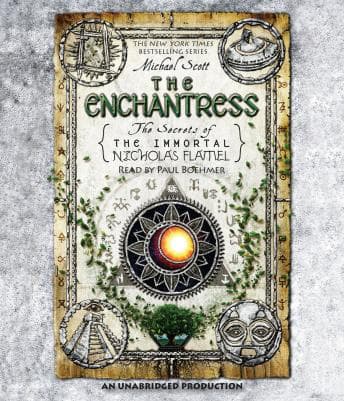

Look, I need to rant for a second. This series has been sitting in my Audible library for years, and I kept bumping it down the queue because — let's be honest — the Bustle quote on the cover comparing it to Harry Potter felt like a red flag. Every YA fantasy series gets that comparison. But I finally got to The Enchantress because I'd burned through my Stormlight re-listen (again) and needed something to fill the void while I was pretending to debug my procedural generation code at 1 AM. And here's the thing that caught me off guard: this finale actually pulls off something I wasn't expecting from a series I'd been half-paying-attention to.
Every Myth Gets Its Moment (For Better and Worse)
Michael Scott's whole deal with this series is the mythological kitchen sink approach. Joan of Arc, Shakespeare, Scathach, Prometheus, Palamedes — they're all running around Danu Talis, which is basically Atlantis, and the book treats this like it's totally normal. And honestly? By book six, it kind of is. The world-building here isn't Sanderson-level systematic — there's no hard magic system with clear rules and costs that make you want to diagram it on a whiteboard. It's more like... mythological jazz? Scott riffs on every pantheon he can get his hands on and trusts that the sheer density of references will carry the weight. It's the same loose, riff-driven world-building Michael Scott pulls off in Magician, though that one's a tighter read overall.
This works about 70% of the time. When it works, it's genuinely cool — the idea that all human myths are distorted memories of the Elders and Danu Talis is a premise that my D&D group would love, and Scott commits to it fully in this book. The twins' prophecy ("the two that are one must become the one that is all") finally pays off, and the resolution of Sophie and Josh's arc has actual stakes. Josh's choices in particular hit harder than I expected from a YA series. It reminded me why I keep coming back to YA that respects its readers — Gregor and the Curse of the Warmbloods pulls the same trick with genuinely brutal stakes.
But when it doesn't work — and some listeners have flagged this across the whole series — the mythological asides feel like someone opened a Wikipedia tab on Celtic mythology and forgot to close it. There are stretches where characters exposition-dump about Elder politics and ancient alliances that don't move the plot forward. Now, I'm someone who will defend info-dumps with my dying breath (if you don't like info-dumps, this isn't for you, but you're wrong), and even I felt my attention drift during some of those middle chapters. At 14 hours, there's room to trim.
Paul Boehmer is Doing the Heavy Lifting
Here's what surprised me during this listen. Paul Boehmer is juggling a cast of — I counted — at least a dozen major characters from different countries, time periods, and species, and he gives each one a distinct voice that I could identify within a sentence or two. His Shakespeare has this theatrical, slightly self-amused quality that's different from his gruff Prometheus, which is different from his Joan of Arc. In dialogue-heavy chapters — and there are a LOT of dialogue-heavy chapters in this book — that differentiation is the difference between following the scene and getting completely lost.
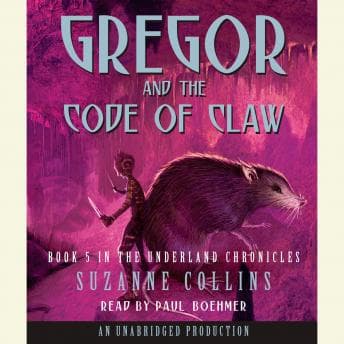
I wouldn't put him in the Steven Pacey tier (Steven Pacey walked so other narrators could run, and I will never stop saying this), but Boehmer is a solid, professional narrator who clearly studied the source material. In fact, his work on Underland Chronicles Book Five: Gregor and the Code of Claw convinced me he's one of the more underrated voices in YA fantasy audio. No weird pronunciation stumbles that pulled me out of the story. No moments where two characters suddenly sounded identical. For a YA fantasy audiobook, this is above-average narration work.
The Progression Is Satisfying (If You've Done the Homework)
Here's the catch, and I want to be upfront about this: The Enchantress is book six of six. This is a finale. If you haven't listened to the first five books, you will be completely lost. Scott doesn't hold your hand. Characters reference events from The Alchemyst through The Warlock constantly, and the emotional payoffs — the Flamels' mortality clock ticking down, the twin prophecy, the fates of the immortal humans — only land if you've been on this ride from the start.
If you HAVE been on this ride? The progression is satisfying. Threads that were planted in book one actually pay off. The Flamels' final day — which the whole book builds toward — carries genuine weight. And the resolution of the twin prophecy is not what I expected, which in a YA series is saying something.
Who This Is For (and Who Should Bail)
If you love mythological mashups, if your ideal fantasy is "what if every historical and mythological figure was secretly connected," and if you've got the patience for a six-book commitment — this series is worth your time, and this finale sticks the landing better than most. If you need hard magic systems with clear rules, or if mythological info-dumps make you reach for the skip button, you'll bounce off this hard.
I read this instead of writing my thesis. Dr. Patel would not approve. But the Flamels' last day hit me harder than expected at 2 AM with cold coffee and a compiler error I'd been ignoring for three hours. Sometimes that's all you need from a book.
Roll Credits, Close the Codex
Six books. Done. The series has its rough patches — pacing issues in the middle books, mythology overload, YA conventions that occasionally feel limiting — but The Enchantress closes it out with enough payoff to justify the journey. Boehmer's narration is consistent and clear across the whole series. Not a must-listen on its own, but as a series finale for invested listeners? Worth the credit.