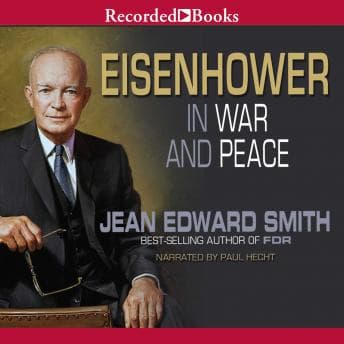
What makes a five-star general hesitate before ordering men into combat? And what does that same man do when politicians want him to start World War III?
I finished this one at 0300 on a Tuesday, couldn't sleep anyway—old habits from deployment never quite die. Ranger was snoring at my feet while Paul Hecht walked me through Ike's decision not to intervene in Hungary in '56. That moment hit me harder than I expected. Here's a man who commanded the largest amphibious invasion in human history, and he's choosing restraint when every hawk in Washington is screaming for action. That's leadership.
The General Who Understood Limits
Let me cut to the chase: Jean Edward Smith gets military command right. I've read too many biographies where authors treat generals like chess players moving pieces on a board. Smith understands that Eisenhower spent D-Day chain-smoking and pacing, that he wrote a letter taking full responsibility if Overlord failed—and kept it in his pocket. These aren't dramatic flourishes. That's exactly what command feels like when you're sending young men to die based on your judgment.
Smith's research is meticulous. He pulls from primary sources I hadn't seen before—personal correspondence, diary entries, declassified memos. The portrait of Eisenhower's relationship with Marshall is fascinating, and his complicated dynamic with Montgomery will make any veteran who's dealt with coalition politics nod in recognition. (Montgomery was apparently even more insufferable than the British documentaries suggest.)
The section on Korea and the nuclear option is where this biography earns its weight. Eisenhower inherited a stalemated war and pressure from his own party to use tactical nukes. He didn't. Understanding why requires understanding the man, and Smith delivers that understanding without hero worship or revisionist criticism.
28 Hours That Fly
Here's the thing about a 28-hour biography—it better justify every minute. This one does. Smith's pacing mirrors Ike's career: methodical buildup through the interwar years, then the tempo accelerates through WWII and barely lets up through two presidential terms. I listened at 1.25x and never felt lost.
Paul Hecht's narration is exactly what this material needs. No dramatic flourishes, no attempts to "perform" Eisenhower. Just clean, authoritative delivery that respects the subject matter. His nine Earphones Awards aren't accidental—the man knows how to handle dense historical material without making it feel like a lecture. By hour fifteen, I'd forgotten I was listening to a narrator at all. That's the goal.
The only sections that dragged slightly were the detailed accounts of Ike's early career postings. Necessary context, sure, but the Panama and Philippines chapters could've been tighter. Minor complaint for a work this comprehensive.
Where Smith Doesn't Flinch
I appreciated that Smith doesn't sanitize Eisenhower. The Kay Summersby situation is addressed directly. His handling of McCarthy—initially too cautious, eventually effective—gets honest treatment. The Little Rock decision and his complicated evolution on civil rights are presented without modern moralizing but also without excuses.
This is where lesser biographers fail. They either canonize their subjects or tear them down for contemporary points. Smith treats Eisenhower as what he was: a human being of extraordinary capability who made some decisions we'd criticize today while making others that prevented nuclear war. That balance is hard to achieve.
Who Should Saddle Up (And Who Should Stand Down)
If you're interested in mid-century American power—military and political—this is essential listening. Veterans will appreciate Smith's accurate portrayal of command dynamics. Anyone who thinks Eisenhower was just a caretaker president between FDR and Kennedy needs this corrective.
Skip this if you want a quick overview. At 28 hours, it's a commitment. But it's the kind of commitment that rewards patience. I've listened to shorter biographies that told me less.
Also worth noting: this pairs well with Smith's FDR biography. Understanding the Roosevelt-Eisenhower dynamic illuminates both men.
Mission Debrief
Jean Edward Smith wrote the definitive Eisenhower biography. Paul Hecht delivered it with the professionalism the subject deserves. I've recommended this to three clients already—executives who think leadership means making the loudest noise in the room. The ego problem in leadership isn't new—Ego and His Own wrestles with that same tension between personal drive and the damage unchecked ambition does to the people around you. Ike knew better. He knew when to act, when to wait, and when walking away from a fight was the bravest choice.
Ranger approved this one. Gave it a solid tail wag at the Korea chapters. He's got good instincts.






![Steve Jobs [unabridged audiobook] audiobook cover](/_next/image?url=https%3A%2F%2Fcovers.audiobooks.com%2Fimages%2Fcovers%2Ffull%2F9788499923406.jpg&w=1920&q=75)