
Look, I need to start with a confession that will probably get my academic credentials questioned: I listened to this while making dal makhani at 10 PM on a Tuesday, and somewhere between the tempering of cumin seeds and the chapter on Type O dietary restrictions, I found myself genuinely irritated. Not because the content was offensive — it's a diet book, not a manifesto — but because as someone who studies how people construct narratives about themselves, this book is a fascinating case study in how badly we want our biology to be our destiny.
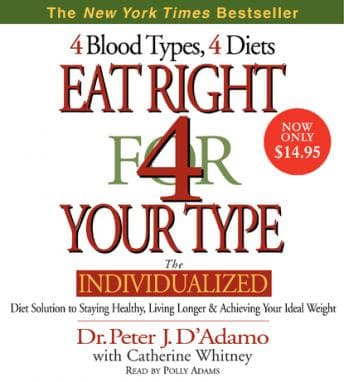
Here's the thing. D'Adamo's central premise is that your blood type — O, A, B, AB — determines what you should eat, how you should exercise, even how you handle stress. Type O? You're the ancient hunter. Pile on the protein, skip the wheat, go hard at the gym. Type A? You're the agrarian. Go vegetarian. Meditate. Be gentle with yourself. And psychologically, this doesn't track for me. Not the diet science (I'll leave that to the nutritionists currently pulling their hair out), but the identity construction. The protagonist of this book — and yes, the reader IS the protagonist — exhibits classic confirmation bias patterns. You hear "Type O should avoid wheat," you remember that time bread made you bloated, and suddenly you've got a blood-type origin story.
My therapist would have thoughts about this character. By which I mean you. By which I mean all of us.
The Abridged Problem Nobody Warned You About
So here's where I got genuinely frustrated, and not in the intellectually-stimulated way. This audiobook is abridged. Three hours. And not just trimmed-around-the-edges abridged — we're talking radically incomplete. The book promises guidance for all four blood types, but what you actually get is heavy coverage of Type O, some attention to Type AB, and Types A and B get... what, a passing mention? If you're Type A — like, say, a researcher who was genuinely curious whether her blood type explained her preference for vegetarian cooking — you're basically left holding an empty plate.
I found myself asking: why does a book organized around four distinct categories only deliver on one and a half of them? That's like writing a murder mystery where you only interview two of the four suspects. The research actually shows that when people feel excluded from a framework that promises universal applicability, trust erodes fast. And that's exactly what happens here. If you're not Type O, this audiobook is essentially a three-hour tease.
Polly Adams Deserves Better Material
Now, credit where it's earned. Polly Adams narrates with this warm, efficient delivery — like a really good talk-radio host who happens to be reading your lab results. She's no-nonsense without being cold. She handles the medical terminology and the dietary lists without making it sound like she's reading a phone book, which is harder than you'd think for this kind of content. Her pacing is steady, her tone is reassuring, and honestly, she's the reason I didn't abandon this somewhere around the wheat-avoidance section.
But here's my issue: Adams is doing solid work with material that's been gutted. She's performing an abridgment that strips away the very specificity that would make this useful. It's like hiring a fantastic actress and then cutting three-quarters of her scenes.
The Psychology of Why This Book Sells Anyway
What makes this book compelling — and I say this as someone who's skeptical of the science — is that it offers what every human craves: a clean narrative about who you are. You're not just someone who gets tired after pasta. You're a Type O. You have an ancestral profile. Your body has a story, and that story explains everything.
This is identity construction 101. We are pattern-seeking creatures who would rather have a wrong explanation than no explanation at all. Power Thoughts operates on the same psychological lever — give people a tidy system for their inner chaos and they'll follow it anywhere, evidence optional. D'Adamo understands human nature in the sense that he understands what people want to hear. Whether the underlying science holds up is... well, let's just say my psychology training makes me very aware of the difference between correlation and causation, and this book lives in that gap like it's paying rent there.
The recommendations themselves — eat more vegetables, exercise appropriately for your body, manage stress — are fine. Good, even. But you don't need a blood-type framework to arrive at "eat well and move your body." The framework is the product. The framework is the story.
Who This Is Actually For (And Who Should Walk Away)
If you're Type O and you want a quick, pleasant listen that gives you a structured dietary starting point, you'll get something out of this. Polly Adams makes the medicine go down easy. If you're any other blood type, you're paying for a book that barely acknowledges your existence. And if you're someone who needs evidence-based nutrition advice, this isn't it — though honestly, at three hours, it's a pretty low-stakes gamble.
My Diagnosis
I came to this as a psychologist, not a dietitian, and what I found was less a nutrition guide and more a case study in narrative identity — how we'll latch onto any system that tells us who we are. The abridged format is genuinely problematic; it undermines the book's own premise by delivering an incomplete taxonomy. Polly Adams is warm and competent. The content is intriguing if you treat it as one perspective rather than gospel. But three hours and only Type O gets the full treatment? That's not a diet plan. That's a pamphlet with a narrator.