
Denise and I were doing our Saturday morning thing — she's reorganizing kitchen cabinets, I'm pretending to help while actually sitting at the table with my headphones in — when this little collection of plays for kids started up. Under three hours. I figured I'd knock it out before lunch. And honestly? I'm glad I did, though not entirely for the reasons I expected.
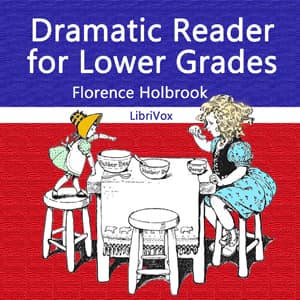
Florence Holbrook was an educator in the early 1900s, and you can feel that in every line. This isn't literature trying to be clever. It's literature trying to be useful. Sixteen short plays — Cinderella, Robin Hood, William Tell, Hansel and Gretel, and a bunch of lesser-known folk stories — all adapted into simple dialogue form for children to read aloud or perform in classrooms. The whole project has this beautiful earnestness to it, like a teacher who genuinely believes that if you just get the kids up on their feet and speaking the words, something clicks.
A Teacher Recognizes a Teacher
Here's what got me: Holbrook's introduction (which one of the LibriVox readers, Maria Therese, narrates with real warmth) lays out exactly what she was trying to do. These plays strip fairy tales down to their dialogue bones. No long descriptive passages. No narrator explaining feelings. Just characters talking to each other, which forces young readers to infer emotion from what's said and how it's said. That's a pedagogical choice I respect deeply — I've spent twenty years trying to get teenagers to understand subtext, and Holbrook was teaching it to seven-year-olds through the back door. The idea that character is revealed through dialogue rather than description is something I kept thinking about when I reviewed Before We Were Yours — a very different kind of book, but one that also leans hard on what characters say (and don't say) to carry its emotional weight.
The William Tell play is a good example. The tension between Tell and Gessler isn't built through stage direction or inner monologue. It's built through clipped, defiant lines from Tell and increasingly threatening commands from Gessler. A kid performing this has to figure out HOW to say those lines, and in doing so, they learn what dramatic tension actually is. My students would hate this. I love it. (Okay, they wouldn't hate it — they'd say it's "for babies." Same thing.)
The Cinderella adaptation is charmingly stripped down — no fairy godmother monologue about believing in yourself, just practical magic and quick scene changes. Robin Hood gets the most action, with enough back-and-forth between Merry Men to keep a whole classroom busy.
The Volunteer Narrator Lottery
So here's where I have to be straight with you. This is LibriVox. Which means volunteer readers. Which means you're spinning a roulette wheel every time a new play starts.
Some of the readers are genuinely lovely — clear diction, appropriate energy for a children's play, the kind of voice that makes you think "this person probably reads to their grandkids every night." Maria Therese's introductory reading sets a nice tone. But then you'll hit a reader who goes full community-theater-villain on a line that really doesn't need it, or someone who reads with the flat affect of a person recording at midnight because that's the only quiet time they had. (I've been that midnight person. I get it.)
The inconsistency is real. In a two-hour-forty-four-minute collection, you notice when one play sounds like it was recorded in a warm studio and the next one sounds like a closet. No background noise issues — it's clean audio — but the energy shifts between readers can be jarring. For adults, this is mildly annoying. For kids, honestly, they probably won't care as much as we think they will.
Who Should Actually Listen to This
If you're a parent or teacher looking for something to play during a car ride that isn't another episode of whatever YouTube show has captured your child's brain — this works. It's short, it's free (LibriVox, bless them), and the stories are ones kids already half-know, which means they can follow along without getting lost.
If you're a teacher specifically — and I'm talking to my fellow exhausted educators here — there's a practical use case. Play one of these short dramatizations in class, then have your students perform it themselves. Holbrook literally designed these for that purpose, and the audiobook version gives kids a model to react to. "Why did the reader say it that way? How would YOU say it differently?" That's a lesson plan writing itself.
If you're an adult looking for a satisfying solo listening experience? This probably isn't it. The prose is simple by design. The plays are quick sketches, not deep explorations. You'll get more out of this by sharing it with a kid than by listening alone at 11 PM while grading. (Trust me. I tried. It did not compete with the stack of sophomore essays on my desk.)
The Assignment I'd Give This Book
B-minus. Solid effort with clear purpose, loses points on execution consistency. Which — and this is the part that makes me smile — is exactly the kind of grade I'd write on a student paper that had good ideas and uneven follow-through. Florence Holbrook knew what she was doing. The LibriVox team did their honest best. The result is imperfect but genuinely useful, which is more than I can say for most things labeled "educational content" these days.
The prose deserves to be savored? No. Not this time. The prose deserves to be spoken out loud by a nine-year-old standing nervously in front of their class, discovering for the first time that words feel different when you say them. That's what Holbrook wanted. And at under three hours, it's worth pausing the faculty meeting for — at least the parts where the readers really land it.