
"Did Grace Sebold murder her boyfriend, Julian, while on a Spring Break vacation, or is she a victim of circumstance and poor police work?"
That question rattled around my skull for three consecutive post-shift drives home. I'm talking about sitting in my driveway with the engine running, Carlos texting me "u alive?" because breakfast isn't happening and I'm just... parked there. Listening.
The Documentary-Inside-a-Novel Thing Actually Works
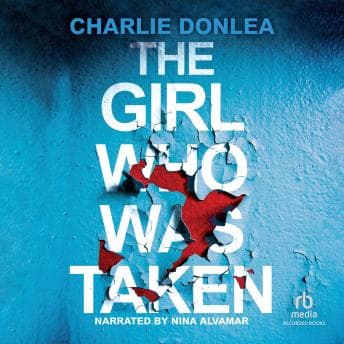
So here's the setup: Sidney Ryan is a filmmaker creating a twelve-episode true crime documentary about Grace Sebold, who's been rotting in a St. Lucian prison for ten years for allegedly killing her boyfriend. Charlie Donlea structures the whole book like you're watching the documentary unfold in real time - episode by episode - while also following Sidney's behind-the-scenes investigation. And I have to say, it's clever. Not "clever" in the way authors pat themselves on the back for. Actually clever. The format gives you that addictive true-crime-podcast energy where every chapter peels back another layer of the investigation, and you keep thinking you've figured it out. Poisoned Pen scratches that same itch - layers peeling back just fast enough to keep you from sleeping.
You haven't.
The way Donlea handles the timeline manipulation - bouncing between Grace's original Spring Break trip, the botched police investigation, and Sidney's present-day documentary production - kept me sharp even at 6 AM when my brain usually wants to shut down. The evidence reveals come at exactly the right pace. Additional suspects surface just when you think you've got it nailed. Timeline inconsistencies pop up that genuinely made me grip my steering wheel harder.
But here's where I have to be honest: the ending. Look, I'm not going to spoil it, but when Sidney gets that letter saying she got it "badly, terribly wrong" - that's where the book reaches its peak tension. The final act tries to stick a landing that's been building for ten hours, and... it almost gets there. Almost. The last hour felt slightly rushed compared to the meticulous pacing of everything before it. Like when a doctor orders a rapid discharge and you're thinking, we're skipping steps here.
Nina Alvamar Made Me Forget I Was Listening to One Person
This is a single-narrator audiobook, and Nina Alvamar carries ten and a half hours on her back without breaking a sweat. Her Sidney Ryan voice has this determined, slightly anxious quality - like a woman who knows she's in over her head but keeps swimming anyway. And when she shifts to Grace? There's something deliberately measured, almost too composed, in how she voices her. It's subtle. You don't notice it at first. But by the middle of the book, when you start questioning everything Grace says, you realize Alvamar has been planting seeds of doubt with her vocal choices the entire time.
Her male characters are competent - not distracting, which is honestly all I ask from a female narrator doing male voices. She doesn't try to go bass-heavy and cartoonish. The emotional scenes hit right. There's a moment where Sidney realizes the scope of what she might have done - what she might have unleashed on the world - and Alvamar's voice cracks just enough to make it real without going soap opera.
Clean production, no weird audio jumps. Night shift approved.
This Is Not How Investigations Work (But I'll Allow It)
Okay, so - as someone who works in a hospital where we get the aftermath of violence on a regular basis, I notice when crime fiction glosses over forensic and medical realities. Donlea does a decent job with the investigative procedures, though the speed at which officials reopen the case based on public outcry from a TV show is... generous. Let's call it generous. In reality, bureaucracy moves like a patient waiting for a bed assignment on a holiday weekend. But this is fiction, and the story needs momentum, so I'll give him that one.
What Donlea does really well is the psychology. The way Sidney gets seduced by her own narrative - she WANTS Grace to be innocent because it makes better television, and that bias colors everything. That felt terrifyingly real. We all do this. We see what we want to see. I've watched doctors commit to a diagnosis and then ignore contradicting lab results because they've already told the patient. Same energy.
Who Needs This in Their Ears
If you're a true crime podcast junkie, this book was basically written for you. The documentary framework will feel like home. If you loved Serial or Making a Murderer, this is that experience wrapped in fiction where the author can actually give you an ending (even if it's slightly rushed).
Skip it if you need deep character backstories. Sidney is well-drawn, Grace is deliberately opaque (which is the point), but the supporting cast is pretty thin. This is a plot machine, and it knows it.
Perfect for that post-shift decompression. End Game is another one that operates the same way - it's not trying to be literary fiction, it's trying to keep you locked in, and it earns every minute of that commute. Ten and a half hours means you'll get about two weeks of commute listening, which is my sweet spot - long enough to build attachment, not so long you forget who's who.
Carlos asked why I was sitting in the driveway three mornings in a row. I told him I was "decompressing." He doesn't need to know I was yelling "DON'T TRUST HER" at my dashboard.