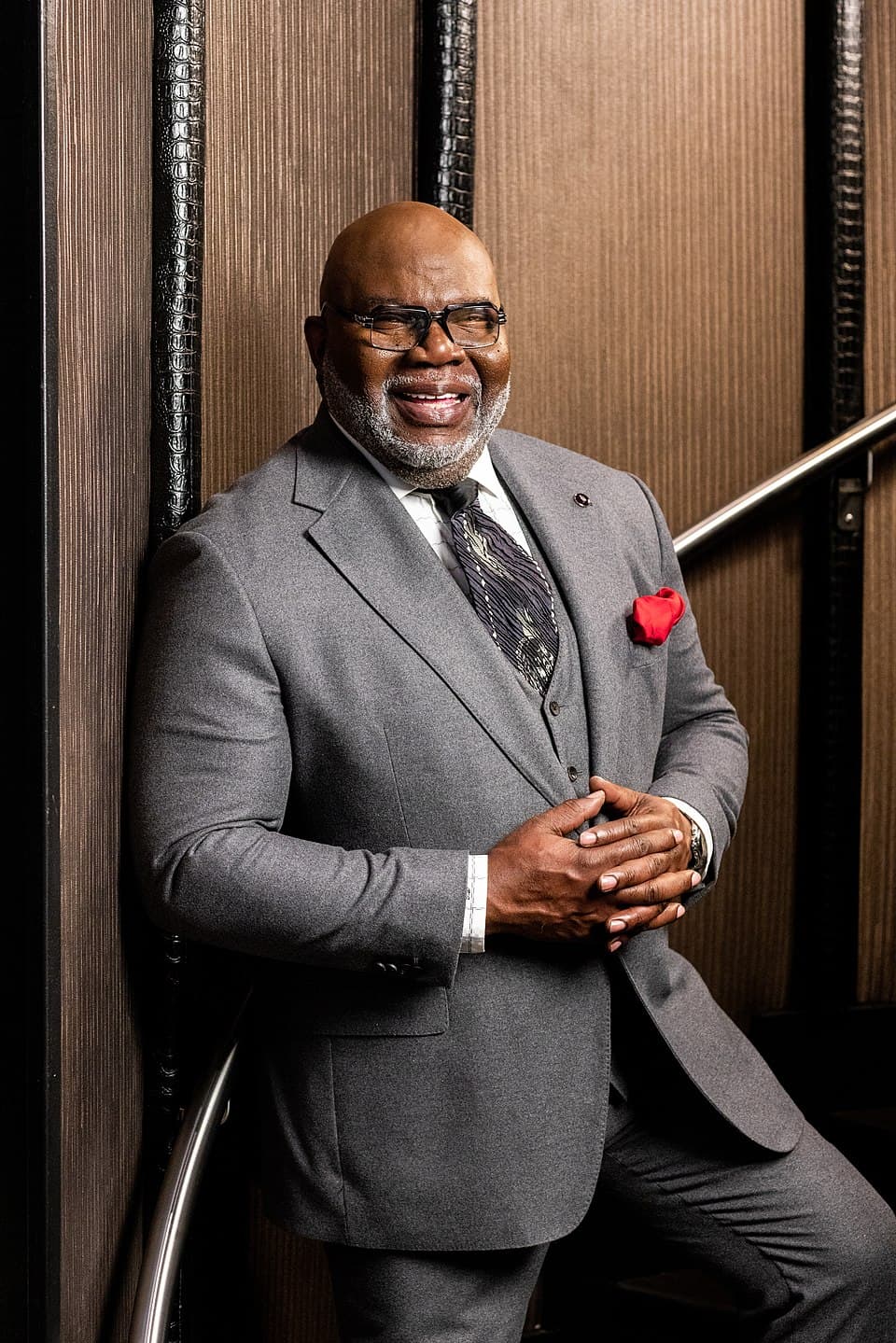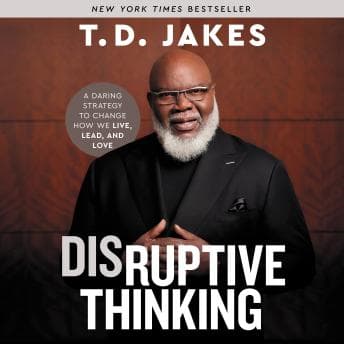

I was reviewing a pitch deck at 1 AM—startup founder convinced his meditation app would 'disrupt wellness'—when I realized I'd been listening to Bishop Jakes talk about actual disruption for the past hour. The irony wasn't lost on me. Here's a guy who built a megachurch, a film production company, and a media empire telling me what disruption actually looks like, while I'm staring at another founder who thinks changing a button color is innovation.
Bottom line: This book has maybe 3 hours of genuinely useful content stretched across 8.5 hours. But those 3 hours? They hit different than most business books on my shelf.
What My Parents Knew Without the TED Talk
Jakes talks about 'productive disruption' versus chaos for chaos's sake, and I immediately thought about my mom and dad's dry cleaning shop in Koreatown. They didn't read Clayton Christensen. They just knew that when the Korean community started moving to the suburbs, they had to follow. That's disruption—not because it sounds cool on a podcast, but because staying put meant dying slow.
The Bishop gets this. He's not selling 'break things fast' Silicon Valley nonsense. He's talking about the courage to abandon what's working when you see what's coming. There's a section where he discusses how churches that refused to adapt to digital ministry during COVID are now half-empty. That's not theory—that's observation from someone who actually runs things.
What separates this from the 47 other 'innovation mindset' books in my Audible graveyard is Jakes' willingness to get specific about the emotional cost. He talks about the loneliness of being the person who sees around corners when everyone else is staring straight ahead. My wife Jenny would say I'm projecting here. Jenny is right.
Three Narrators Walk Into a Recording Booth
Here's where it gets interesting. You've got Inger Tudor and Kyle Chapel handling the bulk of the reading, then Jakes himself drops in periodically. When Jakes speaks, the energy shifts completely. His cadence has that preacher rhythm—builds, pauses, lands. The other two are competent but clinical by comparison.
Honestly? I wish Jakes had narrated the whole thing. The man's been commanding rooms for decades, and you can hear it. When Tudor or Chapel read his words, it's like watching someone else perform your favorite comedian's material. Technically correct, emotionally flat.
The production is clean. No weird audio jumps, no background noise. Just three different energy levels that don't always mesh.
Skip to Chapter 5. Thank Me Later.
The first four chapters are setup—Jakes establishing his credentials, laying philosophical groundwork, defining terms. If you've read any business book in the last decade, you can 2.0x through this without missing anything essential.
Chapter 5 is where he starts talking about what he calls 'disruptive collaboration'—the idea that real innovation happens when you bring together people who have no business being in the same room. He uses examples from his own media ventures, bringing Hollywood producers together with church leaders. Sounds crazy. Apparently works.
The practical framework comes around hour 6—a four-part process for evaluating whether your 'disruptive idea' is actually worth pursuing or just ego dressed up as vision. I've seen too many founders confuse the two. This section alone is worth the credit.
The Faith Factor—Handle With Care
Look, I'm not going to pretend this isn't a Christian book. Jakes is a bishop. His worldview is baked into everything here. If that's not your thing, you'll find yourself mentally editing about 20% of the content. For a completely opposite take on faith's role in society, God Is Not Great argues religion actively undermines rational thinking—though Hitchens would probably respect Jakes' business acumen.
But here's what I'll say—the business principles underneath the theology are sound. He's not using faith as a substitute for strategy. He's using it as a foundation for courage. Different thing entirely. I've worked with plenty of secular founders who could use some of that conviction, honestly.
Who Gets Value Here (And Who Doesn't)
**Listen if:** You're a leader feeling that itch to do something different but can't quite articulate why. Or you're already disrupting and need permission to keep going when it gets lonely. Faith-friendly listeners will get the full experience; secular listeners can still extract the business principles with some mental filtering.
**Skip if:** You need tight, efficient content that respects your time. Or you're allergic to any spiritual framing in your business advice.
The Bottom Line on Your 8.5 Hours
At 8.5 hours, this book doesn't respect your time the way I'd like. Too much repetition, too many stories that circle the same point three different ways. My 2.0x speed helped, but even then, I found myself zoning out during the padding. About 3 hours of core content is worth the listen. The other 5 hours? Not so much.
But those core insights—about productive disruption, about the loneliness of vision, about building coalitions with unlikely partners—that's real. That's what my parents did instinctively when they expanded to three locations in the '90s while everyone else was consolidating.
Jenny says I should mention that I finished this at 3 AM after that pitch deck review. The startup founder's app isn't disruptive. But his willingness to quit his finance job and try? That might be.