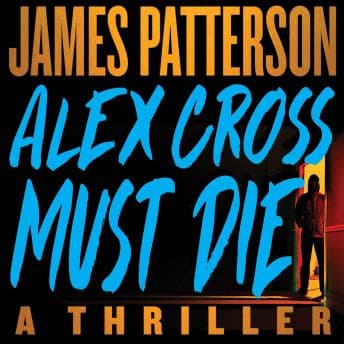

Everyone told me this was peak Patterson. Action-packed, full-cast, Alex Cross doing Alex Cross things. So I queued it up while making chana masala on a Saturday night — the kind of cooking that demands attention but leaves your brain free to wander — and honestly? I found myself asking: why does Alex Cross feel like a guest star in his own book?
Let me back up.
The Psychology of Too Many Subplots
The premise is genuinely interesting from a behavioral standpoint. Someone is using a remote-controlled Vietnam-era .50-caliber machine gun to shoot down planes at Reagan Airport. That's specific. That's terrifying. That's the kind of methodical, technically skilled perpetrator profile that should've had me pausing the audiobook to scribble notes about antisocial personality features and compartmentalized expertise. And there's a second thread — the "Dead Hours" murders, a serial killer targeting young men — which could've been a whole book on its own.
But Patterson spreads himself thin. There are so many side stories competing for oxygen that neither investigation gets the psychological depth it deserves. The protagonist exhibits classic Alex Cross competence — he shows up, he's brilliant, people defer to him — but he doesn't struggle in a way that feels earned. Cross and Sampson move from scene to scene with an efficiency that reads more like a case file than an emotional experience. Psychologically, this doesn't track for a man whose family is constantly in danger. Where's the cost? Where's the wear?
I kept waiting for the moment where I'd understand why the antagonist needed this particular method, this particular weapon, this particular target. The research actually shows that what makes serial offenders fascinating (and terrifying) in real cases is the internal logic — however warped — that drives their choices. Here, the motivation felt thin. Serviceable, sure. But thin.
Seven Narrators Walk Into a Booth
Okay, the full cast. This is where it gets complicated.
Seven narrators is ambitious. And at times it works — it really does feel like a well-rehearsed radio play. Jim Meskimen does this thick brogue for the old, physically diminished but still lethal killer character, and it's genuinely unsettling. There's something about hearing frailty layered over menace that hits different in audio format. My therapist would have thoughts about that character — the way aging doesn't diminish the capacity for violence, just reshapes it.
But here's the thing some listeners flagged that I can't unhear once I heard it: parts of the narration sound... artificial. AI-generated, maybe. I don't know if that's what's actually happening or if it's just inconsistent audio processing between narrator sessions, but there are moments where the vocal quality shifts in a way that pulled me right out of the story. I was stirring my chana masala and suddenly thinking about uncanny valley theory instead of the plot. Not ideal.
Wayne Carr anchors the Cross sections competently. The ensemble conveys desperation and tension well enough during the airport investigation sequences. But seven narrators also means seven slightly different energy levels, seven different recording environments (or at least it sounds that way), and the transitions aren't always smooth. Sometimes you're adjusting to a new voice right when you should be absorbing a plot turn.
The "Mushy" Ending Problem
I won't spoil it, but the ending pivots toward sentimentality in a way that doesn't match the preceding eight hours of machine guns and serial killers. Some listeners called it "mushy." I'd call it tonally inconsistent. Patterson has always balanced Cross's family life against the darkness of his work, and at his best, that contrast is what makes Cross human. Here it felt like someone remembered at the last minute that this character has feelings and tacked on a resolution that doesn't earn its warmth.
This is a fascinating case study in what happens when a long-running series character becomes more brand than person. Cross is competent, loving, smart, brave — and none of those qualities cost him anything in this book. Stakes without sacrifice is just plot mechanics. Frenchman actually cracked this problem — its antagonist's choices carry real weight precisely because the protagonist bleeds for every answer he gets.
Who Gets Something Out of This (And Who Doesn't)
If you're a Patterson completist who wants to keep up with the Cross timeline, this does what it needs to do. It's fast — under nine hours — and the dual investigation structure means you're never bored for long, even if you're also never fully invested. Good for a road trip where you want background tension without needing to rewind.
But if you're coming to Alex Cross for the first time? Start elsewhere. And if you're like me — someone who needs character motivations to hold up under scrutiny — you'll spend more time analyzing what's missing than enjoying what's there.
The Case File Is Closed But the Questions Remain
Patterson knows how to construct a thriller the way my mother knows how to construct a pressure cooker meal: fast, reliable, feeds a lot of people. But reliability isn't the same as excellence. Alex Cross Must Die delivers action and a solid premise, then undercuts both with subplot sprawl, uneven audio production, and a protagonist who feels invincible in the least interesting way possible. The human mind has patterns — and so does this franchise. I just wish it would break a few.