
Sitting in the parking lot of a client's office building at 0630, waiting for the security director to show up with the access codes, I figured I'd knock out something short. Two hours forty-six minutes? That's practically a warm-up. Rousseau's "Discourse on Inequality" had been on my list since a buddy from the War College mentioned it during a debate about human nature and combat psychology. He was wrong about most things, but he was right that I needed to read this.
Let me cut to the chase: this is essential political philosophy, delivered in a no-frills LibriVox package that gets the job done.
The Old Frenchman Had a Point (And Several I'd Argue With)
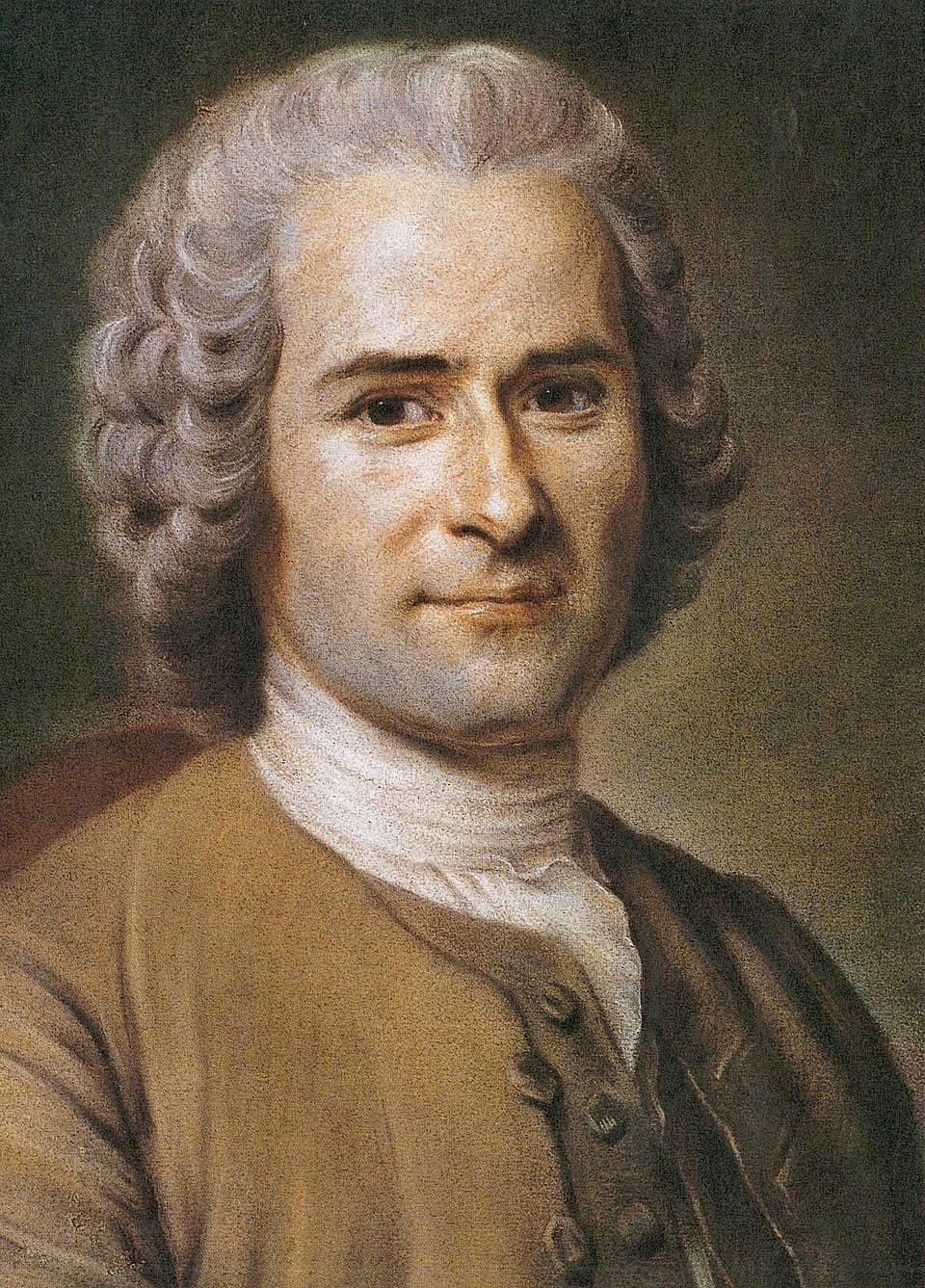
Rousseau's central thesis is almost aggressively simple: humans in their "natural state" were basically content, solitary creatures. Then we invented society, property, and comparison to our neighbors—and everything went sideways. Pride, vanity, greed, servility. The whole ugly mess.
Now, I've commanded men in situations where civilization's veneer stripped away pretty fast. Fallujah, 2004. The Korengal. You learn things about human nature that no philosopher in 18th-century Geneva could've imagined. And here's where it gets interesting—Rousseau's not entirely wrong. I've seen what happens when men compete for status and recognition. I've also seen what happens when that competition disappears and it's just survival. Different beasts entirely.
But Rousseau romanticizes the "noble savage" concept in ways that don't survive contact with reality. His natural man is peaceful because he's alone. Put two natural men near the same water source and tell me how peaceful things stay. The philosopher never had to manage logistics for a forward operating base. Ordinary Men showed me what happens when ordinary people are put in extraordinary circumstances—turns out Rousseau's theories about human nature don't account for institutional pressure and group dynamics.
Still. The man was wrestling with questions that matter. Why do we accept inequality? How did we get here? Is any of this actually necessary? These aren't academic exercises—they're the questions that shaped the American Revolution, the French Revolution, and about half the conflicts I spent my career dealing with. Alexander Hamilton wrestles with some of these same tensions—how to build a functioning government when everyone's got different ideas about what "equality" actually means.
Ej Gets You There Without Flash
The narrator—credited simply as "Ej"—delivers this in straightforward fashion. No theatrical flourishes, no attempt to dramatize Rousseau's 18th-century prose into something it's not. Just clear, competent reading at a steady pace.
Is it going to win awards? No. But here's the thing about philosophy audiobooks: you don't need a voice actor. You need clarity. You need someone who won't trip over the longer sentences (and Rousseau wrote some absolute monsters—subordinate clauses nested inside subordinate clauses like a Russian nesting doll of Enlightenment reasoning). Ej handles these without losing the thread.
I bumped it to 1.25x after the first fifteen minutes. At normal speed, the pacing felt a touch deliberate for my taste. Sped up, it hit the right rhythm—brisk enough to maintain attention, slow enough to process the arguments.
Under Three Hours of Foundational Text
The duration works in this book's favor. Rousseau wasn't writing a doorstop—this is a focused argument, not a comprehensive treatise. You can knock it out in a single commute day or, like me, one extended parking lot session plus the drive home.
For anyone in security, military, or policy work, understanding where modern political assumptions come from isn't optional. Rousseau's fingerprints are everywhere—in how we talk about "the social contract," in debates about government legitimacy, in the tension between individual liberty and collective good. You can agree or disagree with the man, but you should know what he actually said.
The LibriVox production is clean. No audio artifacts, no weird volume fluctuations. Basic, functional, free. For public domain philosophy, that's exactly what you need.
The Debrief
Listen if: You're in security, military, policy, or just want to understand the intellectual foundations of Western political thought—the stuff that shaped everything from the Constitution to the UN Declaration of Human Rights. This is core curriculum.
Skip if: You're looking for entertainment or need a narrator with theatrical range. This is philosophy, not performance.
Rousseau was wrong about some things. He was prescient about others. His analysis of how inequality becomes self-perpetuating through institutions and inherited advantage? That's not 1755 thinking—that's 2024 reality.
Ranger slept through most of it, which is fair. He's more of an action guy. But for those of us who need to understand why societies work the way they do—and occasionally why they don't—this is two hours and forty-six minutes well spent.
Mission accomplished. Not flashy, but effective.





![Steve Jobs [unabridged audiobook] audiobook cover](/_next/image?url=https%3A%2F%2Fcovers.audiobooks.com%2Fimages%2Fcovers%2Ffull%2F9788499923406.jpg&w=1920&q=75)