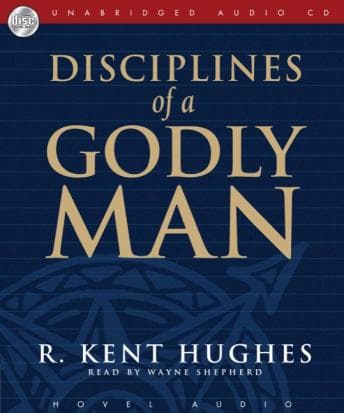

Look, I need to be upfront about something: I am not the target audience for this book. I'm a woman, I'm not particularly religious, and the last time I voluntarily attended a Sunday service was when my mom guilt-tripped me into it over Christmas 2019. But Kevin's been on this whole "intentional living" kick lately, and he kept leaving this in our shared Audible library like some kind of passive-aggressive bookmark. So during a particularly brutal Monday morning commute - the kind where Caltrain is 12 minutes late and everyone's standing because the bike car is broken again - I hit play.
And honestly? I have thoughts.
The "Could've Been a Blog Post" Problem Hits Different Here
Here's where I'll give R. Kent Hughes some credit: this is NOT a business book masquerading as a 300-page LinkedIn post. There's actual structure here. Hughes breaks down Christian manhood into discrete areas - prayer, integrity, marriage, fatherhood, leadership, purity - and each chapter functions almost like a standalone module. If you're a dude trying to get your spiritual life together, it's basically a personal development framework but for faith. Think of it as an API for Christian masculinity: here are the endpoints, here's what you pass in, here's what you should expect back.
The illustrations and anecdotes are where Hughes shines. He pulls from sports, history, pastoral experience - the kind of stuff that makes chapters stick in your brain even at 6 AM. There's a recurring theme about discipline as freedom rather than restriction that, theological framework aside, is genuinely interesting from a self-help perspective. The study questions at the end of each chapter also make this feel less like a passive listen and more like something you're supposed to DO something with.
But - and this is a big but - the book is very much a product of its era and its audience. It's written for men, by a man, with a pretty traditional lens on gender roles. If that's your lane, you'll find it practical and direct. If it's not, some sections will feel like reading code comments from 2001 that assume everyone's running Internet Explorer.
Wayne Shepherd and the Audio Level Rollercoaster Nobody Asked For
Okay, the narration. Wayne Shepherd has a classic Christian radio voice - warm, authoritative, the kind of voice that sounds like it should be introducing a segment on Focus on the Family. And for most of the book, that works fine. It's a steady, earnest delivery that matches the material.
But then the audio production gremlins show up.
There are noticeable volume shifts between sections - like someone adjusted the mic distance between recording sessions and nobody bothered to normalize the levels in post. At 1.5x speed on a rattling Caltrain car, this means I'm constantly adjusting my AirPods volume. One moment Shepherd's at a comfortable level, the next he's either whispering into my temporal lobe or shouting about the disciplines of prayer like he's trying to reach the back pew without a mic.
Worse: the mispronunciations. Some of them are theological terms that - look, I'm not a seminary student, so maybe I wouldn't catch all of them, but several reviewers who ARE that audience flagged this as a real issue. If you're narrating a book about biblical disciplines, you should probably nail the biblical terminology. That's like me mispronouncing "Kubernetes" in a tech talk. People notice. People judge.
Who Actually Benefits From This
If you're a Christian man actively looking for a structured approach to spiritual growth - particularly one grounded in Reformed theology with practical application - the ROI on this audiobook is solid. Seven and a half hours is reasonable. You could finish it in a week of commutes, and the chapter structure means you can pause between sections and actually reflect (or, you know, switch to your incident response Slack channel when prod goes down).
If you're coming at this from outside the intended audience like I did, you'll find maybe 40% of it translatable to general self-improvement concepts. Discipline, intentionality, showing up for your relationships - that stuff is universal regardless of your theological position. Brené Brown covers that same 40% territory with a lot more inclusivity in Rising Strong, which I'd actually recommend pairing with this if you want the discipline-as-growth framework without the denominational packaging. The other 60% is deeply rooted in specific scripture and won't land the same way.
Skip this if you need pristine audio quality. The production issues aren't dealbreakers, but they're annoying enough that I'd recommend the print version if you have the choice. And definitely skip if you're looking for a progressive or egalitarian take on masculinity - that's not what Hughes is offering, and pretending otherwise would be dishonest.
The Commit Message
I told Kevin I listened to it. He asked what I thought. I said it's a well-organized framework with some solid universal principles wrapped in a very specific theological package, undermined by audio production that needed another pass in the studio. He said I review everything like I'm filing a bug report. He's not wrong.
The book itself? Genuinely useful for its intended audience. The audiobook version? Functional but flawed. Like legacy code that works but makes you wince when you look under the hood.