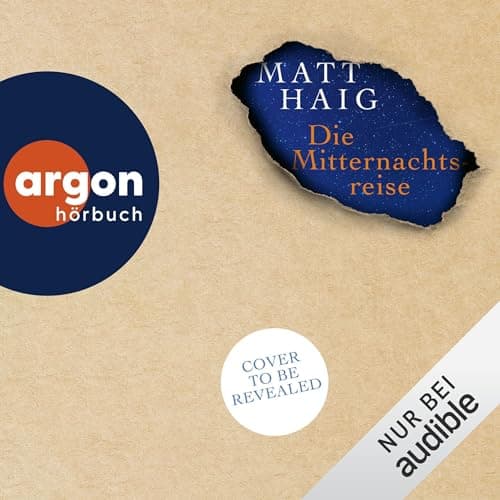

Okay so I need to rant for a second because WHY does Matt Haig keep writing books that make me question every single life choice I've ever made at 2 AM when I should be editing my next BookTok video? I was literally mid-gym session, doing hip thrusts with my AirPods in, and this book had me sitting on the leg press machine for like twelve minutes just staring at the wall because Wilbur's Venice flashback hit me in a way I was NOT prepared for. The guy across from me definitely thought I was having a crisis. He was right.
So here's the setup: Wilbur gets on this midnight train - a literal train, not a metaphor (well, also a metaphor, because Matt Haig) - and it takes him back through the most significant moments of his life. His honeymoon with Maggie in Venice. The moment he messed everything up. The question of whether you'd change your past if it meant losing everything your mistakes accidentally gave you. It's giving Die Mitternachtsbibliothek energy but more intimate, more focused on one love story instead of a thousand alternate lives.
For the record, my full thoughts on that thousand-alternate-lives energy are in my The Midnight Library review — Haig really built different with that one.The Narrator Situation Is... Complicated
Christoph Maria Herbst - and look, the man is a legend in German audiobook circles - brings this soft, contemplative energy that works for about 70% of the book. When he's narrating Wilbur's internal monologue, the quiet regret, the way he remembers Maggie's laugh, it's genuinely warm. You can feel the guy sitting with these memories like they're fragile things he's afraid to hold too tight.
BUT. And this is a big but. The man does not shift gears. Every character sounds like they're having the same calm, slightly melancholic conversation at a coffee shop. Maggie, Wilbur, side characters - they all live in this one emotional register. When the story needs tension, when Wilbur is confronting the moment he threw away his marriage, I needed the narration to crack open a little. Give me some chest-tightness. Give me a voice that shakes. Instead it stays at the same steady hum. I bumped to 1.5x (not even my usual 2.0x because the book genuinely rewards slower pacing) and that actually helped - gave it slightly more urgency without losing the contemplative vibe.
Venice at Midnight, Regret by Morning
What Haig does well here - and this is specific to THIS book, not just his general vibe - is the way he layers time. Wilbur experiences Venice in two timelines simultaneously: the honeymoon version where everything is golden and possible, and the present version where he knows exactly how it all falls apart. There's this scene where Wilbur watches his younger self order wine for Maggie and he remembers the exact label, the exact way she tilted her glass, and he knows this is the last trip where she fully trusted him. That detail WRECKED me. It's not a big dramatic moment. It's a wine glass. But it carries the entire weight of what he lost.
The pacing is slow though. Like, genuinely slow. This is a 10-hour listen that probably could've been 7. The middle section where Wilbur is processing his options on the train drags - there's a lot of philosophical musing that feels like Haig restating the same idea in slightly different words. I didn't DNF because the emotional payoff in the last two hours is worth it, but I'd be lying if I said I didn't check the progress bar a few times around hour 5.
Spice? Zero. Feelings? Illegal Amounts.
This is not a romantasy. There's no spice. There's no magic system. But the love story between Wilbur and Maggie is so specifically drawn - the way she folds napkins into shapes when she's nervous, the way he always ordered her food wrong on purpose because it made her laugh - that it hits harder than half the romance books on my shelf. It's the anti-spice book that still somehow made me feel more than books with entire chapters dedicated to tension. Matt Haig really said "I'm going to make you cry about a middle-aged man's regrets" and I said "okay fine take my tears I guess."
The German translation by Sabine Hübner feels natural, not stilted, which matters a LOT for a book this dependent on internal emotional language. Some translated audiobooks sound like they're reading a manual. This one sounds like someone telling you a story.
Who Gets a Ticket on This Train (And Who Gets Left on the Platform)
If you loved Die Mitternachtsbibliothek and wanted it to zoom in instead of zoom out - one life, one love, one question - this is your book. If you need action, multiple POVs, or a narrator who gives every character a distinct vocal identity, you're going to be frustrated. Same if slow-burn pacing makes you reach for your phone - this book demands your patience, and it does not apologize for it.
My 2 AM Verdict: Worth the Slow Ride
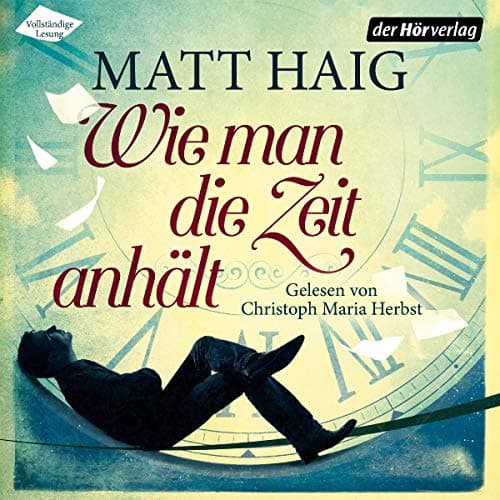
I'm not going to pretend this is the best audiobook I've heard this year. Herbst's narration needed more range, the middle sagged, and at 10 hours it overstays its welcome by about 2. And if you want to hear what Herbst sounds like when the material actually pushes him — Wie man die Zeit anhält gave him so much more to work with vocally. But that Venice wine glass scene? The final hour where Wilbur makes his choice? Those moments made me put my phone down and just listen. And for me - the girl who literally cannot stop scrolling - that says something.