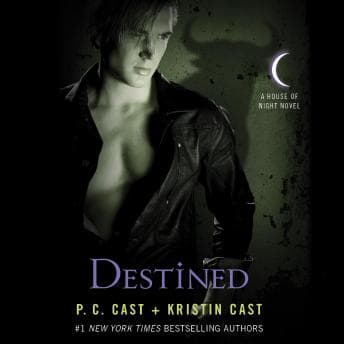

Look, I'll be honest—I spent twenty years telling my students that vampire fiction peaked with Bram Stoker and maybe, if I was feeling generous, Anne Rice. I had a similar moment of reconsideration with War of the Worlds, though that one took me in a completely different direction—classic sci-fi instead of vampires. Then I spent twelve hours listening to Destined during faculty meetings and lakefront walks, and now I have to reconsider some things. Not all of them. But some.
Here's my complaint: why does Young Adult paranormal fiction insist on making everything so complicated? We've got Zoey dealing with Neferet, Kalona's released his hold on Rephaim, there's a mysterious boy named Aurox who's apparently a weapon but also has a soul, and somewhere in there a horse whisperer shows up. My students would eat this up. I found myself making a character chart in the margins of my grading rubric.
The Casts Know What They're Doing
I'll give P.C. and Kristin Cast credit where it's due—they understand pacing in a way that keeps you hooked even when the mythology gets dense. This is book nine (nine!) in the series, and they still manage to introduce new elements without losing the thread entirely. The Aurox character is genuinely interesting—this idea of a being created for darkness but wrestling with humanity? That's Greek tragedy dressed up in YA clothing. Stevie Rae and Rephaim's relationship finally getting room to breathe through Nyx's gift of human form—there's real emotional weight there.
The writing is accessible. My colleague in the English department would call it "commercial," and she wouldn't mean it as a compliment. But I've watched enough reluctant readers become actual readers through books like this. Same thing happened when I recommended Paris Library: A Novel to a student who swore she hated historical fiction—sometimes accessible storytelling is exactly what opens the door. The prose isn't Faulkner. It's not trying to be. It's trying to keep teenagers turning pages, and it succeeds.
Caitlin Davies Will Either Work for You or She Won't
Okay, so. Caitlin Davies. This is where things get complicated.
Her pacing is solid. Her emotional delivery in the heavy moments—particularly anything involving Heath's storyline—lands with real impact. She's clear, she's dramatic when the scene calls for drama. When Zoey's world is falling apart, Davies makes you feel it.
But here's the thing I kept noticing: her voice has a particular quality that I can see rubbing some listeners the wrong way. It's not bad narration—it's divisive narration. Some listeners apparently find it irritating, and I won't pretend I didn't understand why after certain stretches. There's a consistency to her delivery that works for marathon listening but can feel a bit... even. Monotonous isn't quite fair, but she doesn't do the wild character voice differentiation that some audiobook listeners crave.
I listened at my usual 1.0x (the author chose those words, after all), and it worked fine. If you're the type who speeds up audiobooks, this one might actually benefit from a slight bump—say 1.15x—if Davies' style starts to feel flat for you.
Who Should Queue This Up (And Who Should Skip)
Let's be real: this is book nine. If you're picking this up, you're already invested in the House of Night world, or you're a completist who refuses to start series in the middle. (Respect.) For series fans, this delivers exactly what you want—the mythology deepens, relationships evolve, Neferet remains deliciously villainous.
For the uninitiated? Start at the beginning. This isn't standalone material. And if you're narrator-sensitive, sample Davies first or consider the print version—her style is consistent but polarizing.
The content warnings are worth noting—there's violence and some sexual content that firmly places this in older YA territory. My students would be fine with it. Some of their parents might have opinions.
Would I Assign This? No. Would I Recommend It?
Here's my honest take: this isn't literature with a capital L. It's not going to show up on AP English reading lists. But the Casts have built something that works—a paranormal world with genuine stakes, characters who grow across books, and mythology that rewards long-term investment.
I finished this one while pretending to pay attention to a curriculum meeting. (Principal Martinez, if you're reading this—I was definitely listening to your presentation about standardized testing. I wasn't. I was listening to teenagers fight vampires.) And honestly? It was a better use of my time.
My students would hate that I admitted to enjoying this. I love it.