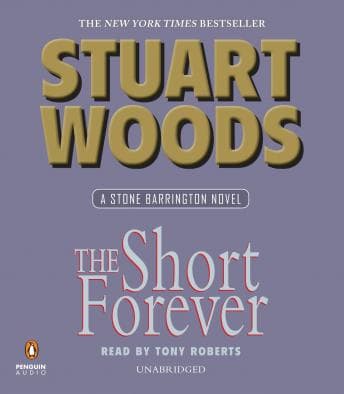
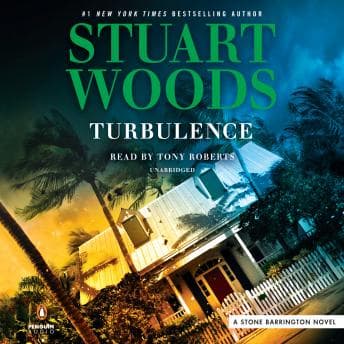
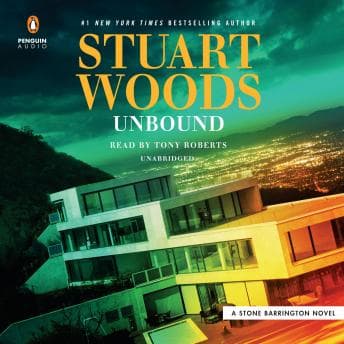
What happens when you teach literature for twenty years and then spend a Saturday afternoon listening to something that wouldn't survive the first round of a sophomore book report?
I'll tell you what happens. You enjoy yourself anyway.
Look, I was at the kitchen table, half-heartedly sorting through a stack of essays on The Great Gatsby — most of them confidently declaring that the green light means money, full stop — when I put on Desperate Measures. And within twenty minutes, Denise walked past, raised an eyebrow, and said, "That's not your usual thing." She's right. My usual thing is Middlemarch at faculty meetings and Faulkner episodes that put my own mother to sleep. But sometimes your brain needs what your brain needs, and mine needed Stone Barrington fixing problems with expensive dinners and convenient connections.
The Literary Equivalent of a Really Good Steak at a Chain Restaurant
Stuart Woods knew exactly what he was doing with this series. This is book 47 of Stone Barrington — forty-seven — and by this point, the formula is the feature, not the bug. Stone returns from Europe, meets a gorgeous woman who conveniently needs both employment and protection, and New York City obliges by producing threats on cue. The plotting is less a mystery and more a series of elegant dominoes. Stone makes a call. Someone owes him a favor. Problem addressed. New problem appears. Repeat.
And here's the thing — I didn't mind. This reminds me of what Hemingway said about prose being architecture, not interior decoration. Woods builds clean rooms. They're not ornate. They're not going to make you rethink your life. But the doors open and close where they should, and the furniture is exactly where you expect it. There's a craft to reliable entertainment that literary snobs (and yes, I've been that snob) tend to dismiss too quickly.
The new hire plotline — Stone bringing on this woman who becomes both colleague and romantic interest — is pure Woods wish fulfillment. Stone Barrington lives in a universe where women are stunning, meals are exquisite, and legal problems resolve themselves over cocktails. It's fantasy. But it's self-aware fantasy, and the pacing at 7 hours 43 minutes means it never overstays its welcome. I had a similar reaction to Message in a Bottle — another book I'd never assign in class but found myself finishing anyway, guilty pleasure and all.
Tony Roberts and the Curious Case of the Octogenarian Lothario
Now. Tony Roberts. This is where I have to be honest with you.
Roberts has genuine charm as a narrator. His comedic timing is sharp — there are moments where Stone's dry observations land with perfect deadpan delivery, and you can tell Roberts has real dramatic chops. He reads Woods' breezy dialogue the way it was meant to be read: fast, light, with a wink. The narration carries this book in ways the text alone probably wouldn't.
But — and this is a significant but — Roberts makes every character sound like they're ordering the early bird special. Stone Barrington is supposed to be this magnetic, virile figure, and Roberts voices him like a man who's seen some things. Many things. Across many decades. When Stone is supposedly having these charged romantic moments with his new hire, I kept picturing two very distinguished people discussing their investment portfolios. "I can't envision anything sexy about Stone or his lady friends" is how one listener put it, and that's... accurate.
The narrator understands that pause is punctuation, and Roberts uses silence well between scenes. His pacing is expert. But the age of the voice versus the age of the character creates this persistent cognitive dissonance that never fully resolves.
Who Gets the Assignment (And Who Gets Excused)
If you loved the other forty-six Stone Barrington books, you already know if you're listening to this one. (You are.) If you're a Woods newcomer, this isn't really the place to start — too much assumed knowledge about Stone's world, his connections, his impossibly convenient life.
This is for: long drives, airport layovers, those evenings when you've read enough student papers to make your eyes cross and you just want something that moves forward without asking anything of you. It's background-friendly in the best sense. I listened while grading and never lost the thread, which says something about the clarity of the storytelling — and maybe something about the complexity too.
Skip it if you want literary fiction, psychological depth, or narration that matches character descriptions. My students would probably say it's "mid." They wouldn't be wrong. But sometimes mid hits the spot.
The Grade I'd Write in Red Ink
I can't give this a high mark. I know that. The formula is too visible, the stakes too easily resolved, the narrator too mismatched with the characters' supposed vitality. But Woods wrote these books like a man who understood his audience perfectly, and Roberts narrates them with a professional ease that makes the hours disappear. Worth pausing the faculty meeting for? No. Principal Martinez, your budget presentation would win that contest. But worth a quiet afternoon when your brain is fried? Absolutely.