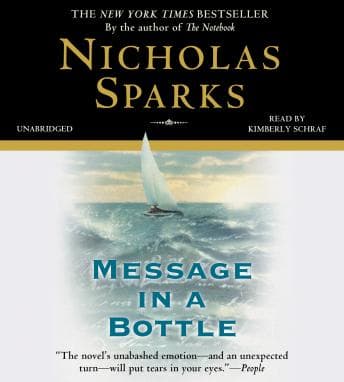

Nicholas Sparks knows exactly what he's doing to you, and you let him do it anyway.
I finished this one during a late-night grading marathon—sophomore essays on The Great Gatsby, most of them missing the point about the green light entirely—and somewhere around hour eight, I realized I'd stopped marking papers altogether. Just sat there with my red pen hovering over some kid's claim that "Gatsby was basically a stalker" while Theresa Osborne chased down a mystery man through the Outer Banks. The irony of grading papers about obsessive love while listening to a book about obsessive love was not lost on me.
Grief as a Third Character
Here's what Sparks gets right that lesser romance writers miss: Garrett's grief isn't an obstacle to overcome. It's not a wall Theresa needs to break down with enough persistence and good hair. Catherine—the dead wife, the recipient of those beach-bound letters—is as present in this story as anyone with a pulse. She's in every hesitation, every comparison Garrett can't help but make, every moment where happiness feels like betrayal.
This reminds me of what Hemingway said about the iceberg theory—what's unsaid carries as much weight as what's on the page. Raven Boys works the same way; half the story lives in what the characters aren't saying to each other. Sparks isn't Hemingway (my students would riot if I suggested otherwise), but he understands that romantic tension isn't just about two people wanting each other. It's about everything standing between them. And sometimes what's standing between them is a ghost neither can exorcise.
The letter-writing device works beautifully in audio format. Those messages to Catherine punctuate the narrative like poetry breaks, and Kimberly Schraf reads them with this quiet ache that makes you forget you're listening to fiction. By the third letter, I'd stopped thinking about whether my students understood symbolism and started thinking about my own wife, Denise, asleep upstairs while I sat surrounded by teenage misinterpretations of American literature.
Schraf Earns Every Tear
Look, I'll be honest—the research I found didn't give me much to work with regarding Schraf's specific vocal choices. But after ten hours with her, I can tell you this: she understands that pause is punctuation. There's a restraint to her emotional delivery that prevents the story from tipping into melodrama, which—given Sparks's tendency toward the sentimental—is no small feat.
One listener mentioned nearly pulling over while driving because the ending made it impossible to see through tears. I believe it. The final hours build with this quiet inevitability that Schraf handles with remarkable control. She doesn't oversell the tragedy. She lets it arrive the way real grief does—not with a crash, but with the slow realization that something precious is slipping away.
My students would hate this. Too slow, they'd say. Where's the action? But that's precisely why we still read the classics, why stories about letters in bottles and second chances matter. The prose deserves to be savored, and Schraf savors it.
The Sparks Formula, For Better and Worse
I'm not going to pretend this is Anna Karenina. Sparks writes to a formula—beautiful coastal setting, wounded protagonists, love that feels fated, tragedy lurking beneath the surface. If you've read The Notebook, you know the emotional beats you're signing up for.
But here's the thing about formulas: they work because they tap into something true. Theresa's divorce, her skepticism about love, her gradual surrender to hope despite knowing better—these aren't just plot devices. They're the experience of anyone who's been hurt and dared to try again. The bottle, the letters, the cross-country search—that's all window dressing. The real story is about whether we can love someone while competing with their past.
At ten hours, it's a commitment. The middle section drags slightly—there's only so much beach-walking and meaningful glances a narrative can sustain—but the emotional payoff justifies the investment. Worth pausing the faculty meeting for, though I'd never admit that to Principal Martinez.
Who Gets the Bottle, Who Throws It Back
If you loved The Notebook, this is its spiritual successor—same emotional DNA, slightly more complex characters. Perfect for a solo road trip or long evening walk. The pacing rewards focused attention but doesn't demand it constantly.
Skip this if you need action or find Sparks's brand of romanticism cloying. Also skip if you're in a fragile emotional state—the ending earns its reputation.
Class Dismissed
I started this audiobook expecting competent beach reading. I finished it at 1 AM, grading forgotten, thinking about the letters we write to people who can't read them anymore. Sparks manipulates your emotions with the precision of a surgeon, and Schraf delivers those emotions with the care they deserve. It's not literature with a capital L, but it's honest about what it is—a love story that believes in love while acknowledging that love isn't always enough.
My mom will probably fall asleep during this review too. But she'd love the book.