
Can we talk about how Patterson just casually drops "she has wings" like he's mentioning the weather?
I'm sitting there at 2 AM, my thesis document open in another tab (theoretically), and suddenly this eleven-year-old girl named Max is flying. Not falling with style. Not gliding. Flying with actual functional wings grafted onto her body by mad scientists in Colorado. Patterson, my guy, you buried the lede on the genre here.
My Dungeon Master Brain Won't Shut Up
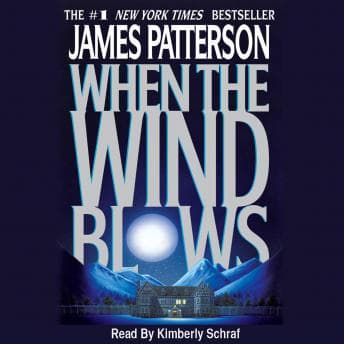
I grabbed this expecting standard Patterson—short chapters, body count, government conspiracy, done. Instead I got what happens when you let a thriller writer run a homebrew campaign. The School is this shadowy research facility creating human-avian hybrid children, and it's exactly the kind of dark premise that would get you weird looks at a writer's workshop but absolutely works when someone just commits to it.
And Patterson commits. Max isn't just a winged plot device. She's got this fierce survival instinct, trauma she's processing in real-time, and a personality that makes her feel like an actual kid despite the fantastical circumstances. When other escaped subjects start showing up, each with their own modifications and damage, I caught myself mentally rolling for initiative. (This is a compliment. My brain defaults to d20 mechanics when things get good.)
The progression is satisfying—Patterson layers the conspiracy reveals well, escalating from "weird murder in Colorado" to "international genetic experimentation ring" at exactly the right pace. It's not Sanderson-level world-building, and I need to be honest about that. The science would make an actual geneticist cry. But Patterson isn't trying to write hard sci-fi. He's running a one-shot with flying children, and he knows exactly how much explanation you need (not much) versus how much momentum you need (all of it).
Schraf Plays It Straight
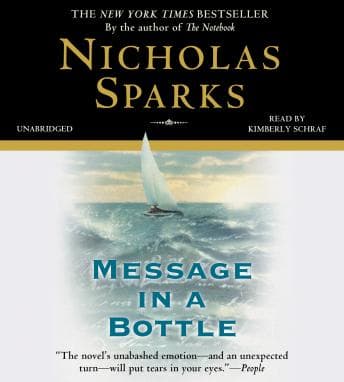
Kimberly Schraf's approach here is interesting—she doesn't do distinct accents or wild vocal differentiation. She plays it straight, letting Patterson's rapid-fire chapters do the heavy lifting on pacing. And honestly? It works. She brought that same restrained precision to Message in a Bottle, where the emotional material is completely different but the instinct to let the writing breathe instead of performing it is exactly what saves the whole thing. Those trademark short chapters need a narrator who can maintain momentum without over-dramatizing every beat, and Schraf nails that rhythm.
The emotional restraint is what sold me. When Max talks about the School, about what they did to her and the other kids, Schraf doesn't oversell it. There's weight without melodrama. The darkest material gets the lightest touch, which somehow makes it hit harder. I finished a late-night coding session (Dr. Patel, I was definitely working on my thesis) that turned into a 3 AM "just one more chapter" spiral, and Schraf's consistent energy kept me locked in.
The Patterson Problem (And Why I'm Fine With It)
Look, the villains are Bad with a capital B. The ethical implications of genetic experimentation on children get explored just enough to make you uncomfortable, but this isn't a philosophy seminar. Patterson wants you asking "will these kids survive?" not "what are the sociological implications of human modification?" If you need your speculative fiction to be rigorous, this isn't for you. (But you're wrong.)
The romance subplot between Frannie and Kit is... there. It's fine. It's Patterson doing Patterson things. I was more invested in Max and the other kids than in whether the veterinarian and the FBI agent would get together, but the book knows where its heart is. The conspiracy escalates, the action sequences deliver, and by hour eight I'd completely forgotten I was supposed to be annoyed about the loose science.
Who Should Roll Initiative (And Who Should Sit This Campaign Out)
Pick this up if you want fast-paced genre-bending weirdness that doesn't apologize for itself. If you've ever wanted to run a campaign where the party is escaped lab experiments with superpowers, this is basically your sourcebook. My D&D group would have character sheets ready before the audiobook finished.
Skip it if you need hard science, if violence against children (even when they're the protagonists fighting back) is a dealbreaker, or if you're going to be mad about a thriller that doesn't explain its magic system. Content warnings are real here—violence, language, sexual content. This is the adult version of the concept Patterson later adapted into the Maximum Ride YA series.
Worth Burning Thesis Time
I finished this with my word count at exactly zero and no regrets. Ten hours is a solid commitment but not an epic—perfect for a weekend of productive procrastination or a couple long drives. Patterson delivers exactly what Patterson delivers: relentless pacing, escalating stakes, and a premise weird enough to stick with you.
Is it high literature? No. Did I immediately look up whether there's a sequel? Also yes. (There is. It's called The Lake House. My thesis is in danger.)
Patterson does this to me every time—13-Minute Murder is a much thinner experience but I blew through it in a single sitting for exactly the same reason, which is that the man has somehow weaponized chapter breaks.When the wind blows, children fly. And apparently I'll follow them anywhere instead of writing about procedural generation.