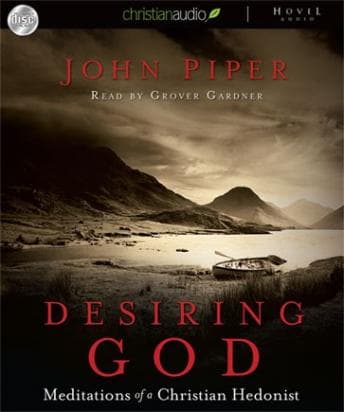

Look, I have a bone to pick with John Piper. Not with his theology — we'll get there — but with his audacity in titling a book Desiring God and then spending twelve hours systematically dismantling every comfortable pew-sitting excuse I've built over twenty years of Sundays. I was grading sophomore essays on The Great Gatsby at 11PM, half-listening the way you do when you think you know what a Christian living book is going to say, and then Piper dropped this line — and I'm paraphrasing because I nearly knocked over my coffee — that God is most glorified in us when we are most satisfied in Him. Not when we're most obedient. Not when we're most dutiful. When we're most satisfied.
That stopped me cold. Red pen hovering over a kid's paragraph about the green light.
The Phrase That Ruined Comfortable Christianity For Me
Piper's central thesis is what he calls "Christian Hedonism" — and yes, he knows exactly how provocative that sounds. The argument is deceptively simple: pursuing your own joy and glorifying God aren't competing impulses. They're the same impulse. Duty divorced from delight is, in Piper's framework, actually a lesser form of worship. I ran into a similar tension — duty versus genuine devotion — in Working for God, though that one never quite builds the theological scaffolding Piper does here. He builds this case chapter by chapter, pulling from the Psalms, from Jonathan Edwards, from C.S. Lewis's famous weight-of-glory argument, stacking Scripture citations like a prosecutor building an airtight case.
This reminds me of what Hemingway said about prose — the dignity of movement of an iceberg is due to only one-eighth of it being above water. Piper's surface claim sounds almost hedonistic (that's the point), but underneath it is this massive, carefully constructed theological architecture. He's not saying "do whatever feels good." He's saying the deepest pleasure a human being can experience is God Himself, and settling for anything less is the real sin.
Now — does every chapter land with equal force? No. The middle sections on money and missions and marriage, while earnest, read more like extended sermon applications than the electric theological argumentation of the opening chapters. Around hour seven or eight, I found my attention drifting back to those Gatsby essays, which tells you something. Piper is at his best when he's wrestling with paradox, not when he's applying it to practical categories. The prayer chapter, though — that one hit different. His insistence that prayer is not a transaction but a desperate expression of need? The prose deserves to be savored there.
Gardner Reads Like Your Favorite Seminary Professor (For Better and Worse)
Grover Gardner narrates this with the steady, measured tone of a man who takes the material seriously. His neutral American delivery works well for Piper's expository style — no theatrics, no dramatic pauses where they don't belong. He treats the text like what it is: a sustained theological argument, not a performance piece.
But here's my honest complaint: Gardner sometimes goes too steady. When Piper's writing catches fire — and it does, particularly in the early chapters where he's laying out his most controversial claims — Gardner doesn't always match that energy. The narrator understands that pause is punctuation, but there are moments where the text is practically begging for a shift in intensity that never quite arrives. The long Scripture quotations, which Piper leans on heavily, come across a bit flat when read in the same register as his commentary. I wanted Gardner to differentiate — to let the biblical text breathe differently from Piper's analysis. He doesn't, and at twelve-plus hours, that sameness becomes noticeable.
At 1.0x speed, this is a commitment. I wouldn't normally suggest speeding up a serious theological work, but I'll admit: there were stretches in the later application chapters where 1.15x or 1.25x wouldn't have hurt.
Who This Is Actually For (And Who Should Keep Walking)
If you grew up in a tradition where faith meant grim obligation — where joy was suspicious and duty was the whole game — this book will feel like someone opened a window in a room you didn't realize was stuffy. Piper gave language to something I'd sensed but couldn't articulate: that the guilt-driven model of Christianity isn't just exhausting, it's theologically incomplete.
But if you're looking for a gentle devotional listen, this isn't it. Piper writes like an academic pastor — heavy on exegesis, dense with cross-references, occasionally repetitive when he's hammering a point home. My students would hate this. I love it. Though I'll concede it demands the kind of sustained attention that's hard to maintain during a lakefront walk when the wind off Lake Michigan is trying to steal your earbuds.
If you loved C.S. Lewis's The Problem of Pain or A.W. Tozer's The Pursuit of God, this is their spiritual successor — more systematic than Lewis, more joyful than Tozer.
Worth Pausing the Faculty Meeting For
Here's what I keep coming back to, days later: Piper reframed a question I didn't know I was asking wrong. I'd spent years treating faith and happiness as separate categories — one for Sunday, one for the rest of the week. Desiring God argues they were never supposed to be separated in the first place. That's not a small idea. That's the kind of thesis that rearranges furniture in your head.
Gardner's narration is competent and clear, if not electric. The production is clean. And at twelve hours, you're getting a full seminary course worth of material for one credit. It's not a perfect audiobook — the pacing sags in the middle, and Gardner could've brought more dynamic range to Piper's most passionate passages. But the ideas? The ideas are worth every minute.
I finished it at 1AM. Denise was already asleep. I just sat there in the kitchen with my cold coffee and thought about joy for a while. That's not nothing.