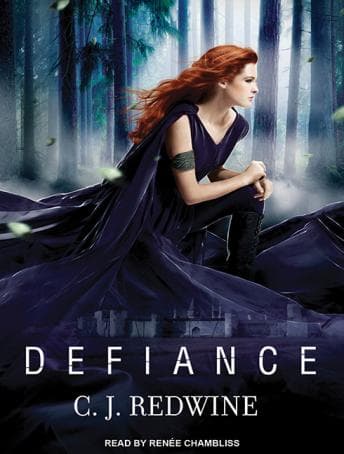
I wanted to love this. I really did. A walled city-state with a brutal Commander, a girl who fights instead of sews, a monster in the Wasteland that can't be killed - on paper, this is the kind of YA dystopian horror-adjacent fantasy that should've had me glued to my headphones during a late shift reshelving in the library basement. The setting practically screams atmospheric dread. But here's the thing about audiobooks: the narrator is your gateway drug, and if that gateway is lined with Ambien, you're not getting to the good stuff.
Let me back up. C.J. Redwine's Defiance has bones I respect. The world of Baalboden - a city where women are property, assigned male Protectors, punished for stepping out of line - is genuinely unsettling in the way good speculative fiction should be. It's not horror in the traditional sense, but the misogynistic social structure functions like a slow-burning psychological cage, and Rachel's defiance against it has real teeth. Shirley Jackson walked so dystopian YA heroines could run, and Rachel's rage at the system she's trapped in feels earned. The dual perspective between Rachel and Logan works well on the page - she's impulsive fury, he's calculated strategy. That tension should crackle.
Should.
The Batman Problem
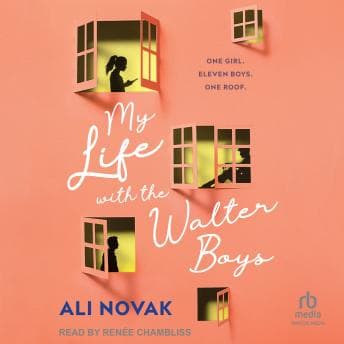
Renée Chambliss has moments where she nails something. Rachel's youthfulness comes through - there's a breathlessness to her internal monologue that feels age-appropriate without being annoying, which is harder than it sounds in YA narration. And the Commander gets this weathered authority in his voice that distinguishes him from the younger cast. But that's where the wins end.
The male characters all sound like they're doing Christian Bale's Batman voice after taking a sedative. I'm not exaggerating - one listener nailed it with that comparison and I can't unhear it. Logan, who's supposed to be this sharp, clever, emotionally conflicted young man, sounds like he's narrating a nature documentary at half speed. Every male character gets the same slow, gravelly, artificially deepened treatment, which means when Logan and another male character are in conversation, you're essentially listening to the same person argue with himself. In a book that alternates between two POV characters, one of whom is male, this is a structural problem that the narration never solves.
And the pacing. Oh, the pacing. Defiance has assassins, a Cursed One (the unkillable monster stalking the Wasteland), actual combat sequences, political betrayal - this is not a quiet book. But Chambliss delivers it all at the same drowsy tempo, like she's reading a bedtime story about the apocalypse. There's no gear shift when Rachel's fighting for her life versus when she's having an internal moment about Logan. It all comes out at the same flat register. I was shelving horror anthologies in dim fluorescent lighting at 8 PM - perfect conditions for tension - and I still caught myself drifting.
I bumped the speed to 1.25x around hour three. It helped. Not enough, but it helped.
The Story Underneath the Sleepy
Here's what frustrates me: strip away the narration issues and there's a solid YA dystopian adventure here. The romance between Rachel and Logan has that delicious awkwardness of "we have history and it's messy" - she confessed her love, he rejected her, now they're forced together by a dictator. That's a setup I can work with. The Wasteland sequences have genuine stakes, and Redwine doesn't shy away from violence or consequence. Rachel gets hurt. People die. The Commander is a villain who operates through bureaucratic cruelty, which is always scarier than someone who's just randomly evil.
But comparing this to other YA dystopian audiobooks I've covered on the podcast - The Hunger Games with Carolyn McCormick, Red Queen with Amanda Dolan - those narrators understood that genre fiction needs vocal dynamism. I kept thinking about The Dream Thieves, where the narration matches the book's strange, bruised energy beat for beat - you feel the difference when a reader actually believes in the world they're voicing. They committed. Chambliss doesn't commit. And that's the gap between an audiobook that works and one that fights against itself.
The Cursed One deserved better. A monster that can't be killed, lurking beneath the earth, drawn by something the characters carry? That's horror DNA in a YA wrapper. I wanted to feel that threat in the delivery. Instead I got the same measured, sleepy cadence I got during the romance scenes.
Who Gets the Invite, Who Gets Left Outside the Wall
If you're a Redwine fan and you want this story, read the print version. Seriously. The writing earns its New York Times bestseller status - Rachel is fierce, the world is specific, the political intrigue has layers. But the audiobook version undermines the story's intensity at almost every turn. If you're an audiobook-or-nothing listener, bump the speed and know that you'll need to actively focus to track which male character is speaking. This isn't background listening. It's not even casual listening. It's work.
My podcast listeners are going to hear me say this and be surprised, because I'm usually the person championing audiobooks as the superior format. But some books get better narrators than they deserve, and some books deserve better narrators than they get. Defiance is the latter. Shirley (my cat) was unimpressed. For once, I agreed with her.