
What happens when someone writes a brutally honest memoir but the narrator sounds like she's announcing prom court?
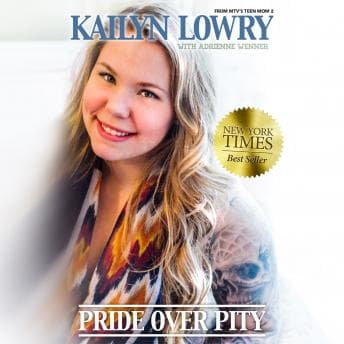
I was prepping for a client call—startup founder dealing with some genuinely messy personal stuff affecting the business—and thought I'd listen to something that might give me perspective on resilience narratives. Kailyn Lowry's story seemed right. Reality TV star, teen mom, survived what sounds like actual hell. The kind of real-world grind my parents would recognize.
The Gap Between Lived Pain and Performed Emotion
Here's the thing about this audiobook that kept nagging at me: there's a fundamental mismatch happening. Lowry's writing is raw. She's talking about sexual trauma, custody battles, a bipolar diagnosis, the whole brutal machinery of being a young woman with no safety net. This isn't manufactured drama—this is someone putting genuine scars on paper.
But Renee Chambliss delivers it with this high-pitched, almost cheerleader-adjacent energy that creates cognitive dissonance. You're hearing about serious trauma while the vocal tone suggests she's recapping a sorority mixer. It's not that Chambliss is a bad narrator—she's technically competent. It's that the voice doesn't match the weight of the content. Imagine someone reading your darkest journal entries with a smile in their voice. That's the experience.
Some listeners apparently connected with it anyway. The emotional transparency comes through despite the delivery. But for me? I kept getting pulled out of the story.
What My Parents Would Recognize
Stripped of the reality TV packaging, Lowry's story is pretty universal immigrant-kid familiar to me. Single principle: don't let your circumstances define your ceiling. Head down, pride intact, figure it out. She's writing about creating stability for her son when she had none herself, about breaking cycles of dysfunction.
This is what my parents did instinctively. Now it has a TED talk. And an MTV show. And a memoir.
The book clocks in at 5 hours 19 minutes, which is actually refreshing. No padding. She says what she needs to say and gets out. I respect that. At 2.0x speed, I finished it during one long afternoon of client prep and a dinner with Jenny (who asked why I was frowning at my phone—I told her I was thinking about content-delivery mismatches and she changed the subject).
The Credit Question
Bottom line: Is this worth your credit?
If you're a Teen Mom fan who wants the behind-the-scenes story, probably yes. The content delivers what it promises—candid, vulnerable, real. Lowry doesn't hide from her mistakes or sanitize her history.
If you're coming to this as a general memoir reader looking for a well-crafted listening experience? The narrator situation is a real problem. That high-pitched melodrama isn't going to work for everyone, and several listeners felt it actively undermined the serious subject matter.
I've seen this pattern before in business contexts—authentic message, wrong messenger. Not wrong as in bad, just wrong as in mismatched. The packaging fights the product.
Who Gets Value Here (And Who Doesn't)
Fans of the show will find this essential. They already know Kailyn's voice from years of watching her, so they can mentally overlay that onto Chambliss's performance.
Young women dealing with similar challenges—unstable home life, early pregnancy, figuring out who they are—might find real comfort here. Very Punchable Face has that same clarity of purpose—knowing exactly who you're writing for and delivering directly to them. Lowry wrote this specifically for them, and that intention comes through.
But if you're narrator-sensitive? If vocal tone affects your ability to engage with heavy content? Skip to chapter 5. Thank me later. Or honestly, consider the print version.
Jenny would say I'm being harsh. Jenny is right. But I also think Lowry deserved a narrator who could match the gravity of what she was sharing. That disconnect isn't her fault, and it's not entirely Chambliss's fault either—it's a casting decision that didn't land.
Park's Final Assessment
The core message is worth the listen. The other 4 hours? Depends on your tolerance for that delivery style. At under 6 hours, it's not a massive time investment, and Lowry's willingness to be genuinely vulnerable about sexuality, trauma, and mental health is rare in celebrity memoirs. Open Book manages that same vulnerability with a narrator who actually matches the emotional weight.
But I can't ignore that narrator situation. It's like getting solid strategic advice delivered in Comic Sans—the substance is there, but something about the presentation keeps undermining it.
Wait for a sale. Or borrow it. The content earns respect; the audio execution doesn't quite earn a full credit.