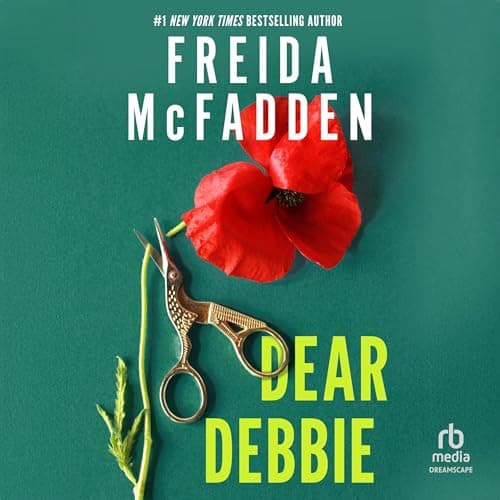

Everyone keeps telling me Freida McFadden is the queen of domestic thrillers, and I've been skeptical. I came to Dear Debbie expecting another paint-by-numbers "woman snaps" story with a twist you can see from orbit. I was wrong. Not completely wrong — but wrong enough that I'm sitting here at midnight, Shirley curled on my chest, lights very much on, rethinking my McFadden bias.
I started this one shelving returns at the library on a slow Tuesday afternoon, earbuds in, half-paying attention. By the time Debbie's advice column drafts started showing up — the real ones, the ones she actually wants to send, dripping with fury and dark comedy — I'd stopped shelving entirely. I was just standing in the 800s section holding a copy of The Joy of Cooking like an idiot, grinning.
The Drafts Are the Whole Point
Here's what McFadden gets right: the dual-layer structure of Debbie's column. You get the polished, professional "Dear Debbie" responses — supportive, measured, the kind of advice a New England housewife would clip and tape to her fridge. And then you get the drafts. The unhinged, profane, absolutely unfiltered versions Debbie writes before she edits herself into respectability. They're funny in a way that makes you uncomfortable, because you're laughing at a woman who is clearly unraveling. And the drafts aren't just comic relief — they're foreshadowing. By the time the payback arc kicks in, you realize those drafts were breadcrumbs. McFadden was telling you exactly who Debbie was becoming, and you were too busy laughing to notice.
The morally grey protagonist thing gets thrown around a lot in thrillers, but Debbie earns it. She's not "cool girl" morally grey. She's messy, petty, sometimes genuinely cruel. The tracking app on her husband's phone, the way she weaponizes her knowledge of other women's secrets from the column — it's uncomfortable. And the book doesn't let you off the hook by making her a secret saint. She's a woman who gave good advice to everyone else and terrible advice to herself, and now she's done pretending.
Three Narrators, Zero Weak Links
Julia Whelan handles Debbie with this precise balance of composure and barely-contained rage — you can hear the cracks widening as the story progresses. Her reading of the column drafts versus the published versions is where the performance lives. The drafts get this slightly breathless, almost giddy quality, like Debbie's enjoying herself too much. The published versions are flat, professional, dead inside. That contrast does more storytelling than half the actual plot.
January LaVoy and Scott Brick take the supporting POVs, and neither phones it in. LaVoy brings real weight to the daughters' sections — there's something genuinely unsettling happening with those girls, and LaVoy plays it close to the vest, letting you feel the wrongness without telegraphing it. Brick's work is solid, though his sections don't get as much room to breathe. The three-narrator setup could've felt fractured, but the production team earned their paychecks here. Clean handoffs, consistent tone, no jarring shifts.
The narrator commits. That's rare in multi-narrator thrillers where everyone's trying to out-perform each other. This cast understood the assignment: serve the story, not your ego.
Where the Seams Show
I won't pretend the plot is airtight. There are moments — particularly in the husband's storyline — where things happen because the plot needs them to, not because they make logical sense. And the pacing in the middle third sags a bit. You can feel McFadden setting up dominoes, and some of those scenes exist purely to position pieces for the final reveal rather than standing on their own.
But that final reveal? It lands. I've listened to enough thrillers that I'm usually three steps ahead, and this one caught me genuinely off-guard. Not with a cheap "gotcha" twist, but with a recontextualization that made me want to relisten to the first few hours. (I didn't. It was 1 AM. Shirley was judging me.)
Some listeners have complained about the informal tone, and I get it — there's a casualness to the narration style that might feel jarring if you're expecting a more traditional thriller delivery. But for me, that informality is the point. Debbie isn't a polished character. She's a woman falling apart in real time. The narration should feel a little unhinged.
Content Warning, Because I'm Not a Monster
There's a rape scene in here. It's not gratuitous, but it's present and it's not easy. There's also violence that escalates in ways that might catch you off-guard if you came in expecting pure dark comedy. This understands that horror — and yes, this dips into horror territory — isn't about gore. It's about dread. Poe understood this better than anyone — his best work in Works of Edgar Allan Poe, Raven Edition, Volume 2 is less about what happens and more about the unbearable weight of what the narrator knows. The dread of watching someone you've been rooting for cross lines you can't uncross.
Cataloging This One Under "Revenge Done Right"
At 7 hours 40 minutes, this is a tight listen. No bloat, even with the middle-third pacing issues. If you scare easily — not from monsters, but from the idea that the reasonable woman in your life might be keeping score — skip. If you don't, you need this.
My podcast listeners are going to love this one. I'm already drafting the episode. The drafts versus published column structure alone deserves a full segment. McFadden didn't just write a revenge thriller. She wrote a revenge thriller with a formal conceit that actually works, and that's harder than it sounds.
I listened in the dark. Mistake? Maybe. Worth it? Absolutely.