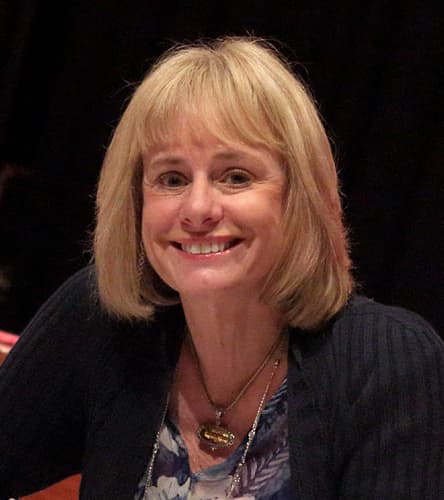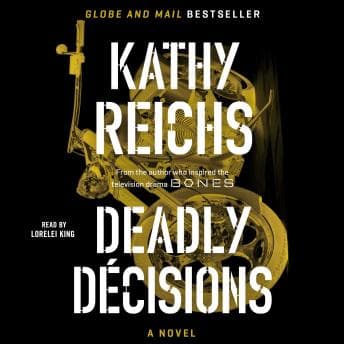

So here's the thing about Kathy Reichs that I think people forget - she's not just a crime writer who did her research. She IS the research. The woman is an actual forensic anthropologist, and Deadly Decisions makes damn sure you know it. I came into this one expecting a biker gang thriller with some bones thrown in (pun intended, no apologies), and what I got was... more complicated than that.
I was shelving returns at the library on a slow Thursday afternoon, earbuds in, when the opening hit - nine-year-old Emily Anne Toussaint, killed on a Montreal street. And look, I consume horror and violence like breakfast cereal, but there's something about the clinical specificity of Reichs' forensic descriptions layered over a child's death that lands differently than fiction-born gore. This understands that horror isn't about gore - it's about dread. The dread here is real-world dread. Outlaw motorcycle gangs. Missing teenagers whose bones turn up scattered across state lines. The kind of evil that doesn't need a supernatural explanation to keep you awake. That real-world dread is something Let Me Go channels too, though it leans harder into the thriller throttle and lighter on the procedural weight.
When the Science Becomes the Story (For Better and Worse)
Reichs goes deep on forensic procedure. Blood-splatter analysis, ground-penetrating radar, bone-sample breakdowns - it's the stuff that made Bones a hit, and it's clearly sourced from lived expertise. But here's where the audiobook format creates a specific problem: dense technical passages that you can skim on the page become walls of sound when narrated. I caught myself rewinding more than once because my brain glazed over during an extended explanation and I'd missed a plot-critical detail buried in the science. If you're listening while doing anything that requires even partial attention - driving, cooking, existing as a human with thoughts - you're going to lose threads. This is a focus listen, full stop.
The dual-location structure (Montreal to North Carolina and back) keeps the plot from going stagnant, but Tempe Brennan's personal entanglements are starting to feel like they're running on a loop. The will-they-won't-they with Andrew Ryan, the tension with her niece - some of these character beats are beginning to calcify into formula. I've seen listeners say some characters are "fast becoming clichés," and I can't entirely disagree. Reichs is brilliant at the procedural spine of her stories. The emotional connective tissue? It's functional but it's not where the book's heart beats hardest.
The Lorelei King Problem
Here's where the popular opinion split gets interesting, and I land firmly in the middle of it. Lorelei King has a voice that's easy to settle into - warm, professional, competent. Some listeners swear by her Tempe Brennan. Others have noticed something that drove me a little sideways: she recycles vocal profiles. Brennan ends up sounding like other female characters - specifically, there's a bleed between Tempe and her niece that made a few scenes confusing when I wasn't looking at the screen to check who was speaking. Same thing happens with the male characters - Ryan's voice shares enough DNA with other men in the cast that during group conversations, I had to do mental math to track who was talking.
And then there's the inflection issue. King has this habit of lifting her pitch at the end of declarative sentences, turning statements into something that sounds like questions? You hear it more during exposition-heavy passages, and in a book that's already demanding your full attention for technical content, it adds an extra layer of cognitive friction. It's not a dealbreaker. But the narrator doesn't fully commit to the darker material the way I want. That's rare in a good way when someone does commit, and noticeable in a bad way when they don't.
That said - she's consistent across the Reichs catalog, so if you've listened to the previous Tempe books and liked her work, you'll be fine here. If this is your entry point, just know what you're getting.
Who Needs This and Who Should Walk Away
If you're deep into the Tempe Brennan series, this is a necessary chapter - the biker gang investigation is a significant arc, and the forensic detail is peak Reichs. If you love procedurals where the science feels earned rather than invented, this delivers. But if you're looking for a standalone thriller or an audiobook you can half-listen to during chores? Skip it. The plot demands too much attention for casual consumption, and the narration won't carry you through the gaps.
My podcast listeners are going to have opinions about this one, specifically about whether Reichs' real-world expertise makes the violence land harder or whether the clinical distance actually cushions it. I think it does both, simultaneously, and that tension is what makes her interesting even when her characters start repeating themselves.
Shelving This One in the "Respect, Not Love" Section
Solid procedural. Authentic forensic detail that most crime writers can only dream of approximating. But the audiobook format amplifies both the book's density problem and the narrator's voice-recycling issue in ways that the print version probably wouldn't. Shirley (my cat) was unimpressed. I was... engaged but not gripped. There's a difference, and Deadly Decisions lives in that gap.