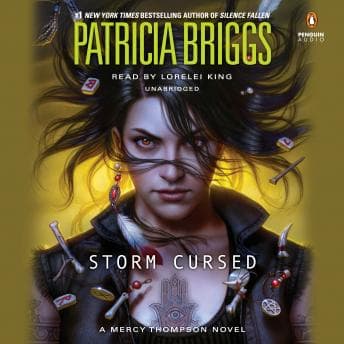

What happens when you give a coyote shapeshifter political responsibilities?
I was asking myself this around 2 AM, deep into a thesis-procrastination spiral, when I should've been writing about procedural dungeon generation but was instead listening to Mercy Thompson negotiate supernatural diplomacy. Look, Dr. Patel can wait. Zombie goats cannot.
The Magic System Is... Wait, There's Politics Now?
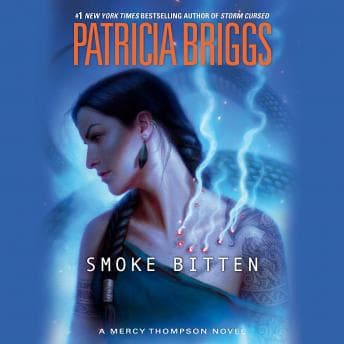
So here's the thing about Storm Cursed that caught me off guard—this isn't just another monster-of-the-week urban fantasy romp. Patricia Briggs has been quietly building this world for eleven books, and now we're seeing the payoff. The fae have gone public, the werewolves are trying to maintain territory, and Mercy's standing on a bridge making promises she might not survive keeping. That same blend of supernatural politics and personal stakes shows up in Once and Future Witches, though with a historical twist. It's giving "your D&D campaign accidentally became a political intrigue game because someone rolled a nat 20 on diplomacy."
The world-building here rewards long-time listeners. Briggs has constructed a supernatural ecosystem where every faction—werewolves, vampires, fae, witches—operates under different rules and power structures. The Gray Lords aren't just spooky fae nobility; they're calculating political players using human-fae relations as chess pieces. When black magic enters the picture (and it does, viscerally), the stakes feel earned because we understand exactly what's being violated. Giving Up The Ghost plays with similar dark magic consequences, though in a much shorter format.
That said, if you're jumping in here? Don't. This is book eleven. You need the history. You need to know why Stefan matters, why Marsilia's presence carries weight, why the pack dynamics work the way they do. Starting here would be like joining my D&D group in the final dungeon—technically possible, but you'd miss why everyone screamed when the NPC showed up.
Lorelei King Is Mercy Thompson and I Will Fight You
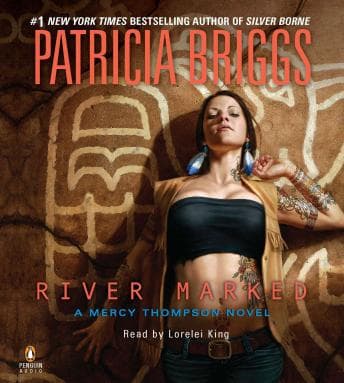
Look, I've listened to a lot of fantasy narrators. Steven Pacey is my gold standard. But Lorelei King doing Mercy Thompson? That's a different kind of perfect. She's been voicing this character for over a decade, and it shows in ways that matter.
Mercy's whole deal is being matter-of-fact about insane situations. She's a coyote shifter married to an alpha werewolf, and she talks about it like she's describing a carburetor problem. King nails this. Her delivery is calm, almost dry, which makes the emotional moments hit harder when they land. The tender scenes between Adam and Mercy—and there are several that made me pause my thesis avoidance to just... feel things—work because King doesn't oversell them.
Her male voices are distinct without being cartoonish. Adam sounds like an alpha without sounding like a parody of masculinity. The pack members each have their own vocal signatures. Her comedic timing during the goblin hunt sequences is genuinely funny—there's a beat she hits when Mercy's internal monologue goes sarcastic that just works.
Minor gripe: she mispronounces a few character names. Aurielle gets a weird treatment, and Stefan's pronunciation shifts occasionally. After eleven books, this is slightly annoying, but it's like complaining about a scratch on your favorite dice—noticeable, not ruinous.
The Pacing Problem (Or Is It?)
Some folks found this one slow. I get it. Briggs takes her time building tension, letting the political machinations simmer before the violence erupts. The action scenes, when they come, are written with Mercy's characteristic composure—she's not panicking, so the prose doesn't panic either. This can feel less urgent than you might want.
But here's my take: that's the point. Mercy's power isn't raw strength. She survives by thinking, by understanding the supernatural rules better than her enemies expect. The slower build lets you appreciate the strategy. When the final confrontation hits—and listeners aren't exaggerating when they call it breathtaking—the payoff lands because you've done the work.
At 10 hours, it's a comfortable listen. I did it across three thesis-avoidance sessions (and one long drive to my mom's place where she asked about graduation and I pretended my phone was dying). Some reviewers suggest 1.25x speed, and honestly? For the slower political sections, that's fair. I kept it at 1x for the pack interactions because I wanted to savor them.
Who Should Grab This (And Who Should Run)
If you've been with Mercy since Moon Called, this is essential. The character work, the pack dynamics, the slow-burn political tension—it's all here, and it's all paying off threads Briggs has been laying down for years.
If you want non-stop action urban fantasy? This might frustrate you. The thriller elements are present but measured. Mercy thinks her way through problems as often as she fights through them.
If you haven't started the series? Go back to book one. Seriously. This world deserves to be experienced in order.
Content-wise: there's violence, gore, black magic that gets genuinely dark. Not grimdark-for-shock-value, but consequences-have-weight dark. My D&D group would call it "appropriately gritty."
Roll for Recommendation
I read this instead of writing my thesis. Again. And I don't regret it.
Storm Cursed isn't the flashiest entry in the Mercy Thompson series, but it might be one of the most satisfying for longtime fans. Briggs is playing a long game with her world-building, and this book feels like watching pieces finally click into place. Lorelei King remains the definitive voice of Mercy—calm, competent, occasionally devastating.
Is it perfect? No. The pacing won't work for everyone, and the political complexity demands attention. But for those of us who've been following this pack for years? It's exactly what we needed.
Now if you'll excuse me, I have a thesis to continue ignoring.