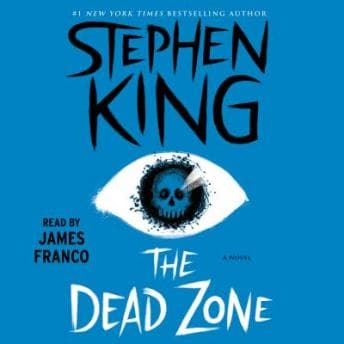

The Franco Problem (And Why It Might Not Be One)
Okay, so here's the thing about James Franco narrating Stephen King: it shouldn't work. Like, on paper, this is a weird choice. Hollywood actor doing a 17-hour psychological horror novel? My D&D group would've laughed me out of the room if I'd suggested it. But I gotta be honest - I didn't hate it. I might've even... liked it?
Look, I came into this expecting disaster. The internet is deeply divided on Franco's narration, and some of those takes are brutal. "Worst narrator I've ever heard" brutal. But here's where it gets interesting - the same qualities people hate are exactly what made this work for me. His delivery is restrained. Almost monotone at times. And for a book about a guy who wakes up from a coma with the ability to see people's futures through touch? That quiet, melancholy vibe hits different.
Johnny Smith isn't some bombastic hero. He's a man watching his life slip away while visions of death and destruction crowd his head. Franco's slow burn approach - and yeah, it's definitely a slow burn - captures that quiet torment in a way that a more theatrical narrator might've missed. It's like listening to someone who's just... tired. Tired of seeing things he can't unsee. (And honestly, after 17 hours, I felt a little of that exhaustion too. But in a good way? Mostly.)
When Menace Actually Lands
Now, the villain. Greg Stillson. This is where Franco earns his keep.
The guy oozes menace when he needs to. There's this unsettling quality to his Stillson that made my skin crawl - and remember, this book was written in 1979 but feels uncomfortably relevant now. The magic system here isn't spells and mana pools, it's the horrifying clarity of seeing exactly what a monster will become if no one stops him. Franco gets that. He leans into the dread. King's other narrators handle that same dread differently—like in It, where the horror is more visceral than existential.
But - and this is where the criticism has merit - his secondary characters can feel a bit flat. Some of the accents are awkward (there's a doctor character that people really don't like), and when you're spending 17 hours in a world, those minor roles need to pop more than they do here. It's not dealbreaker territory for me, but if you need every character voice to be distinct and dynamic, you might struggle.
The Sanderson Problem (But Make It King)
Here's my hot take: The Dead Zone is basically Sanderson-level setup for a single devastating payoff. King spends hours building Johnny's world - his relationships, his losses, his growing horror at what he can see - and it all funnels toward one gut-punch question: what do you do when you KNOW someone will destroy everything?
The progression is satisfying in that slow-build way. This isn't LitRPG stat blocks (unfortunately), but the escalation of Johnny's visions and the political thriller elements scratched a similar itch for me. That same methodical escalation shows up in Dark Tower II, where King builds toward inevitable confrontations with equally careful pacing. You're watching pieces move into place, knowing the collision is coming.
Franco's pacing actually serves this well. He doesn't rush the quiet moments, which means when things get intense, the contrast lands harder. My mind wandered a few times during the slower middle sections - I'm not gonna lie - but I was coding during those parts anyway. (Still not writing my thesis. Dr. Patel, if you're reading this: I'm almost done. Probably.)
Who's Rolling Initiative on This One?
If you need your narrators to be Steven Pacey-level theatrical with distinct voices for everyone? This isn't that. Franco's approach is more like a really good friend telling you a story late at night - quiet, personal, sometimes a little flat, but with moments of genuine emotional depth that catch you off guard.
If you're a King fan who's read this before, the audiobook adds a layer of melancholy that I didn't expect. It made me think about Johnny differently - less as a protagonist and more as a tragedy happening in slow motion.
But if monotone delivery makes you zone out? If you need constant energy to stay engaged? Sample this first. Seriously. The polarized reviews exist for a reason, and you'll know within 20 minutes which camp you're in.
Saving Throw: Passed
For me, this was a solid commute companion. Not perfect - the 17-hour runtime felt long in spots, and some character work could've been sharper. But Franco's restrained, almost haunted delivery stuck with me longer than I expected. Sometimes the quiet voices are the ones that echo.
(Now if you'll excuse me, I have a thesis to definitely work on. Right after one more chapter of Stormlight.)