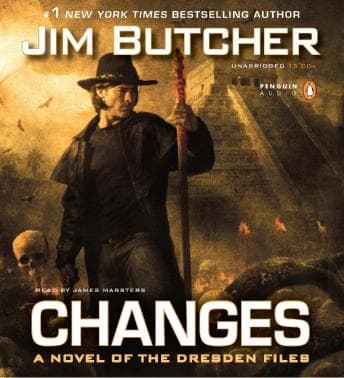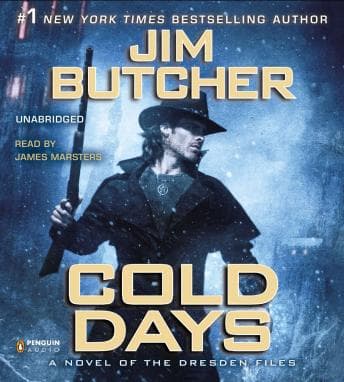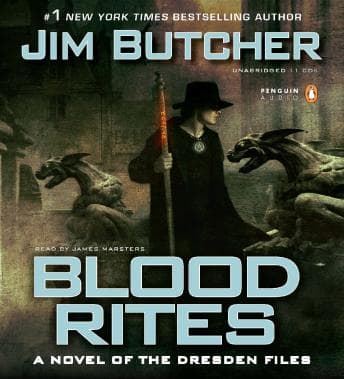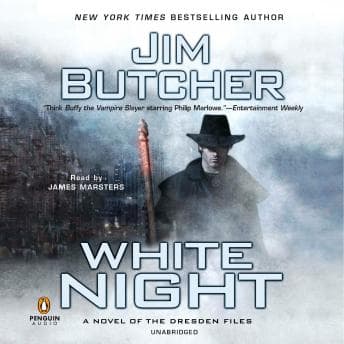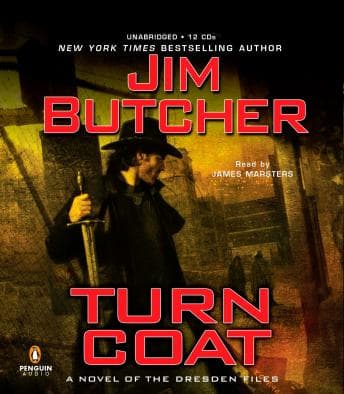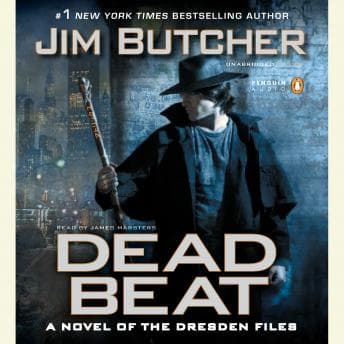

Look, I need to talk about what happened on my morning jog through Cambridge last Tuesday. I'm halfway through the route, dodging undergrads on their phones, and Harry Dresden is riding a zombie T-Rex through Chicago.
A zombie. T-Rex.
I actually stopped running. Just stood there on the sidewalk like an idiot, earbuds in, probably looking like I was having some kind of episode. Because Jim Butcher had the audacity to put a reanimated dinosaur in a noir detective story and somehow - somehow - make it work.
The Psychology of Harry Dresden (And Why I Can't Stop Analyzing Him)
Here's the thing about this series that hooks me as a behavioral psychologist: Harry Dresden exhibits classic hero-complex patterns, but Butcher understands the underlying trauma architecture. This isn't just a wizard punching monsters. This is a man whose entire identity is built around protecting others because he couldn't protect himself as a child. The research actually shows that protector archetypes often mask profound self-worth issues, and Dead Beat leans into that hard.
The plot - vampire blackmails Harry to find some necromantic artifact before six evil wizards can use it to become gods on Halloween - is honestly secondary to watching Harry's psychological state deteriorate under pressure. He's isolated from his usual support network, Murphy's career is on the line, and he's making increasingly desperate choices. What makes this character compelling is that his heroism and his self-destruction are the same impulse.
My therapist would have thoughts about this character. Many thoughts.
But Butcher balances the darkness with genuine wit. Harry's internal monologue is sardonic in a way that feels earned rather than performative. He's not quipping to seem cool - he's quipping because gallows humor is a documented coping mechanism for chronic stress. (Yes, I'm analyzing a fictional wizard's defense mechanisms. This is what I do. Don't judge me.)
Why James Marsters IS Harry Dresden
I've listened to a lot of audiobooks. A lot. And I can count on one hand the narrator performances that made me forget I was listening to a performance at all. James Marsters - and yes, that's Spike from Buffy, for those keeping track - has somehow crawled inside Harry Dresden's head and set up permanent residence.
The voice work here is genuinely impressive from a technical standpoint. Each character has a distinct vocal signature that remains consistent across fifteen hours. Bob the skull sounds appropriately lecherous and ancient. Murphy sounds tired and tough in equal measure. The villains each have their own particular brand of menace. But what Marsters really nails is Harry's emotional range - the exhaustion, the determination, the moments of genuine fear he tries to hide behind bravado.
There's this scene where Harry is confronting something genuinely terrifying (trying to avoid spoilers here, but let's just say the necromancers are not messing around), and Marsters' delivery shifts from Harry's usual sarcasm to something rawer. You can hear the character's mask slipping. That's not just good narration - that's acting.
The pacing never dragged for me, even at fifteen hours. I found myself "accidentally" extending my jogs, taking longer routes to the grocery store, cooking increasingly elaborate dinners just to keep listening. (The lamb biryani I made last week was entirely motivated by wanting to hear how the polka battle ended. Context: there's a polka battle. It's exactly as ridiculous as it sounds and I loved every second.)
Where Noir Meets Necromancy
Butcher's doing something interesting with genre here - a fascinating case study in how noir conventions translate to fantasy settings. The rain-soaked streets become snow-covered Chicago. The femme fatale becomes a vampire with leverage. The detective's moral compromise becomes a wizard making increasingly questionable magical choices.
I've seen similar noir-to-thriller translations work in Any Means Necessary, though that one stays grounded in political reality rather than going full supernatural.
But the psychology tracks. That's what keeps me coming back. The characters behave like actual humans under pressure - they make bad decisions, they prioritize the wrong things, they let personal feelings cloud professional judgment. Butcher understands human nature in a way that a lot of fantasy writers don't bother with.
Is it perfect? No. Some of the female characters still feel a bit underwritten compared to Harry's rich internal life. And there are moments where the action sequences go on slightly longer than my attention span preferred. But these are minor complaints against what is otherwise a genuinely entertaining fifteen hours.
Who's This For (And Who Should Run the Other Way)
If you like your fantasy with psychological depth and your noir with a side of the supernatural, this is your book. Skip it if you need female characters as fully developed as the male lead, or if fifteen hours of escalating magical chaos sounds exhausting rather than exhilarating.
The Diagnosis
Honestly? I might listen again. There's enough layered into the character dynamics that I suspect I missed things the first time through. Plus, I need an excuse to make more biryani.
If you're new to the Dresden Files, you could technically start here - Butcher provides enough context - but you'd be missing the accumulated weight of Harry's relationships. Start from the beginning if you can. If you're already a fan who's been reading instead of listening, switch to audio. James Marsters brings something to this that the page can't replicate.
Just maybe don't listen during your morning jog. The zombie dinosaur scene will make you stop in the middle of the sidewalk, and the undergrads will look at you weird.