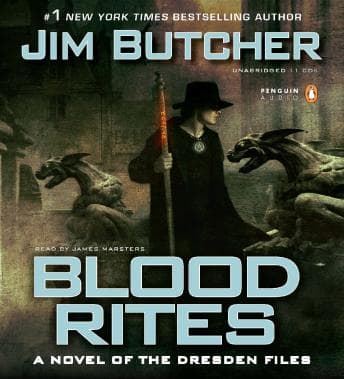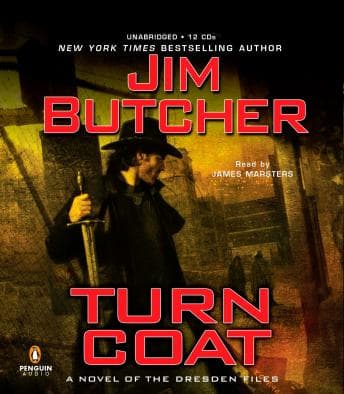

Morgan showing up at Harry Dresden's door, bleeding and accused of murder? About the last thing I expected from this series. And I've been through eleven of these books now. The man who's spent years wanting to take Harry's head off is suddenly asking for help. That's the kind of tactical situation that makes you sit up straighter.
I burned through this one during a week of client site visits across Texas. Fourteen hours of windshield time, and honestly? It flew by. Ranger rode shotgun for most of it, and even he seemed invested - though that might've been the AC.
When the Enemy Becomes the Asset
Here's what Butcher does brilliantly: he takes Morgan - a character I've genuinely disliked for years - and makes me care about saving him. That's no small feat. The guy's been a thorn in Harry's side since book one, rigid as a steel rod and twice as unforgiving. But watching him vulnerable, wounded, desperate enough to trust the wizard he's always despised? That's character work that actually landed.
Butcher's ability to redeem a character through vulnerability reminds me of what Margaret Atwood pulled off in Testaments - taking someone you thought you knew and showing you layers you didn't expect.
The mystery itself is solid military-grade plotting. There's a traitor on the White Council, and Harry's got to find them before Morgan's head ends up on the chopping block. (And before his own does, frankly.) The investigation takes some genuinely unexpected turns. I thought I had the mole figured out around hour six. I was wrong. Butcher plays fair with the clues, but he's good at misdirection.
The action sequences are where my tactical brain kicks in, and Butcher clearly did his homework on combat pacing. There's a confrontation with a skinwalker - I'm not spoiling details - but it's one of the most intense supernatural fights in the series. The author understands that real danger comes from enemies you can't just punch your way through. Harry gets genuinely outmatched here, and that vulnerability makes the stakes feel real.
That same kind of tactical mismatch - where the protagonist has to outthink rather than overpower - is what made Knight of the Seven Kingdoms work so well for me.
Why Marsters Owns This Role
James Marsters has been voicing Harry Dresden for so long now that I can't imagine anyone else in the role. It's like how certain actors just become their characters - Marsters IS Dresden at this point. His delivery of Harry's internal snark is spot-on, but what impressed me more this time was how he handled Morgan.
Morgan's always been voiced with this rigid, almost hostile edge. But in Turn Coat, Marsters finds something else in there - exhaustion, desperation, maybe even a grudging respect for Harry that neither character wants to acknowledge. It's subtle work. The kind of thing you might miss if you're not paying attention, but it adds layers to every scene they share.
The character voices remain distinct and identifiable. I particularly appreciated his work on the various Council members - you can tell who's speaking without the attribution tags. That's professional-grade narration. The pacing matches the book's rhythm perfectly: slower during the investigation scenes, accelerating when things go sideways. And things go sideways a lot.
Mission Debrief
Turn Coat is the Dresden Files hitting its stride. The series has been building toward this kind of internal conflict within the White Council, and Butcher delivers. The mystery is tight, the action is intense, and the character development - especially for Morgan - adds emotional weight that earlier books sometimes lacked.
Is it perfect? No. There's a stretch in the middle where Harry's juggling so many plot threads that I lost track of one or two. And some of the supernatural politics gets dense enough that I rewound a couple of sections. Minor complaints against a book that mostly succeeds at what it's trying to do.
Who should listen: If you're already invested in the Dresden Files, this is essential. For my fellow veterans who appreciate books where the protagonist faces impossible odds and has to think his way through rather than just muscle through? Mission accomplished. Who should skip: If you're new to the series, start at the beginning - there's too much context you'd be missing here.
Ranger approved this one. He only fell asleep during the slower Council deliberation scenes, which is better than most audiobooks manage.