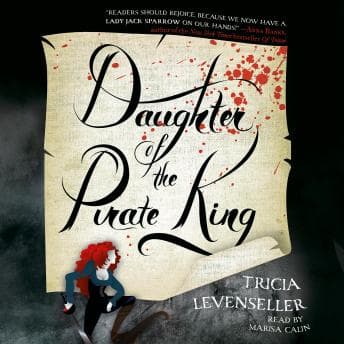

Look, I need to lodge a formal complaint with whoever decided to categorize this as "Self-Help." Unless "self-help" now means "learning to manipulate your captors while being devastatingly attractive," in which case—fine, I'll allow it.
I started this during a late-night cooking session. Chicken tikka masala from scratch, the kind that takes two hours and makes my apartment smell incredible for days. Perfect pairing, as it turned out, because both the dish and Alosa require patience to appreciate the layers.
The Psychology of a Pirate Who Refuses to Be a Victim
Here's what grabbed me immediately: Alosa is a fascinating case study in competence fantasy done right. She's seventeen, she's a captain, she deliberately gets captured—and the book never once makes her feel like she's in over her head. The protagonist exhibits classic high-agency behavior patterns, but what makes her compelling is the why. She's not just competent because the plot demands it. There's genuine strategy happening in her head, real calculation, and Levenseller lets us see the gears turning.
The enemies-to-lovers dynamic with Riden? Psychologically, this actually tracks. They're both playing games, both convinced they're the smarter one, and that mutual underestimation creates genuine tension. I found myself asking: why does Riden keep coming back to her cell? The answer isn't just attraction—it's ego. He needs to prove he can figure her out. She needs to prove he can't. It's a power dynamic dressed up in flirtation, and I was absolutely here for it. The strategic maneuvering between them reminded me of the power plays dissected in 50th Law—same psychological chess game, just with more sexual tension and fewer business metaphors.
Marisa Calin Understands the Assignment
The narration. Oh, the narration. Calin gives Alosa this confident, almost amused tone that sells the whole premise. When you're listening to a character who's supposedly "captured" but clearly running the show, the voice has to walk a tightrope between vulnerability and control. Calin nails it.
Her male voices aren't dramatically differentiated—you're not getting wildly different accents for each crew member—but honestly? It works. This is Alosa's story, her perspective, and everyone else is filtered through how she sees them. The men blur together a bit because to Alosa, most of them are just obstacles. Riden stands out because he's the only one she can't quite dismiss.
The pacing is excellent for what this is: a YA adventure with romantic tension. At 7 hours 26 minutes, it doesn't overstay its welcome. I finished the tikka masala, ate it, did the dishes, and still had time to finish the book before bed. (My therapist would have thoughts about me calling that a productive evening, but she'd be wrong.)
Where the Research Comes Up Short
I'll be honest—I went looking for specific scenes that listeners loved, moments that made people gasp or cry or throw their headphones. Couldn't find much. The reviews are all variations of "engaging" and "immersive" without pointing to particular beats. Which tells me something interesting: this book works as a vibe more than a collection of memorable moments.
That's not a criticism, exactly. Some books are about the journey, the sustained pleasure of competent execution. This is comfort food. It's the audiobook equivalent of my chicken tikka masala—you know what you're getting, it's reliably good, and sometimes that's exactly what you need.
The "magic" element mentioned in the description is pretty light—more of a tease for future books than a fully developed system here. If you're coming for complex fantasy worldbuilding, adjust expectations accordingly. This is pirates and banter first, everything else second.
A Note on Content
I do need to mention: there are some implied and attempted sexual assault moments. They're brief, handled as threats rather than graphic scenes, but they're there. If that's a dealbreaker for you, now you know. The author uses them to establish stakes and villainy, which—the research actually shows this is a common but controversial choice in YA. It worked for me in context, but your mileage may vary.
Who's This Really For?
You'll love this if: you want a confident female protagonist who's never the damsel, you enjoy enemies-to-lovers with actual verbal sparring, you're in the mood for something fun rather than heavy.
Skip it if: you need complex magic systems, you want deeply differentiated character voices in your narration, or you're looking for something that'll challenge you intellectually. This is escapism, and it knows it.
The Clinical Assessment
Daughter of the Pirate King is exactly what it promises to be: a YA pirate adventure with a protagonist who's smarter than everyone around her and knows it. Marisa Calin's performance elevates good material into genuinely enjoyable listening. Is it going to change your life? No. But did I immediately check if the sequel was available? Also yes.
Sometimes you don't need a book to be profound. Sometimes you need a seventeen-year-old pirate captain to outsmart everyone while flirting with her captor. The human mind has patterns, and one of them is "we love watching competent people be competent." Levenseller understands that impulse—at least, the part of us that wants to feel powerful and clever by proxy.