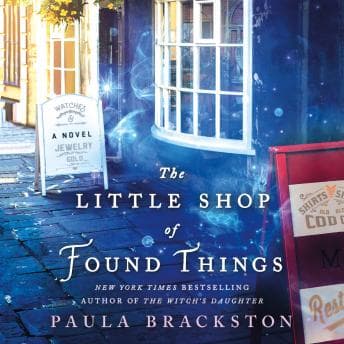

When I see a Kirkus comparison to Outlander, my first instinct is skepticism. That comparison gets thrown around like confetti at a wedding. But Paula Brackston's Little Shop of Found Things actually earns it, though maybe not in the ways you'd expect.
This is time-travel done through antiques. Xanthe, our protagonist, can sense the stories locked inside old objects—which, as someone who spends entirely too much time in estate sales with Denise, I found weirdly relatable. The silver chatelaine that pulls her back to 1605 isn't just a plot device. It's the kind of object that makes you understand why people become collectors in the first place.
The Seventeenth Century as Character
Brackston does something clever here. She doesn't just use the past as a backdrop for romance—she makes it feel genuinely dangerous. The turbulent days around 1605 (we're talking Gunpowder Plot territory, folks) create real stakes. There's a ghost threatening Xanthe's mother, a wrongful accusation that needs righting, and an architect named Samuel Appleby who complicates everything.
The historical detail isn't overwhelming. It's not one of those novels where you feel like you're reading a research paper dressed up as fiction. Brackston threads in enough period authenticity to ground you without drowning you. My students would probably call this "accessible"—and for once, I don't mean that as an insult.
The mother-daughter relationship between Xanthe and Flora surprised me. It's the emotional anchor that holds the whole thing together. That kind of mother-daughter dynamic—complicated, loving, and utterly central to the story—shows up beautifully in My Brilliant Friend too, though in a completely different context. Flora's antique shop isn't just a setting; it's a refuge they're building together after leaving London. When that gets threatened, you feel it.
Why Marisa Calin Works
Here's where the audiobook format really shines. Calin has this warm, clear delivery that never feels rushed. At nearly 13 hours, pacing matters—and she nails it. The shifts between present-day Marlborough and seventeenth-century England could easily feel jarring, but her voice carries you through the transitions without a hitch.
What I appreciated most was her restraint. She doesn't oversell the romantic moments or push too hard on the suspense. There's a steadiness to her performance that lets Brackston's prose breathe. (This is why I listen at 1.0x, people. The pauses matter.)
The emotional beats land because Calin trusts the material. When Xanthe realizes she might not want to come back from the past, you hear the conflict in how the lines are delivered. Not theatrical. Just... honest.
Where It Falters
I'd be lying if I said this was perfect. The ending feels a bit unresolved—clearly setting up the sequel rather than standing on its own. For a standalone listen, that might frustrate you. I found myself wanting just one more scene, one more conversation that tied things together.
And look, if you need your time-travel mechanics explained with scientific precision, this isn't your book. The "how" of Xanthe's gift stays pretty mysterious. Brackston is more interested in the "what it means" than the "how it works." That's a stylistic choice that works for me but might not work for everyone.
The romance is slow-burn. Very slow-burn. Samuel Appleby is charming enough, but their connection builds gradually over the course of the book. If you're looking for instant chemistry and dramatic declarations, adjust your expectations.
Who This Is (and Isn't) For
Perfect for long drives or weekend cleaning marathons. I listened to most of it while grading essays—and honestly, it made the stack of mediocre papers on The Great Gatsby almost bearable. The story moves at a pace that rewards attention but doesn't punish you for getting distracted by a particularly egregious comma splice.
Fans of Diana Gabaldon will find familiar territory here, but Brackston carves out her own space. It's gentler than Outlander, less epic in scope but more intimate. The antique shop setting gives it a cozy quality that the Scottish Highlands don't quite have. If you loved The Witch's Daughter, you already know what you're getting. If this is your first Brackston, it's a solid entry point.
Skip it if you need hard rules for your time-travel or if cliffhanger endings make you throw things.
Class Dismissed
I finished this on a Sunday morning walk along the lakefront, and it left me in exactly the right mood. Not every book needs to be challenging or transformative. Sometimes you want a story that transports you somewhere else for a while, tells you a good tale, and brings you back satisfied.
Marisa Calin's narration elevates what could have been a straightforward time-travel romance into something more immersive. The production is clean, the pacing is right, and the nearly 13 hours never dragged.
Will I listen to the sequel? Yeah, probably. There's something about Xanthe's gift—this ability to hear the stories objects carry—that feels like it has more to say. And honestly, I want to know what happens with Samuel.
(Don't tell my students I spent my weekend listening to a time-travel romance. My reputation as a Serious Literature Person is already hanging by a thread.)