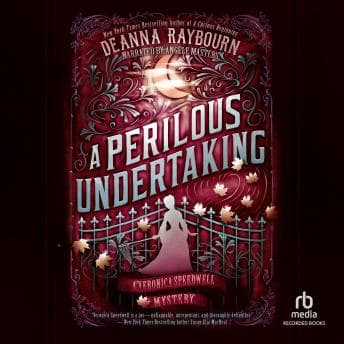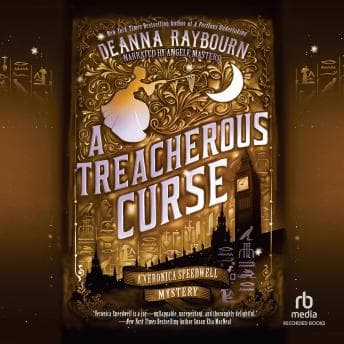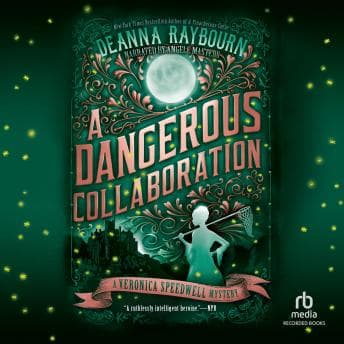

Gothic horror on a Cornish island with a disappeared bride, spectral figures, and a house party where everyone's a suspect? Deanna Raybourn knows exactly what she's doing, and I'm here for every atmospheric second of it.
I started this one around midnight—classic mistake, classic me—curled up in my reading chair with Shirley (the cat, not the author, though Jackson would absolutely approve of this book's gothic sensibilities). By hour two, I'd pulled a blanket over my lap not because I was cold but because something about isolated islands and missing brides makes you want to feel... contained. Safe. The fog rolling in off the Cornish coast felt uncomfortably real through my headphones.
When the Setting Becomes a Character
Look, I've consumed enough gothic fiction to recognize when an author truly understands the genre versus when they're just slapping some candlesticks and creaky floorboards onto a mystery. Raybourn gets it. The Romilly estate isn't just a backdrop—it's practically breathing. The isolation of a remote island, a wedding that ended in disappearance, ghostly music drifting through corridors at night. End Game builds that same kind of creeping dread, where the real terror lives in what you can't quite see. This understands that horror isn't about gore—it's about dread. The slow accumulation of wrongness.
Veronica Speedwell makes for an unconventional gothic heroine, and that's precisely why she works. She's a natural historian who approaches spectral phenomena with the same analytical eye she'd apply to a butterfly specimen. There's something delicious about watching a rational woman navigate a space designed to unsettle her—she refuses to be the trembling ingenue, but even she can't quite shake the unease. The fake engagement to Stoker's brother Tiberius adds a layer of social horror to the supernatural variety. Victorian propriety meets possible murder? Sign me up.
Angele Masters Commits to the Chaos
The narrator commits. That's rare. Masters has been voicing Veronica for four books now, and she's got the character's no-nonsense snark down to muscle memory. The way she delivers Veronica's internal observations—that dry, slightly exasperated tone when dealing with dramatic house guests or her complicated feelings about Stoker—feels lived-in rather than performed. I heard similar character depth in Valley of Amazement, where the narrator had to carry complex emotional arcs across decades.
Her accent work deserves specific praise. This is a book full of characters from different social strata, and Masters shifts between aristocratic drawl and working-class directness without it ever feeling like a parlor trick. Tiberius sounds appropriately polished and slightly dangerous. Stoker's gruffness comes through with just enough underlying concern to sell the slow-burn romantic tension. When Veronica's vulnerability surfaces—and it does, in moments that caught me off guard—Masters doesn't oversell it. She lets the emotion land.
I've seen some listeners mention the narration doesn't quite fit as well as earlier installments, and I can see the argument. There's a slight shift in how some characters land. But honestly? Four books into a series, these are minor calibration issues, not dealbreakers. Masters still owns this role.
The Mystery Underneath the Atmosphere
Here's where I'll admit something: I figured out one of the twists early. Not because Raybourn telegraphed it poorly, but because I've been trained by a hundred gothic novels to spot certain patterns. The "every guest has a connection to the missing bride" setup is classic Agatha Christie territory, and Raybourn plays with those expectations skillfully.
What kept me listening past 2 AM wasn't the whodunit—it was the how and why. The dynamics between characters, the slow reveal of Rosamund's story, the way the supernatural elements dance on the edge of explanation. Is it ghosts? Is it manipulation? The book keeps you guessing without feeling cheap about it.
The Veronica-Stoker tension simmers throughout, occasionally boiling over in ways that made me pause the audiobook just to sit with my feelings. (Shirley was unimpressed by my emotional investment. She's a cat. She doesn't understand Victorian romantic tension.) Their dynamic has built over four books, and the payoff here feels earned rather than manufactured.
Who Should Queue This Up (And Who Should Skip)
If you've been following the series, this is essential. If you're new to Veronica Speedwell... honestly, you could start here, but you'd be missing context that makes the character relationships richer. Go back to book one. You'll thank me.
Perfect for listeners who want their mysteries wrapped in gothic atmosphere. If you need breakneck pacing, look elsewhere—this is about mood, about the slow accumulation of secrets, about a house party where everyone's hiding something. I listened at 1.2x and that felt right. Fast enough to maintain momentum, slow enough to savor Masters' accent work.
Content-wise: there's violence, some language, and sexual content. Nothing extreme, but it's not cozy mystery territory either.
Already Planning the Podcast Episode
Gothic romance meets locked-room mystery, a heroine who refuses to be frightened into submission, and a narrator who understands that audiobook performance is acting. Raybourn writes the kind of historical fiction that respects its genre conventions while subverting them just enough to feel fresh.
I listened in the dark. Mistake? Maybe. Worth it? Absolutely. The Cornish fog hasn't quite left my imagination yet, and I'm not mad about it.