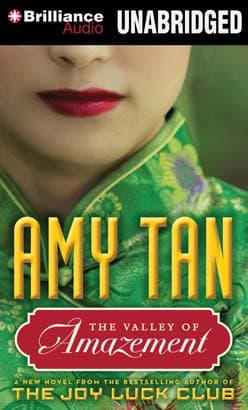

I started this one during parent-teacher conferences week. You know the drill - twenty-minute breaks between sessions where you're supposed to be prepping but instead you're hiding in your classroom with your eyes closed, letting someone else's voice wash over you. Twenty-five hours is a commitment, but honestly? The chaos of old Shanghai felt oddly appropriate while parents asked me why their kid got a B+ on their Gatsby essay.
Amy Tan does something here that I try to explain to my students about great literature - she writes about the universal through the specific. The mother-daughter fractures in this book aren't just Chinese-American experiences. They're human ones. My Confession explores that same kind of inherited pain between generations, though in a completely different setting. Lucia and Violet's parallel journeys of betrayal, reinvention, and that desperate clawing for love from people who can't or won't give it - that's Faulkner territory. That's the stuff that lasts.
When Three Voices Actually Work
Here's the thing about multi-narrator audiobooks: they can feel like a gimmick. Like the publisher threw money at a problem instead of trusting one performer. But this setup earns its complexity. Nancy Wu carries the bulk of the narrative as Violet, and she gets the sarcasm right. The bitter humor of a woman who's learned that survival requires performance - Wu understands that Violet isn't just telling her story, she's performing it, even to herself.
Joyce Bean handles Lucia's sections, and there's this quality to her delivery - conflicted, almost hesitant in places - that captures a woman who made choices she can't undo and knows it. The emotional register shifts between defiance and regret, sometimes in the same sentence. That's hard to pull off.
And then there's Amy Tan herself narrating the mentor's chapters. Look, I'll be honest: there are some technical issues. Swallowing noises. A flatter tone than the professional narrators. But there's also something authentic about hearing the author's own voice in those sections. It's like she's pulling you aside to explain something the characters can't see yet.
The Problem Nobody Wants to Mention
The male voices. Nancy Wu is brilliant with the women, but when men speak, it gets... complicated. The accents waver. Some of the dialogue feels stiff in a way it doesn't on the page. And there are moments where Wu's and Bean's voices overlap in memory or parallel scenes, and you lose track of who's speaking for a beat.
My students would call this "mid." I'd call it a minor distraction in an otherwise rich performance. But if you're someone who needs pristine narration or you're easily pulled out of a story by inconsistency, fair warning.
The Slow Burn That Paid Off (Mostly)
Forty years. Two continents. The collapse of an empire and the rise of a republic. Tan isn't in a hurry, and neither should you be. This is a 1.0x listen, absolutely. The prose is doing work that speed-listening would destroy.
But - and I say this with love - the ending drags. There's a point around hour twenty where you feel like Tan didn't quite know how to let go. One of my podcast listeners (hi, Mom) would say I'm being too harsh. Maybe. But I teach kids about narrative economy, and this book could've used an editor willing to push back on the final act.
The thing is, even when it meanders, the emotional core holds. The courtesan houses of Shanghai aren't just exotic backdrops - they're systems of power and survival that Tan renders with the same unflinching eye she brought to The Joy Luck Club. That kind of world-building—where the setting becomes inseparable from character—reminded me of the layered reality in Alice In Wonderland, though obviously in a much darker register. The business of seduction and illusion, the way women navigate structures designed to use them - it's devastating and funny and deeply researched.
Would I Assign This to My Students?
Probably not. It's long, it's dense, and the sexual content would get me some angry emails. But would I recommend it to anyone who's ever wondered why their mother is the way she is, or why they became the person their daughter doesn't understand? Absolutely.
This is a book about inherited trauma before we had that phrase. About how love gets twisted by circumstance and culture and sheer bad luck. About women who refuse to disappear quietly.
Denise and I finished it on a Saturday walk along the lakefront. She cried at the end. I pretended I didn't. (I did.)
The narration isn't perfect. The pacing isn't perfect. But the story - the messy, sprawling, too-long, absolutely human story - that's the real thing. If you love multigenerational family sagas and can sit with a slow build, this one will reward you. If you need tight pacing or clean, single-narrator audio, you'll probably bounce off it. My students would hate it. I loved it.