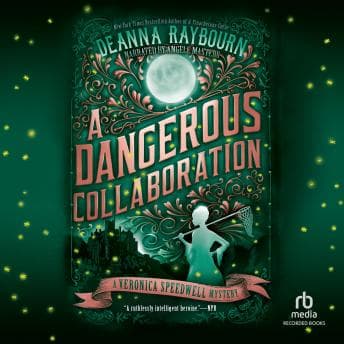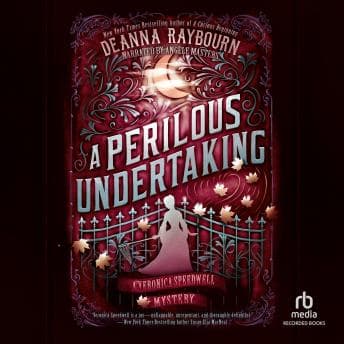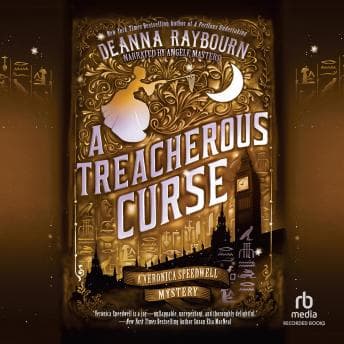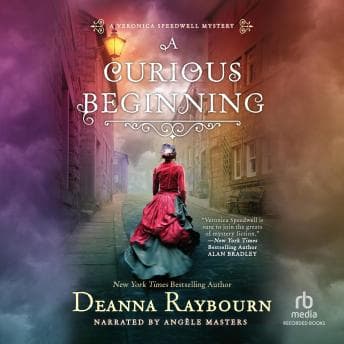

Look, I'll be honest - I picked this up because I needed something to get me through a stack of sophomore essays on The Great Gatsby. (If I read one more paper calling Nick Carraway "relatable," I might scream.) What I didn't expect was to find myself genuinely invested in a Victorian butterfly hunter solving murders in 1887 London.
Here's the thing about Veronica Speedwell: she's the kind of protagonist my students would call "extra." She's opinionated, unapologetically intelligent, and absolutely certain she's the smartest person in any room. Some listeners find this grating. I found it refreshing. After twenty years of teaching teenagers who apologize for having thoughts, a woman who refuses to shrink herself? That's the energy I needed.
The Voice That Made Me Miss My Stop
Angele Masters does something remarkable here - she doesn't just read Veronica, she becomes her. There's this clipped, educated cadence that feels authentically Victorian without tipping into parody. The pacing matches Raybourn's witty dialogue beat for beat, which is harder than it sounds. (Trust me. I've listened to audiobooks where the narrator treats every sentence like it's the Gettysburg Address.)
The male voices are genuinely distinct and masculine - Stoker sounds like a man who's seen too much and has no patience for pleasantries. The German baron has weight and mystery. These aren't the same voice pitched down an octave, which is a pet peeve of mine. Masters understands that character voices are about rhythm and attitude, not just register.
I actually teared up at one point. Not going to say where because spoilers, but the emotional delivery caught me completely off guard. I was grading papers. Denise asked why I was sniffling. I blamed allergies.
Where the Mystery Actually Works
Raybourn does something clever with the structure here. The murder mystery is almost secondary to the character dynamics - Veronica and Stoker circling each other, prickly and reluctant and clearly heading somewhere interesting. It's a slow burn, and the audiobook format rewards that. You're not racing through pages to get to the reveal; you're settling into the rhythm of their banter.
The Victorian setting never feels like homework. Raybourn writes with precision but not pretension - she knows her era without drowning you in historical footnotes. (Unlike certain authors I assign who shall remain nameless. Okay, it's Dickens. Sometimes Dickens drowns you.)
That said, if you need constant action, this might test your patience. There are stretches of character introspection, of Veronica cataloging butterfly specimens and philosophizing about independence. I loved it. My students would probably check their phones.
The Veronica Problem (That Isn't Really a Problem)
Some listeners complain that Veronica is arrogant. Self-centered. Overbearing. And yeah, she is. That's... kind of the point? She's a woman in 1887 who refuses to play by society's rules, who travels the world alone collecting specimens and taking lovers when it suits her. Of course she's developed a protective shell of confidence.
But here's what the critics miss: Raybourn gives us glimpses beneath that shell. Veronica's bravado is armor. The audiobook format actually amplifies this - you can hear the moments where Masters lets vulnerability slip through the performance. It's subtle. It's smart.
If you loved Elizabeth Peters' Amelia Peabody or wanted a Victorian Sherlock Holmes with better emotional intelligence and fewer cocaine habits, this is your book. Skip it if you need nonstop action or find confident female protagonists insufferable - Veronica won't apologize for herself, and neither will I.
Though if you're looking for something with a darker psychological edge, Girl Before: A Novel scratches that mystery itch in a completely different way—contemporary instead of Victorian, but equally twisty.
Closing the Gradebook on This One
I listened to this over two weeks of lakefront walks and late-night grading sessions. It made both activities better. The production is clean, the pacing is deliberate but never draggy, and Masters' performance is genuinely theatrical in the best way - immersive without being overwrought.
Is it literary fiction? No. But it's smart genre fiction that respects its audience, and sometimes that's exactly what you need. Especially when you're staring down forty essays about the green light at the end of Daisy's dock.
I've already downloaded the second book. Don't tell my podcast listeners - I'm supposed to be working on my Middlemarch series. (Sorry, Mom.)