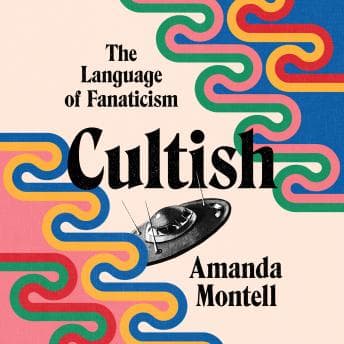

"The true answer has nothing to do with freaky mind-control wizardry or Kool-Aid."
I paused the audio right there. I was mid-jog along the Charles River, probably looking like a maniac because I actually stopped running to nod. Because thank you.
As someone who spends way too much time analyzing why humans act against their own self-interest (and writing papers about it that gather dust), I am tired of the "brainwashing" excuse. It's lazy. It suggests some magical spell. Amanda Montell suggests something way scarier—and way more accurate: It's just words.
The Linguistics of "Us"
Look, I'm a sucker for linguistic determinism. The idea that language shapes our reality? That's my bread and butter. Montell takes this academic concept and makes it... well, actually fun. She breaks down how "cultish" language works, not just in the heavy hitters like Jonestown or Heaven's Gate, but in that SoulCycle class you spent $35 on. Or that DM from a high school friend trying to sell you essential oils.
(Yes, I have fallen for the "Hey girlie!" trap. I'm human. My therapist says I need to stop beating myself up about the leggings I bought.)
What makes this compelling isn't the shock value. We've all seen the documentaries. It's the pattern recognition. Montell argues that cults satisfy a basic human need for belonging and answers. She treats her subjects with surprising empathy—doesn't call them idiots, calls them seekers. That same compassionate lens shows up in Mating in Captivity, where Esther Perel refuses to pathologize desire—she just examines what drives us. Psychologically, that tracks. We are social animals terrified of uncertainty. Give us a special vocabulary—a "loaded language"—and we feel safe. We feel like insiders.
My mother would call it "getting mixed up with the wrong crowd," but Montell calls it the "language of fanaticism." Same thing, really.
Ann Marie Gideon Sounds Like Your Smartest Friend
I couldn't find a ton about Gideon's background, but her performance here is interesting. She's not doing the "Serious Academic Voice" (which, frankly, puts me to sleep even though I am one). She sounds like your smartest friend telling you a wild story over wine.
Warm. Engaging. She lands the jokes—and this book is darkly funny. Montell has a very specific, millennial, internet-savvy tone, and Gideon nails that vibe.
But.
(You knew there was a "but" coming.)
There are mispronunciations. Quite a few. For a book entirely about language, hearing names or terms mangled is... ironic? Frustrating? My eye twitched a few times. It's not a dealbreaker—the energy carries it—but if you're the type who corrects grammar on Twitter, you might struggle. It distracted me from the data a few times, which is a shame because the research is actually solid.
Where the Lines Blur
Some people might get annoyed that Montell puts Scientology and Peloton in the same book. I've seen the reviews. "How dare she compare a suicide cult to a spin class?"
But that's missing the point. She's not equating the harm; she's equating the mechanism. The psychological hook is identical. The "us vs. them" rhetoric. The love-bombing. The specialized jargon that makes outsiders feel like they just don't "get it."
I found myself looking at my own life—academia is its own cult, let's be real. We have our own jargon, our own idols, our own hazing rituals (dissertation defense, anyone?). Montell gets that we all want to be part of the club.
Who This Is (and Isn't) For
Listen if you've ever wondered why you keep going back to that toxic group chat, why you trust that one influencer implicitly, or why your CrossFit friend won't shut up about WODs. Skip if you want rigorous academic sourcing or if mispronunciations will make you throw your phone.
Class Dismissed
No, this isn't a dry textbook. It digresses. It gets personal. It's a bit pop-psychology in places. But it explains why we do the things we do better than half the journals I read last month. Just maybe check the pronunciation of some of the names on Google afterwards.