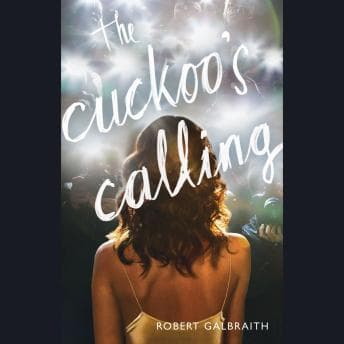

The Setup
Okay, so I need to get something out of the way first: this isn't horror. I know, I know - what's the host of a horror podcast doing reviewing a detective novel? But here's the thing. Good mystery operates on the same engine as good horror. Dread. Anticipation. The slow, creeping certainty that something terrible happened and you're going to have to sit with it. The Cuckoo's Calling understands this. And Robert Glenister? He commits.
I started this one during a late shift at the library - headphones in, shelving returns in the dim back stacks because our fluorescent lights are on their last legs and nobody's approved the budget to fix them. Sixteen hours is a commitment, and I wasn't sure I'd make it. But somewhere around hour three, I realized I'd been standing in the 800s holding the same book for twenty minutes, completely lost in Cormoran Strike's world.
Why Glenister Works
Let me be real: I didn't know much about Robert Glenister before this. Did some digging and couldn't find a ton beyond his theatre and TV work. But based on this performance? The man is doing something special.
His Strike is - and I'm stealing this from another listener because it's perfect - "like butter." There's this gruff warmth to him, this lived-in quality that makes you believe every ache in that prosthetic leg, every cigarette smoked on a cold London street. Glenister doesn't just read Strike. He inhabits him. The Cornish accent is subtle enough to feel authentic without becoming a distraction, and there's this poignant edginess underneath the gruffness that sneaks up on you.
But here's what really impressed me: the women. Look, we've all heard male narrators attempt female voices and... yikes. It can go wrong fast. Glenister sidesteps the caricature trap entirely. His Robin (Strike's assistant) is distinct and capable-sounding without being pitched into parody territory. The parade of models, designers, and socialites each get their own vocal identity. It's genuinely impressive work.
The Slow Burn (And Why It Works)
I'll be honest - this book takes its time. Like, really takes its time. If you're coming in expecting the breakneck pacing of a thriller, you might bounce off this hard. There were moments, especially in the middle stretch, where I thought "okay, we've interviewed a LOT of people now, can we move this along?"
But here's the thing about slow burns: when they're done right, they're building something. Rowling (writing as Galbraith, though we all know the deal now) is doing character work. She's layering. Every interview, every seemingly tangential conversation is adding texture to this world of celebrity and desperation and grief. By the time the pieces start clicking together, you realize you've been handed all the clues - you just weren't paying close enough attention.
This is where Glenister's pacing becomes essential. A lesser narrator might rush through the quieter investigative scenes, treating them as filler between the "good parts." Glenister treats every conversation like it matters. Because it does. The mystery kept me guessing until the very end, and I say this as someone who's consumed enough mysteries to usually spot the killer by the midpoint.
(Shirley was unimpressed by my gasping at the reveal. She was sleeping on my chest at the time and did not appreciate being disturbed. Cats have no respect for narrative tension.)
Who Should Listen (And Who Should Skip)
This is for the patient ones. The listeners who appreciate a detective story that earns its ending through meticulous groundwork rather than shocking twists. If you loved The Big Sleep or appreciate noir-adjacent character studies, you're in the right place. Commuters, this is your jam - the length works in your favor because you'll actually want to sit in traffic to get another chapter in.
Skip if you need constant action. Skip if slow pacing makes you reach for the 2x speed button. (And honestly? Don't speed this one up. Glenister's delivery is calibrated for 1x. Trust me on this.)
Content-wise: there's discussion of suicide throughout - it's literally the central mystery - plus some violence, adult themes, and language. Nothing gratuitous, but it's definitely adult fiction.
The Verdict
I went in skeptical. Sixteen hours for a mystery? From the Harry Potter author's "secret" pseudonym? It felt like it could go either way. But The Cuckoo's Calling won me over through sheer craft - both Rowling's careful plotting and Glenister's immersive performance.
Is it horror? No. But it understands something horror understands: the power of patience. Of letting dread accumulate. Of trusting your audience to sit with discomfort long enough for the payoff to land.
Glenister earned that Earphones Award. The production is clean, the performance is textured, and by the end, I genuinely cared about these characters - even the ones I suspected of murder.
My podcast listeners probably won't care about this one. But my library patrons who ask for "something smart but not too literary"? I'm recommending this constantly now. There are more books in this series, and yeah. I'm already queuing up the next one. Glenister narrates Silkworm too, and I'm counting on him to bring that same grounded warmth to Strike's next case.
Finally, a mystery that respects the genre.