
"The body is a tool. The mind is a prison. The church will set you free."
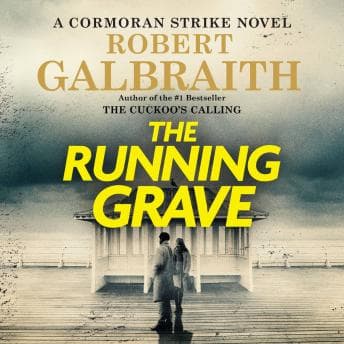
That's the kind of thing the Universal Humanitarian Church tells its members. And somewhere around hour twelve of this thirty-four hour audiobook, I realized I'd been holding my breath. Not literally—Shirley would've noticed and demanded food—but that creeping dread had settled into my bones the way only good horror does. Except this isn't horror. It's a detective novel. And that's what makes it so much worse.
The Cult That Crawls Under Your Skin
Look, I've consumed a lot of cult content. Documentaries, podcasts, the occasional true crime deep dive at 2 AM when I should be sleeping. That same 2 AM energy—the kind where dread builds slowly—is what I loved about Works of Edgar Allan Poe, Raven Edition, Volume 2, though Poe goes for gothic atmosphere where this goes for psychological realism. But Galbraith—Rowling, whatever we're calling her these days—does something here that genuinely unsettled me. She doesn't just describe a cult. She makes you feel how someone gets trapped in one.
Robin Ellacott goes undercover at Chapman Farm, and the slow erosion of her autonomy is... honestly, it's devastating in the most uncomfortable way possible. The sleep deprivation. The constant surveillance. The way they strip away your identity piece by piece until you're not sure what's real anymore. I listened to most of this during night shifts at the library (yes, we have night shifts, yes, it's exactly as atmospheric as you're imagining), and there were moments I had to pause. Not because it was boring—the opposite. Because the psychological manipulation was too well-rendered.
This isn't your typical mystery where someone dies and our detectives piece together clues. Sycamore Row is more traditional in that detective-work sense—courtroom drama, legal puzzles, the satisfying click of pieces falling into place. The mystery here is almost secondary to the horror of watching Robin lose herself. And I mean that as a compliment, even though my heart rate would disagree.
Robert Glenister Carries Thirty-Four Hours Like It's Nothing
Okay, so. Thirty-four hours. That's not a typo. This is essentially three regular audiobooks stacked in a trench coat. And Robert Glenister—who's been narrating this series from the beginning—makes it work.
His Strike is gruff and weathered in exactly the right way. His Robin is sharp but increasingly fragile as the cult does its work on her. But here's what really got me: the cult members. He gives each of them distinct voices without ever tipping into caricature. The leaders are charismatic in that skin-crawling way that makes you understand why people follow them. The true believers are earnest. The ones who've been broken sound hollow.
There's this one character—I won't spoil who—whose voice Glenister pitches just slightly wrong. Slightly off. And you know, you KNOW, something's not right with them. That's not just good narration. That's acting. That's craft.
The British accents are spot-on, which matters more than you'd think when you're spending this much time with these characters. Yorkshire, Cornish, London—he nails them all without ever making it feel like a showcase. It's just... how these people sound.
Where the Length Actually Works (Mostly)
I'm not going to pretend this book doesn't have pacing issues. It does. There are subplots that feel like they're treading water, characters who appear for a scene and then vanish into the Norfolk mist. If you're the kind of listener who needs constant forward momentum, you might struggle around the middle section.
But—and this is a big but—the length serves the story in a way I didn't expect. Cults work through exhaustion. Through repetition. Through making you feel like time has lost all meaning. And spending thirty-four hours with Robin as she experiences that? It's immersive in a way a tighter edit wouldn't be.
I found myself losing track of how long I'd been listening. Which is either a credit to Glenister's narration or a sign that I'd accidentally joined a cult myself. (Shirley remains unimpressed either way.)
The Darkness That Lingers
Fair warning: this book goes places. Violence, psychological manipulation, coercive control, references to child abuse. It's not gratuitous, but it's not sanitized either. Galbraith commits to showing what these organizations actually do to people, and it's ugly.
Who should skip: If you're sensitive to cult content or have personal experience with high-control groups, maybe sit this one out. Or at least go in prepared.
Who should listen: My fellow horror fans who appreciate psychological dread over jump scares—this is the good stuff. It understands that the scariest thing isn't a monster in the dark. It's a smiling person who wants to help you become your best self. It's the slow realization that you can't leave. It's the moment you stop wanting to.
My podcast listeners are going to love this one. I'm already planning the episode.
Checking My Locks Before Bed
Honestly? I need a break first. This one stayed with me in a way I wasn't expecting. But yes. Eventually. Probably with all the lights on this time.
If you're already invested in Strike and Robin, this is essential. If you're new to the series... maybe don't start here? There's seven books of relationship development and case history you'd be missing. But if you've been following along, this might be the best one yet. Certainly the darkest. Certainly the one that made me check my locks before bed.
Shirley Jackson walked so this author could run. Straight into a nightmare.