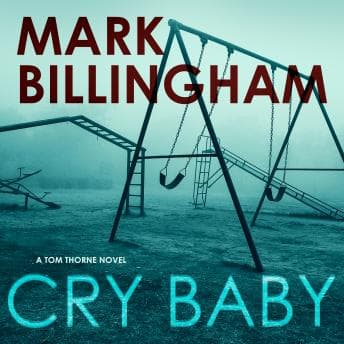

Look, I need to get something off my chest about full-cast audiobooks. They're either transcendent or they're a mess. There's no middle ground. You're either getting a radio drama that pulls you into another dimension, or you're getting a bunch of actors who clearly recorded in different studios and never met each other. Cry Baby? It's... complicated.
Here's the setup: 1996, two boys run into the woods, one comes out. Classic horror setup, right? Except this isn't horror - it's British crime fiction, which means it's going to be procedural, it's going to be methodical, and it's going to make you wait for the payoff. Mark Billingham knows what he's doing. The man has won Theakston's Old Peculier twice (yes, that's a real award name, and yes, I love everything about it). This is a prequel to his Tom Thorne series, so we're getting young Thorne, messy divorce Thorne, hasn't-figured-out-how-to-be-a-detective-yet Thorne.
The Voices in the Dark
So here's where it gets interesting. Billingham himself narrates, and he's solid. Assured. Easy to follow. The kind of voice you can listen to for ten hours without wanting to claw your ears off. But then there's David Morrissey as Thorne, and - okay, I'm just going to say it - his London accent is giving "actor who grew up in Liverpool trying really hard." Which is exactly what it is, because that's literally his background.
I listened to this in the dark (because of course I did), and there were moments where Morrissey got so quiet and mumbly that I had to rewind. Multiple times. At 2 AM. While my cat Shirley stared at me with profound judgment. The production is clean, the cast distinguishes characters well, but when your lead voice is inconsistent? It pulls you out.
The rest of the full cast brings genuine energy, though. That's the trade-off. You get this richness of character voices that a single narrator couldn't achieve, but you also get the occasional weak link. Robert Glenister is in here too, and he commits. That's rare in full-cast productions.
Where the Dread Lives
Billingham understands that crime fiction isn't about gore - it's about dread. Case of Jennie Brice operates on that same principle - the horror is in what's absent, not what's shown. Two people connected to the missing boy get murdered, and Billingham lets that weight sit on you. He doesn't rush to the reveal. The Euro '96 backdrop (England hosting, football fever everywhere) creates this weird tension between national celebration and personal horror. It's effective. It's atmospheric.
But here's my honest take: if you're coming to this for character depth, you might leave hungry. The procedural elements are strong - Billingham knows police work, knows how investigations spiral, knows how personal life bleeds into professional catastrophe. Thorne's divorce is happening in the background, and it colors everything. But some listeners have complained that they couldn't connect with the characters, and I get it. I had a similar disconnect with What Alice Forgot - compelling mystery, but the emotional core felt just out of reach. This is plot-driven crime fiction. The mystery is the meal; the characters are the seasoning.
For what it's worth, I found myself more invested in the investigation than in Thorne himself. Which is fine? That's the genre. But if you're expecting the psychological intimacy of, say, Tana French, adjust your expectations.
Who's This For (And Who Should Skip)
If you're already a Tom Thorne fan, this is essential - origin story energy, young detective making mistakes. If you're new to Billingham, this actually works as an entry point; you don't need the series context. But if you're sensitive to inconsistent narration, if a mumbly lead voice is going to pull you out of a thriller, sample first.
Last Call at 3 AM
I finished it at 3 AM. Shirley was unimpressed. I was satisfied - not blown away, but satisfied. Sometimes that's enough from a ten-hour crime procedural. Sometimes you just want competent darkness delivered by mostly competent voices while the real world sleeps.
Billingham knows the genre. He respects it. This isn't revolutionary crime fiction, but it's reliable crime fiction, and in a genre full of pretenders, reliable is worth something.