
"Her name may or may not have been Ida Durbin."
That line lands about thirty minutes in, and Will Patton delivers it like a man confessing to a priest — quiet, breathy, already worn out by the truth before he's finished telling it. I was driving through the back roads between Salem and the coast when it hit, windshield wipers keeping time, and something about grey Oregon plus that Louisiana drawl in my earbuds created this strange dissonance. Like hearing a ghost story told in the wrong haunted house.
Burke Doesn't Write Mysteries — He Writes Hauntings
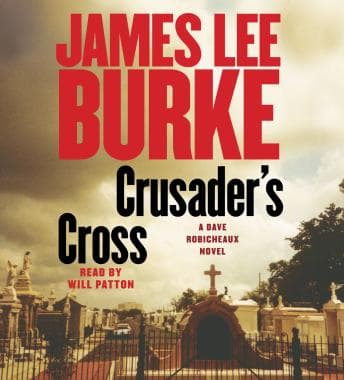
James Lee Burke doesn't write mysteries. He writes haunted houses and puts a badge on them. Every Robicheaux novel is less about who did it and more about what it costs to keep asking. In Crusader's Cross, the central question — what happened to a girl Dave and his brother Jimmie met on a Galveston beach in the 1950s — functions like the locked room in a Gothic novel. The mystery isn't really the mystery. The mystery is why this man can't stop picking at wounds that healed wrong decades ago.
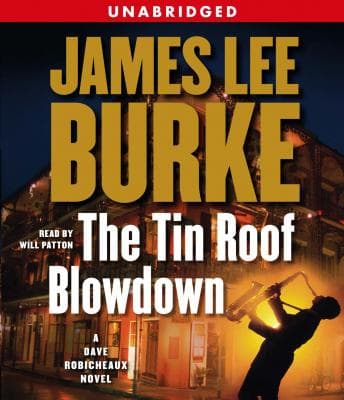
Burke's prose is genuinely literary in a way that will either hypnotize you or test your patience. He describes Louisiana the way some writers describe lovers — with obsessive, repetitive devotion to light on water, to the smell of rain on soil, to the way Spanish moss moves. It's gorgeous. It's also, sometimes, too much. There are stretches where I wanted him to trust me — I get it, Dave, Louisiana is beautiful and terrible, you can move on now. But if you're willing to sink into the bayou and stay there, Burke's earlier Tin Roof Blowdown is even more immersive—Hurricane Katrina becomes a character in itself, and Patton's narration is a masterclass in controlled anguish.
The deathbed confession that kicks everything off is classic Burke: it doesn't just introduce a plot, it detonates a buried memory. And the Chalons family — Valentine and his disturbed, deeply alluring sister Honoria — bring this old-money rot that feels authentically Southern in the best and worst ways. Burke knows these people. He knows their houses, their lawyers, their particular brand of entitlement that smells like magnolias and ammonia.
Patton's Robicheaux: Dreamy Where It Should Cut
Here's where I'm genuinely split. Patton's voice for Robicheaux sits in this dreamy, almost sedated register, which tracks for a man constantly fighting the pull of the bottle. When Robicheaux falls off the wagon — and he does, hard — Patton earns his paycheck. The guilt, the self-loathing, the way his voice gets smaller and more clipped. That's not a narrator reading about addiction. That's a performance that understands what addiction sounds like from the inside.
His Clete Purcell is the standout: louder, rougher, with this brawler energy that cuts through Robicheaux's melancholy like a fist through drywall. The contrast between those two voices alone tells you everything about their friendship without Burke having to spell it out. Patton brings that same layered dynamic to Blue Lily, Lily Blue, where his voice navigates a whole different kind of haunted landscape—Maggie Stiefvater's eerie magic and teenage longing.
But — and I know this is contentious because the Patton-vs-Hammer debate is alive and well in this fandom — his breathiness can work against him. During the more dangerous scenes, when redneck deputies are warning Robicheaux off and the New Orleans underworld starts showing teeth, I needed more edge and got whisper. There's a softness to Patton's delivery that serves the confessional moments beautifully but flattens the threat. When someone is telling Dave to stop asking questions or face consequences, I want to feel that menace land. Instead it drifts.
Ten Hours Is a Lot of Bayou If the Road Keeps Looping
The pacing is uneven. Burke takes his time with memory and landscape in ways that feel essential in the first half but start to drag around hour seven. Descriptions loop back on themselves — yes, the light on Bayou Teche is extraordinary, but I've been told four times now. And the ending. Without spoilers, threads involving the scandalous relationship with a Catholic nun (which Burke handles with more grace than the premise suggests) and the Chalons family feel like they deserved another fifty pages of resolution but got twenty. Burke wrote himself into a beautiful corner and then rushed through the exit.
This is a book for focused, patient listening. Don't put it on while doing dishes. Don't try it at 1.5x. Burke's sentences are built to breathe, and Patton's delivery demands you match his pace.
Shelve It With Your Southern Gothic, Not Your Procedurals
If you want tight plots with clean resolutions, this isn't your book. If you want to sit inside a deeply flawed man's head while he drives through bayou country chasing a ghost from a Galveston beach circa 1958, Crusader's Cross understands what that kind of story requires. It just doesn't always deliver it evenly.
My podcast listeners who love atmospheric crime fiction — the ones who care more about the humidity in a scene than the body count — are going to dig this. If you need another dose of Dave Robicheaux's Louisiana, Robicheaux: A Novel is a more recent entry that Patton also narrates—and it's just as haunted. Everyone else might check the clock around hour eight.
Shirley (my cat) slept through the whole thing. I envied her patience.