
Look, I need to talk about the fact that James Patterson wrote a book where the central moral question — is a vigilante sniper killing corrupt politicians a hero or a villain? — gets about as much psychological depth as a fortune cookie. I was chopping onions for a chana masala at 9 PM on a Tuesday, tears already streaming (the onions, not the book, let's be clear), and I found myself asking: why does Patterson keep setting up these genuinely interesting ethical dilemmas and then sprinting past them like they're inconvenient speed bumps?
Because here's the thing. The premise is legitimately fascinating. A skilled marksman systematically eliminating Washington's most corrupt figures — a dirty congressman, a scheming lobbyist — and the public starts to wonder if maybe this person is doing good work. That's a real psychological case study in moral disengagement, in how people rationalize violence when the targets are unsympathetic. The research actually shows that people's tolerance for vigilante justice increases dramatically when they perceive institutional failure. Patterson has this sitting right there in his lap. And he just... doesn't do much with it. Willows is a case study in what happens when a thriller actually commits to sitting with that discomfort — the moral ambiguity gets room to breathe, and the psychological payoff is genuinely earned.
The Sniper Problem (And I Don't Mean the Marksmanship)
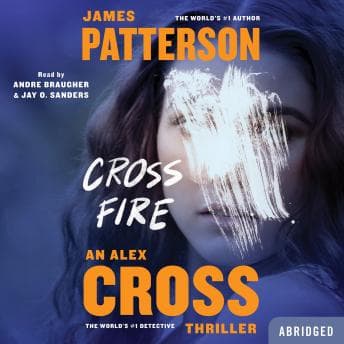
At 4 hours and 33 minutes, this is an abridged sprint through what should've been a slower, more deliberate investigation. Alex Cross is pulled between the sniper case, an FBI turf war with agent Max Siegel, wedding planning with Bree, AND the return of Kyle Craig — his recurring nemesis, "The Mastermind." That's four narrative threads for a runtime shorter than my last departmental meeting. The protagonist exhibits classic overextension, which Patterson frames as Cross being exceptional at juggling chaos, but psychologically, this doesn't track. Nobody — not even a fictional detective genius — can meaningfully engage with that many simultaneous high-stakes situations without something suffering. And what suffers is character development. Favorites like the Cross children barely register. Sampson, Alex's best friend, makes what amounts to a cameo. The family dynamics that should anchor the emotional stakes feel like set dressing.
What makes Alex Cross compelling in theory is that he's a psychologist himself — a detective who should be analyzing the why behind criminal behavior. But in this entry, he's mostly reacting, chasing, and surviving. The internal life gets thin.
Braugher and Sanders Carry What the Script Won't
Now, the narration. This is where things get interesting. Andre Braugher — yes, that Andre Braugher, the man who could read a grocery list and make you feel the weight of existence — handles the Cross chapters with a gravity the text doesn't always earn. His characterizations are believable in a way that actually elevates Patterson's sometimes-flat dialogue. He gives different characters distinct vocal identities without resorting to caricature, and there's an emotional register in his delivery that made me stop mid-stir more than once.
Jay O. Sanders takes on the other perspective chapters with this crisp, controlled clarity that works well for the procedural and antagonist sections. The contrast between the two narrators creates an instant signal — you know whose head you're in without any confusion. There's a well-placed musical background in the production that adds tension without being distracting. Credit where it's due: the audio production is clean and professional.
But here's my frustration. These are two genuinely talented performers working with material that doesn't always give them enough to chew on. It's like watching a great actor in a mediocre screenplay — you appreciate the craft while wishing the writing rose to meet it.
The Kyle Craig Question
The return of Kyle Craig as the overarching threat is — okay, I'll say it — the most predictable element in a book that leans heavily on predictability. Patterson telegraphs danger in a way that removes actual suspense. You know Cross and his family will survive because there are more books in the series. The question should be how and at what psychological cost, but we don't really get that reckoning. My therapist would have thoughts about this character's apparent inability to process accumulated trauma, but Patterson seems uninterested in that angle.
Who Gets Something Out of This
If you're a Patterson completist working through the Alex Cross series, this is perfectly serviceable — a quick, action-forward entry that moves pieces on the board for future books. The dual narration genuinely adds value, and at under five hours, it's a single-afternoon listen. If you're coming to this looking for the kind of psychological complexity that a premise about vigilante justice practically begs for? You'll be disappointed. I was. (Not heartbroken, just... academically let down.)
Best consumed during a workout or commute where you want propulsive pacing without needing to think too hard. Not the book for a deep-focus listen — there isn't enough under the surface to reward close attention.
The Case File Summary
Patterson knows how to construct a page-turner. That's never been in question. But Cross Fire is a this-is-a-fascinating-case-study-in missed opportunity — great premise, strong performers, thin execution. The narration earns a higher rating than the story itself. And at 4.5 hours abridged, you're getting the skeleton of a thriller when you could've had the full anatomy.