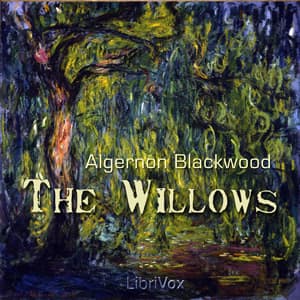
I made the mistake of starting this at 11 PM on a rainy Tuesday. Shirley was asleep on my chest, the apartment was dark except for my phone screen, and the wind outside was doing that thing where it sounds like something's trying to get in. Perfect conditions for Blackwood's masterpiece. Terrible conditions for my sleep schedule.
Look, H.P. Lovecraft called this "the greatest weird tale ever written." That's not hyperbole from some random Goodreads reviewer - that's the guy who basically invented cosmic horror saying "yeah, this one got me." And after listening to Michael Thomas Robinson's narration while staring at my ceiling at midnight, I get it. I really, really get it.
The Slow Creep That Lovecraft Stole From
Here's what Blackwood understood that so many horror writers miss: the scariest thing isn't the monster. It's the moment before you're sure there IS a monster. Two guys on a canoe trip down the Danube. Willows everywhere. And something is... wrong. Not dramatically wrong. Not jump-scare wrong. Just wrong in that way where your brain keeps trying to explain it away while your gut screams at you to leave.
The pacing is glacial by modern standards - we're talking 1907 here - but that's the point. Blackwood builds dread the way good horror should: through accumulation. The willows moving when there's no wind. The sand shifting. The sounds that shouldn't exist. Each detail stacks on the last until you realize you've been holding your breath for the past ten minutes.
My podcast listeners always ask me why old horror still works. This is why. Shirley Jackson walked so Stephen King could run, but Blackwood? Blackwood was already sprinting before any of them were born. Speaking of early horror that laid the groundwork, Murders in the Rue Morgue did something similar for the detective genre - Poe creating templates everyone else would follow. The influence on Lovecraft is obvious once you hear it - that sense of forces so vast and alien that human comprehension is laughable. But where Lovecraft goes cosmic, Blackwood stays rooted in nature. The horror isn't from space. It's from the willows themselves. From the river. From the thin places where our world touches something else.
Robinson's Voice in the Dark
I'll be honest - I couldn't find much about Michael Thomas Robinson's other work, but based on this performance? The guy gets it. His pacing does this thing where it quickens during the tense moments and slows during the descriptive passages, and it sounds simple but so many narrators can't pull it off. They either rush through the atmosphere (criminal) or drag through the action (boring). Robinson finds the rhythm.
Some listeners apparently had doubts at first. I get that. The style is measured, deliberate. This isn't a narrator who's going to grab you by the collar in the first five minutes. But by the time the willows start doing their thing? He's got you. The production is clean - no weird background noise, no volume issues - which matters when you're listening in the dark and any unexpected sound would make you throw your phone across the room. (Not that I did that. Shirley didn't appreciate being woken up, though.)
Why This Still Terrifies
The thing about nature horror - and I've talked about this on the podcast - is that it taps into something primal. We've spent most of human history afraid of the wilderness. Afraid of what's out there in the dark, in the water, in the trees. Modern horror often forgets this. We're so busy with serial killers and haunted houses that we forget the oldest fear: being somewhere we don't belong, surrounded by something that doesn't want us there.
Blackwood never explains what the willows are. What the dimension is. What any of it means. And that restraint? That's what separates good horror from mediocre horror. The narrator commits to the ambiguity. He doesn't try to clarify what the text leaves murky. He leans into the dread.
At two hours and twenty-three minutes, this is a perfect single-session listen. I'd recommend darkness. I'd recommend solitude. I'd recommend not being near any actual willows, because you will never look at them the same way again.
If you scare easily, maybe skip this one. If you don't? You need this. This understands that horror isn't about gore - it's about dread. About the slow, terrible realization that you are not alone, and what's with you is not friendly, and there is nowhere to run.
Shirley (my cat) was unimpressed. I was terrified. Finally, horror that respects the genre.









