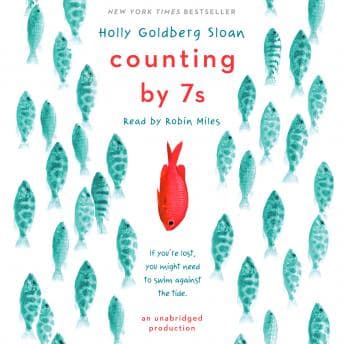

Okay, so this isn't my usual fare. Fantasy epics with elaborate magic systems? That's my wheelhouse. Middle grade realistic fiction about a genius twelve-year-old coping with the death of her parents? Not exactly Sanderson territory. But my advisor's kid needed a book recommendation for school, and I figured I'd give it a listen while pretending to work on my thesis.
I was not prepared.
When a Book Punches You in the Feelings
Willow Chance is the kind of character I would've wanted in my D&D group growing up—if she'd been real and if she'd been interested in anything besides botany and medical diagnoses. She counts by sevens. She's obsessed with nature. She's been adopted by parents who genuinely get her. And then, in one of those gut-punch moments that fiction does so well, she loses them both.
Here's the thing—this could have been misery porn. It could have been one of those books that exists purely to make you cry and feel bad about everything. But Holly Goldberg Sloan does something way more interesting. She lets Willow grieve, yeah, but she also lets her find her way into this weird, wonderful found family that's so diverse and so specific that it feels real. A Vietnamese-Mexican-African American family, a struggling nail salon, a taxi driver with his own demons. It's not a fantasy world, but the world-building here? Chef's kiss. Every character has their own internal logic, their own motivations.
Robin Miles Walks a Tightrope
So let's talk about Robin Miles. She's a Golden Voice narrator, multiple Audie winner—the woman has credentials. And honestly? She captures Willow in ways I didn't expect. The mannerisms, the precise way Willow processes the world, the slight remove from emotion that feels authentic to how this particular kid would actually speak—Miles nails it.
But—and this is where I have to be honest—there's a disconnect. Willow is twelve. Robin Miles does not sound twelve. There were moments, especially early on, where I had to actively remind myself I was listening to a kid's perspective. It's not a dealbreaker, but it's noticeable. Some listeners in the reviews I checked out mentioned the same thing. One person said the voice was "too old and unemotional at times," and I get that. There's a precision to Miles's delivery that works for Willow's character but occasionally reads as flat.
That said? When the emotional beats hit, they hit. The calming quality of her narration actually works in the book's favor—it keeps the grief from becoming overwhelming. My advisor's kid apparently engaged with it better than expected, which tracks. The pacing is solid, the character voices are distinct, and the production is clean.
The Comparison Game
This gets compared to Wonder and Out of My Mind a lot, and I can see why. They're all middle grade books about kids who don't fit in, who see the world differently. Railway Children has that same quality—kids navigating impossible situations without the story turning preachy. But Counting by 7s feels less... I don't know, less like it's trying to teach you a lesson? Willow isn't inspirational in that after-school-special way. She's just a weird, brilliant kid who loses everything and has to figure out what comes next.
Compared to the fantasy I usually consume, this is obviously a different beast. No magic systems to diagram, no maps in the front matter. But there's something here that reminds me of the best character-driven fantasy—that sense that the author knows these people inside and out, that every choice they make flows from who they are. Sloan's prose is accessible but not dumbed down. She trusts young readers to handle complexity. That respect for the audience is something I noticed in Big Little Lies too, though obviously aimed at a very different demographic.
Roll for Emotional Damage
Probably not my D&D group's thing—unless they have kids. But here's the deal: I cared. More than I expected to. I finished this instead of writing my thesis (shocking no one), and I didn't regret it. It's seven hours of listening that goes by faster than you'd think, and by the end, you're genuinely invested in whether this patchwork family is going to make it.
Who should listen: Parents looking for something to share with their kids, anyone who loved Wonder but wanted something less lesson-y, or readers who appreciate character-driven stories where the world-building happens through people instead of maps. Skip it if: you need high drama, varied vocal performances, or can't get past an adult voice narrating a twelve-year-old.
Is it perfect? Nah. But if you want something heartfelt that doesn't tip into saccharine, something that respects both its protagonist and its audience? This is solid.
(Don't tell Dr. Patel I spent my afternoon on this instead of the procedural generation chapter. She's already "concerned about my progress.")