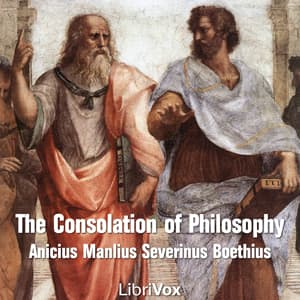

A man writes philosophy while waiting to be executed. Not metaphorically—Boethius literally composed this work in a prison cell in 524 AD, knowing Theodoric the Great was going to have him killed. That context hit me harder than any of the actual philosophy.
I was driving back from a client site in Houston—four hours of I-10 monotony—when I started this. Figured ancient philosophy would either put me to sleep or give me something to chew on. Ended up pulling over at a rest stop near Columbus just to sit with it for a minute.
When Fortune Turns on You
Here's what got me: Boethius had everything. Power, wealth, influence at the highest levels of Rome. Then his friends betrayed him, false accusations flew, and suddenly he's in a cell waiting to die. Sound familiar? I've watched careers end on bad intel. Seen good officers destroyed by politics. The man's situation—stripped of everything he'd built, abandoned by people he trusted—that's not ancient history. That's Tuesday in Washington.
The setup is simple. Boethius is in despair. Lady Philosophy shows up (yes, literally personified as a woman) and proceeds to walk him through why he shouldn't be so upset about losing everything. Their dialogue becomes a meditation on fortune, free will, and what actually matters when the world takes everything from you.
Now, I'll be honest—some of this is dense. Plato's influence is everywhere, and there are passages where I had to rewind because my brain wandered. This isn't beach reading. But when it lands, it lands hard. The arguments about fortune being fickle by nature, about how external goods were never really "ours" to begin with—I've told junior officers versions of this after they got passed over for promotion. Didn't know I was channeling a 6th-century Roman.
Two Voices in Your Ear
LibriVox did something smart here. Larry Wilson voices Boethius—the despairing prisoner asking the hard questions. Devorah Allen takes Philosophy—calm, rational, almost maternal in her patience. The contrast works. You're not just reading a treatise; you're witnessing an intervention.
Wilson captures that particular exhaustion of someone who's been broken by circumstances. Not melodramatic, just... tired. Allen's Philosophy has this steady authority that never wavers. When she's dismantling Boethius's complaints about fortune, you can hear the centuries of wisdom behind her words.
Is it professional studio quality? No. This is LibriVox—volunteers doing their best. But the dramatic reading format actually serves the material. The dialogic structure becomes a feature, not a gimmick. You're eavesdropping on a conversation between a dying man and Wisdom herself.
The Fatalism Problem
I'm going to level with you—there's a streak of fatalism here that sits uneasy with me. The argument essentially runs: fortune is random, virtue is internal, therefore stop caring about external outcomes. Fine in theory. But I've spent 25 years in environments where outcomes matter, where the mission isn't just a philosophical exercise. "Accept your fate" is cold comfort when you're responsible for other people.
That said, there's something to the core message. The things we chase—status, wealth, reputation—they're borrowed. Fortune gives and takes without regard for merit. Boethius isn't saying don't try. He's saying don't be surprised when the world doesn't play fair. After three deployments, I can't argue with that.
The blend of pagan philosophy and proto-Christian humility is fascinating. You can see the bridge between Seneca and Aquinas. This is where Western thought pivots from classical stoicism toward medieval Christianity. If you want more context on that transition period, Middle Ages 101: Medieval History and Life covers the broader cultural landscape Boethius was writing into. Heavy stuff for a Tuesday commute, but Ranger seemed interested. (He wasn't. He was asleep.)
Who This Is For (And Who Should Skip It)
If you want action, explosions, or a tight thriller—wrong book. This is for the listener willing to sit with uncomfortable questions about meaning, fortune, and what remains when everything else is stripped away. Officers facing career setbacks. Executives who've been pushed out. Anyone who's watched their world collapse and wondered what's left. Skip it if you need practical solutions; Boethius offers perspective, not a playbook.
At 5 hours 14 minutes, it's not a massive commitment. But it demands focus. Background listening won't cut it—you'll miss the argument's progression and end up confused. I'd recommend 1.25x speed; the pacing is deliberate, and the content is dense enough that a slight acceleration helps maintain engagement without losing comprehension.
After-Action Report
Boethius wrote something that mattered while staring at his own death. Fifteen hundred years later, it still has teeth. The LibriVox production is solid for what it is—clear, differentiated voices, faithful to the source. Not polished, but functional.
Worth your time? If you've ever had fortune turn on you—and who hasn't—there's wisdom here. It won't solve anything. But it might help you understand that you're not the first person to watch everything fall apart. And that there's something on the other side of that collapse worth finding.
Ranger approved this one. Mostly because I didn't yell at any bad military details.







![Steve Jobs [unabridged audiobook] audiobook cover](/_next/image?url=https%3A%2F%2Fcovers.audiobooks.com%2Fimages%2Fcovers%2Ffull%2F9788499923406.jpg&w=1920&q=75)