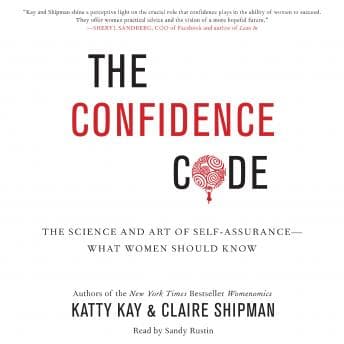

Look, I'm gonna be honest - I picked this up because my skip-level manager told me I needed to "speak up more in meetings" and I was like, okay, fine, I'll listen to a book about it on my commute instead of actually fixing the problem. Classic avoidance behavior, I know.
But here's the thing. The Confidence Code actually gave me something useful. Not a magic fix, but real data I can work with. As someone who debugs systems for a living, I appreciated that Kay and Shipman don't just tell you to "believe in yourself" - they bring the receipts. Genetics research, behavioral studies, actual science about why women tend to underestimate themselves while dudes are out here applying for jobs they're 40% qualified for.
The First 75% Is Basically a Literature Review
Okay so the pacing. Let me be real. The first three-quarters of this audiobook felt like reading a research paper out loud. Interviews with successful women, studies about brain chemistry, more interviews, more studies. It's thorough - super thorough - but if you're looking for a quick "10 steps to confidence" checklist, this ain't it.
I found myself zoning out around hour three on a particularly packed morning train. The content is good! It's just... dense. And sometimes it felt like the authors were padding their word count with yet another anecdote about Christine Lagarde or some other powerful woman I'll never be.
When the practical stuff finally hits in the last quarter though, it hits. The actionable advice about taking risks, failing fast, and rewiring your thought patterns? That's the good stuff. I just wish they'd front-loaded it more.
Sandy Rustin Gets the Assignment
Sandy Rustin's narration is... solid. Not Ray Porter level (obviously), but she's got this clear, easy-to-follow voice that works well for business content. What I really noticed was how she shifts her tone when the authors are making a key point - gets a little more assertive, a little more punchy. It's subtle but effective.
The production is clean, no weird audio artifacts or background noise. Perfect for train listening where you're already fighting against the Caltrain announcement system and that one guy who ALWAYS takes calls on speaker.
At 6 hours 46 minutes, this is about 4-5 commutes for me at 1.5x speed. Honestly, I'd bump it to 1.75x for the research-heavy middle sections. You won't miss anything critical.
The ROI Calculation
Here's my take: the science in this book actually holds up. The authors aren't just making stuff up - they cite real studies, talk to real researchers, and acknowledge the complexity of confidence as both nature and nurture. Essentialism takes a similar research-backed approach to the whole "do less but better" thing, though it skips the gender angle entirely. That's refreshing in a genre full of books that could've been blog posts.
But - and this is a big but - if you've already read Lean In or similar books, a lot of this will feel familiar. The "women need to take more risks" message isn't new. What's new is the depth of research backing it up.
For me, the most useful insight was the idea that confidence isn't about feeling confident - it's about taking action despite feeling uncertain. Big Magic hammers this same point home for creative work - just start before you feel ready. That reframed things for me. Instead of waiting until I feel ready to speak up in that architecture review, I just... do it. Still feels weird, but apparently that's the point.
Who Should Listen (And Who Should Skip)
Perfect for: commutes, gym sessions, any time you need something informative but not plot-dependent. If you're a woman in tech (or any male-dominated field) who's been told she needs to "be more visible" and you want to understand why that feels so hard, this is your book.
Skip if: you want pure motivation without the research backing. Also skip if you're impatient - the payoff takes a while.
I finished this in 4 commutes and walked away with maybe 3-4 genuinely useful frameworks. Is that worth 7 hours? For me, yeah. The confidence-as-action reframe alone was worth it. But I get why some listeners bounce off the interview-heavy middle section.
Would I relisten? Probably not the whole thing. But I might go back to the last quarter when I need a reminder that feeling like an imposter doesn't mean I am one.